Going up against a massive insurance company can feel like an impossible fight. They have teams of adjusters and lawyers, and you just have the facts of your case. But knowledge is the great equalizer. When you understand the appeals process and your rights, you shift the power dynamic. A well-documented and professionally presented appeal forces the insurer to take your claim seriously. This guide will equip you with the knowledge you need, explaining how to appeal an insurance denial with confidence. We’ll cover everything from collecting the right evidence to structuring your appeal for the greatest impact.
Receiving a denial letter from an insurance company can feel like a punch to the gut. After the stress of a car accident, you expect your insurance provider to help, not to put up another roadblock. But a denial isn’t the end of the road. It’s the start of a process, and with the right approach, you can challenge the decision and fight for the compensation you deserve.
The first step is to understand that insurance companies are for-profit businesses, and they sometimes deny claims to protect their bottom line. It doesn’t always mean your claim is invalid. It just means you need to build a stronger case. To do that, you need to know exactly why they denied your claim and what your next steps are. This starts with carefully reviewing the official denial letter they sent you. Our firm specializes in handling these types of property damage claims and can help you make sense of the process.
Insurance companies can deny claims for a variety of reasons, some more legitimate than others. Often, the denial comes down to a simple disagreement over the facts or the fine print in your policy.
Common reasons for a denial include:
Understanding the specific reason is critical because it dictates how you’ll build your appeal.
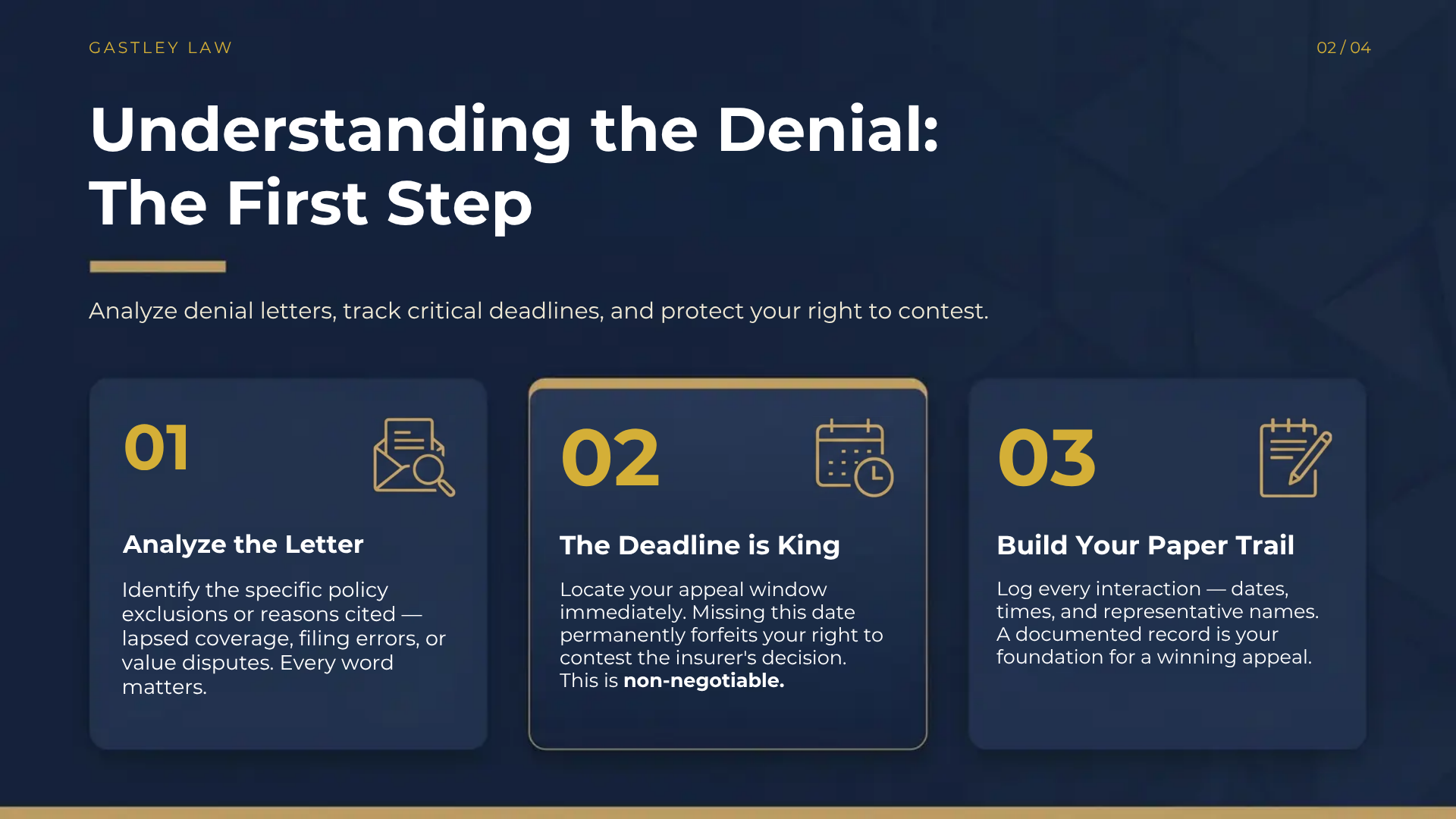
Your denial letter is the most important piece of evidence you have right now. Don’t just skim it; read it carefully, and then read it again. The letter is required to state the specific reason(s) your claim was denied, often referencing a particular section of your insurance policy. Pinpoint this exact language, as it will be the focus of your appeal.
Most importantly, look for the deadline to file an appeal. This is non-negotiable. Missing it can mean forfeiting your right to contest the decision. Mark this date on your calendar immediately. From this point forward, keep a detailed record of every interaction with the insurance company, including the date, time, and name of the person you spoke with. If the letter is confusing or feels unfair, it might be time to get a professional opinion.
Receiving a claim denial can feel like a major setback, but it’s important to remember that this isn’t the final word. An initial denial is often just the start of the conversation. By taking a few immediate, organized steps, you can prepare a strong response and challenge the insurance company’s decision. Think of this as your opportunity to build your case and show them exactly why your claim is valid. Let’s walk through what you should do first.
Before you do anything else, sit down and read the denial letter from start to finish. The insurance company is required to give you a specific reason for their decision. Don’t just skim it; look for the exact language they use to justify the denial. They might argue the damage isn’t covered by your policy or dispute the value of your diminished value claim. This reason is the foundation of their argument, and it’s what you’ll need to address in your appeal. Most importantly, find the deadline for filing an appeal. Insurance policies have strict time limits, and missing this window could mean losing your right to fight their decision.
Sometimes the formal language in a denial letter can be confusing. Your next step should be to call your insurance adjuster or a company representative for a clearer explanation. Ask them to walk you through their reasoning in plain English. While you’re on the phone, stay calm and professional. Your goal here is to gather information, not to get into an argument. Be sure to take detailed notes of the conversation, including the date, time, the representative’s name, and a summary of what was discussed. This record is a crucial part of your paper trail. If their explanation still feels unfair or doesn’t add up, it may be time to get a second opinion.
Now that you understand why your claim was denied, it’s time to collect everything you need to prove your case. Start organizing all your paperwork and evidence in one place. This includes the police report from the accident, photos and videos of the vehicle damage, repair estimates from independent body shops, and copies of all communication with the insurer. Your evidence should directly counter the reason for the denial. For example, if they questioned the severity of the damage, multiple detailed estimates from certified mechanics can be very persuasive. Building a strong, evidence-based case is a key part of handling property damage claims effectively.
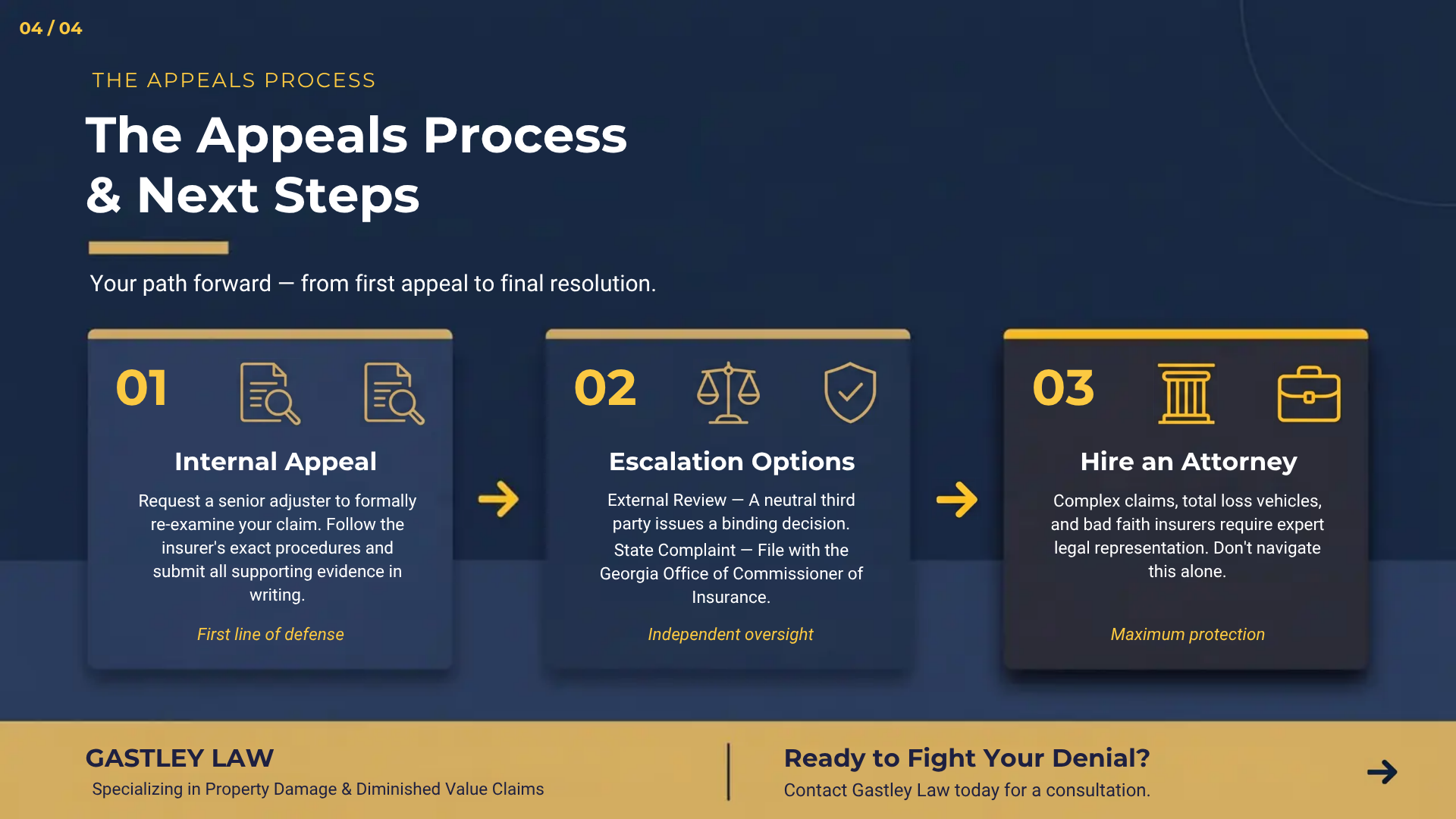
After receiving a denial, your first formal step is to file an internal appeal. This simply means you’re asking the insurance company to conduct a full and fair review of its own decision. It’s your right to challenge their conclusion, and this process forces a fresh set of eyes, often from a more senior adjuster, to re-examine your claim and the evidence you’ve provided.
Think of it as your official first round in fighting back. The internal appeal is handled entirely within the insurance company, following a specific procedure they have laid out. It’s crucial to approach this step methodically. You’ll need to present your case clearly and provide all the necessary documentation to show why their initial decision was wrong. While it may seem like you’re asking the fox to guard the henhouse, this is a required step in the process and is often successful when you present a well-organized and compelling case. Successfully navigating this stage can save you a lot of time and prevent the need for further action.
Every insurance company has its own specific process for handling internal appeals. You can’t just send an angry email; you need to follow their rules to the letter for your appeal to be considered valid. Your denial letter should outline the exact steps you need to take, including where to send your appeal and what forms to fill out. If the instructions aren’t clear, check the company’s website or call them to confirm the procedure. Following these steps correctly is essential. Our team can help you manage the complex paperwork and communication involved in these legal services to ensure everything is filed properly from the start.
This is one of the most critical parts of the process. Your denial letter will specify a deadline by which you must submit your appeal. Missing this deadline can automatically disqualify your appeal, and you could lose your right to challenge the decision altogether. As soon as you receive the denial, find the deadline and mark it on your calendar. Give yourself plenty of time to gather your documents and write your appeal letter so you aren’t rushing at the last minute. Submitting your appeal well before the deadline shows you are organized and serious about your claim.
In some urgent situations, you may be able to request an expedited appeal. This requires the insurance company to make a decision much faster, sometimes within 72 hours. While this is more common in health insurance, it can apply to property damage claims if the denial creates a significant hardship. For example, if your vehicle is essential for your job and you risk losing your income, you may qualify. To request an expedited review, you must clearly explain in writing why your situation is urgent. If you believe your case qualifies and you need help fast, contact us to discuss your options.
When you appeal an insurance denial, your argument is only as strong as the evidence you provide. Think of yourself as building a case. The insurance company has stated its position in the denial letter; now it’s your turn to present a clear, fact-based counterargument. The best way to do this is by gathering every piece of relevant paperwork and expert testimony you can find. A well-documented appeal shows the insurer that you are serious, organized, and prepared to fight for the compensation you deserve. This documentation forms the foundation of your appeal letter and demonstrates exactly why the initial decision was wrong. Taking the time to collect and organize these documents is one of the most important steps you can take to win your appeal.
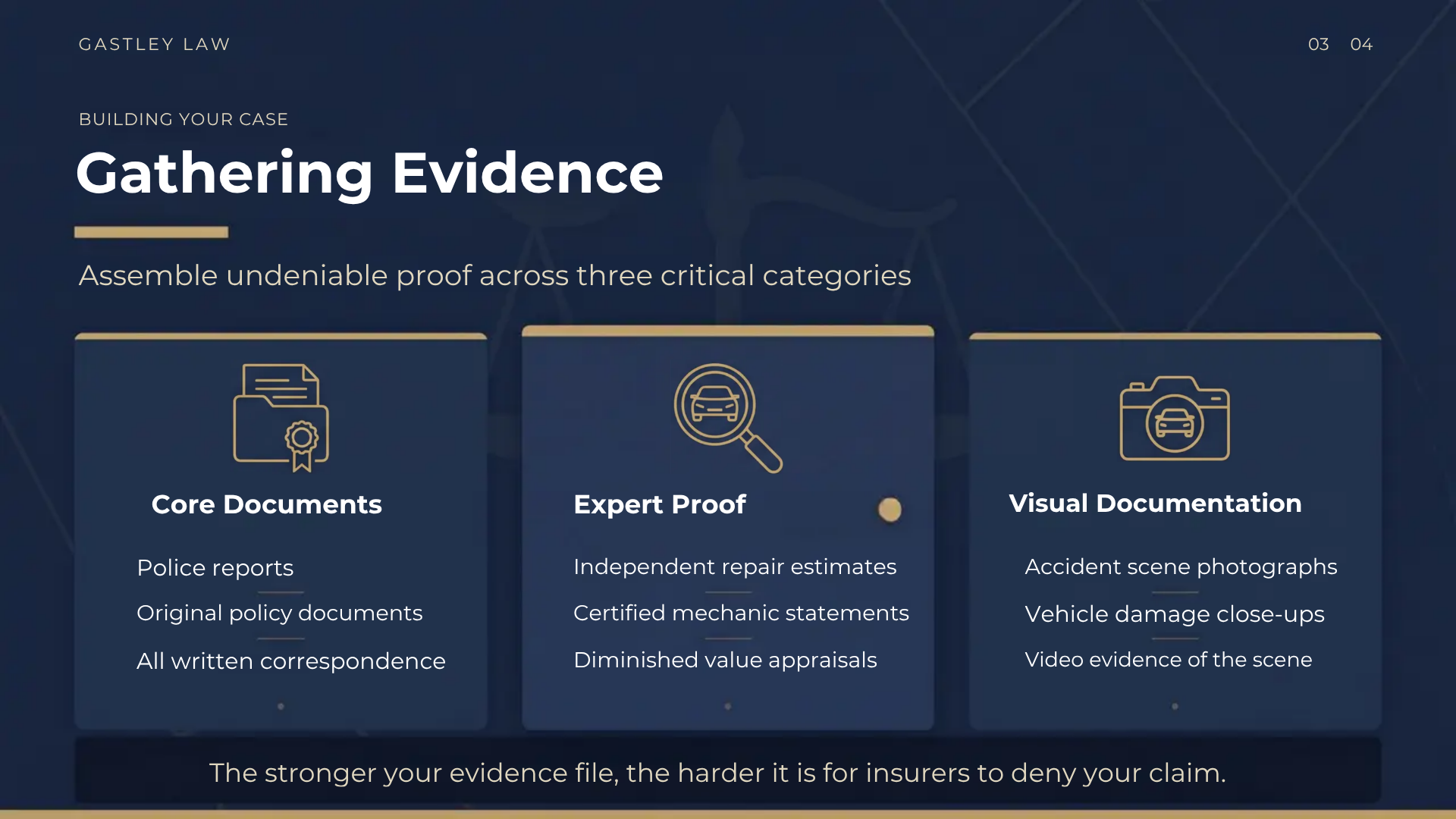
Start by gathering all the documents related to your initial claim. This creates a complete file that tells the story of your accident and the damages you incurred. Your goal is to have a comprehensive record that leaves no room for doubt. Make sure you have copies of the original police report, your insurance policy, all correspondence with the insurance company (including emails and notes from phone calls), and the official denial letter. You should also include any photos or videos of the vehicle damage and the accident scene. This collection of paperwork establishes a clear timeline and is the first step in handling all types of property damage claims.
Your personal account is important, but an expert’s opinion can be what convinces an insurer to reverse its decision. This is where you bring in professional assessments to support your claim. Get an independent estimate from a trusted auto body shop, especially if you believe the insurer’s approved shop undervalued the repairs. If there are mechanical issues, a statement from a certified mechanic can be incredibly powerful. Most importantly for vehicle claims, you should get a professional report that calculates your car’s diminished value. This expert evidence directly challenges the insurer’s assessment with credible, third-party proof of your losses.
Once you have all your documents, how you present them matters. A messy, disorganized file can confuse the adjuster and weaken your argument. Create a simple cover sheet that lists every document included in your appeal package. Arrange your paperwork in a logical order, such as chronologically, and label everything clearly. This makes it easy for the claims adjuster to follow your reasoning and understand the evidence you’ve provided. Before you send anything, make a complete copy of the entire package for your own records. If you feel overwhelmed by the process, you can always get a case evaluation to ensure your appeal is as strong as possible.
Your appeal letter is your official request for the insurance company to reconsider its decision. It’s your chance to present your case in a clear, organized, and persuasive way. A well-written letter, backed by solid evidence, can make all the difference in getting a denial overturned. Think of it as the centerpiece of your appeal package, where you tie all your documentation together and make your argument. The goal is to make it as easy as possible for the reviewer to understand why their initial decision was wrong and approve your claim.
A confusing letter is an easy letter to deny. Keep your appeal professional, concise, and simple to follow. Start by putting your name, address, policy number, and claim number at the top of the page. In your opening sentence, state your purpose directly: “I am writing to appeal the denial of my claim [Your Claim Number].” Use the body of the letter to build your case, dedicating separate paragraphs to each point you want to make. As you prepare your letter, be sure to clearly cite the claim for damages you are seeking and address the specific reason for the denial as stated by the insurer. Finish with a clear statement of what you want, such as a full review and payment for your claim.
Use the insurance company’s denial letter as your guide. Go through it line by line and address every single reason they gave for denying your claim. If they questioned the extent of the damage, counter with your mechanic’s report and photos. If they denied your diminished value claim, present the appraisal you got from an independent expert. It’s also helpful to keep written records of all your interactions with the insurance company, including dates, times, and the names of people you spoke with. Referencing these details in your letter shows the reviewer you are organized and serious about your appeal. This methodical approach prevents them from upholding the denial based on an issue you forgot to address.
While you should always remain professional, this letter is your opportunity to provide a clear, factual narrative of what happened. Briefly explain the accident, the damage to your vehicle, and the steps you’ve taken since. Stick to the facts and avoid letting anger or frustration seep into your writing. Your goal is to be persuasive, not confrontational. Connect your story to the evidence you’ve gathered. For example, you might write, “The attached police report confirms the other driver was at fault,” or “The enclosed receipts show the costs I have already paid for repairs.” An experienced attorney can provide valuable guidance on how to frame your case, and if you’re struggling to put it all together, it may be time to contact a professional.
Filing an appeal can feel like you’re getting a second chance to make your case. But it’s easy to make a misstep that could hurt your chances of getting the denial overturned. The good news is that many of these mistakes are completely avoidable. By being mindful of a few common pitfalls, you can present a much stronger appeal and show the insurance company you mean business.
Think of this process as building a solid case from the ground up. Every piece of evidence, every conversation, and every deadline matters. Let’s walk through the most frequent errors people make so you can sidestep them entirely. Knowing what not to do is just as important as knowing what to do, and a little preparation goes a long way in getting the compensation you deserve.
This is one of the easiest and most heartbreaking ways to lose an appeal before it even starts. Insurance policies have strict timelines for filing appeals, and if you miss that window, you often forfeit your right to challenge the decision. The deadline should be clearly stated in your denial letter, so find it and mark it on your calendar immediately. Don’t assume you have plenty of time. The clock starts ticking the moment the decision is made, and you’ll want to use every available day to gather your documents and build a strong case. If you’re feeling overwhelmed, it’s wise to contact us to ensure everything is submitted correctly and on time.
When you appeal a denial, you can’t just say you disagree with the outcome. You have to prove why the insurer’s decision was wrong. A common mistake is failing to submit enough compelling evidence to support your position. Your appeal needs to be backed by solid documentation that directly refutes the insurance company’s reason for denial. This means gathering every relevant document: the police report, photos of the damage from multiple angles, and repair estimates from reputable shops. For a diminished value claim, you’ll need an expert appraisal report. The more evidence you provide, the harder it is for the insurance company to stand by its original decision.
It’s completely understandable to feel frustrated and angry when your claim is denied. However, letting those emotions take over your communication with the insurance company can backfire. Yelling at an adjuster or sending angry emails won’t help your cause; in fact, it can make them less willing to work with you. Always aim to be firm, professional, and clear in all your interactions. Keep a detailed log of every phone call, including the date, time, and the name of the person you spoke with. Follow up important calls with an email to create a written record. This paper trail is invaluable, and our legal representation can ensure your case is always presented calmly and effectively.
It’s incredibly frustrating to go through the entire internal appeal process only to have the insurance company deny your claim again. I get it. But please don’t think this is the end of the line, because it isn’t. You still have powerful options for getting the compensation you deserve. When the insurer’s internal review doesn’t go your way, it’s time to take your case to an outside party.
Think of it this way: up until now, you’ve been playing by the insurance company’s rules, on their home turf. Now, you can involve neutral third parties who can look at your case objectively. This is where you can file for an external review, submit a formal complaint with the state, or explore your legal rights if the insurer is acting unfairly. These next steps are designed to hold insurance companies accountable and ensure you get a fair shake. It’s time to move your appeal into a new arena where the insurer doesn’t get the final say.
When your internal appeal is denied, you can often request an external review. This means an independent, certified third party with no connection to your insurance company will examine your case. This neutral reviewer looks at all the same evidence you submitted, along with the insurer’s reasoning for the denial, and makes an impartial decision. If the external reviewer sides with you, the insurance company is typically required by law to pay the claim. This process takes the final decision out of the hands of the company that denied you and places it with someone unbiased. It’s a critical step that ensures fairness and accountability, giving you a fresh set of eyes on your claim.
If you believe your insurance company has handled your claim improperly, you can file a complaint with Georgia’s state insurance department. The Office of Commissioner of Insurance and Safety Fire is responsible for regulating insurance companies and protecting consumers. When you file a complaint, the department will investigate the issue by contacting your insurer for a formal response. While they can’t force an insurer to pay a disputed claim, they can enforce state laws and regulations. A formal complaint creates an official record and puts pressure on the insurance company to justify its actions to a government regulator, which can often lead to a resolution.
Insurance companies have a legal duty to act in “good faith,” which means they must treat you fairly and handle your claim honestly. If an insurer fails to do this by, for example, unreasonably delaying your claim, refusing to conduct a full investigation, or deliberately misinterpreting your policy, they may be acting in bad faith. Georgia has specific laws outlining unfair claims settlement practices. If your insurer violates these laws, you may be entitled to sue for damages beyond what you were originally owed on your claim. This is a serious step, and it’s often the point where having an experienced attorney on your side becomes essential to protect your rights.
Handling an insurance appeal on your own can feel overwhelming, especially when you’re already dealing with the stress of a car accident. While you can manage minor disputes yourself, bringing in a professional is often the best way to protect your interests. An attorney can step in when the process becomes too complex or when the insurance company simply isn’t treating you fairly. They understand the tactics insurers use and can counter them effectively, ensuring your case gets the serious attention it deserves.
The most obvious sign you need legal help is a claim denial. Many denials from insurance companies are improper and can be overturned with a strong appeal. If your denial letter seems vague or based on a weak argument, it’s a major red flag. You should also consider hiring an attorney if the insurer is delaying the process, pressuring you to accept a lowball offer, or suggesting you were at fault when you weren’t. When the claim involves complex issues like a total loss or a significant diminished value calculation, an expert can make sure you aren’t leaving money on the table.
An experienced attorney does more than just write letters; they level the playing field. Your lawyer will thoroughly review the insurance company’s denial, compare it against the evidence and your policy, and determine the best strategy for your appeal. They handle the entire process, from gathering additional evidence like expert reports to managing all communications with the insurer. This specialized legal representation is focused on one goal: fighting to overturn an improper denial so you receive the full compensation you are rightfully owed. It takes the burden off your shoulders and puts a powerful advocate in your corner.
Worries about cost should not stop you from seeking legal advice. Most property damage attorneys, including our team at Gastley Law, work on a contingency fee basis. This means you pay nothing upfront. The attorney’s fee is a percentage of the money they recover for you, so they only get paid if you win your case. This structure ensures your lawyer is motivated to get you the best possible outcome. During your initial consultation, which is typically free, the attorney will explain their fee structure clearly. Don’t hesitate to contact us to discuss your case and learn how we can help without any initial financial risk.
If your internal and external appeals don’t resolve the issue, don’t lose hope. You still have several other paths you can take to challenge the insurance company’s decision. These options involve getting third parties involved, from neutral mediators to state regulators. Exploring these resources can provide the leverage you need to secure a fair outcome for your property damage claim. Think of this as moving into a new phase of the process, where you bring in outside support to make your case.
Mediation and arbitration are two common ways to resolve disputes without heading to a full-blown trial. In mediation, a neutral third party helps you and the insurance company talk through the issues to find a mutually agreeable solution. The mediator doesn’t make a decision for you; they just facilitate the conversation. Arbitration is a bit more formal. An arbitrator, or a panel of them, will hear evidence from both sides and then make a binding decision. Both options can be faster and less expensive than going to court. If you suspect your insurer is operating in bad faith, these methods can be an effective way to hold them accountable with the help of an experienced attorney.
You’re not alone in this fight. Many states have consumer assistance programs designed to help people just like you. In Georgia, the Office of Commissioner of Insurance and Safety Fire has a Consumer Services Division that can provide information and assistance. These government bodies regulate the insurance industry and can be a powerful ally. They can help you understand your rights, review your case, and guide you on how to file a formal complaint against the insurer. Reaching out to them is a great step if you feel you’ve hit a wall and need official guidance on what to do next.
Beyond state programs, other organizations can offer support. While many focus on health insurance, the core principles of fighting a denial are the same. The most important thing you can do is keep meticulous records of every phone call, email, and letter you exchange with your insurance company. Document everything. For complex situations involving your vehicle, especially if you’re dealing with a diminished value claim, the best support often comes from a legal professional who specializes in this area. They understand the tactics insurers use and can build a strong case on your behalf, ensuring you don’t leave money on the table.
The timeline can vary quite a bit depending on your specific situation. An internal appeal with the insurance company might take anywhere from 30 to 60 days for them to review and issue a new decision. If you move on to an external review or need to take legal action, the process will naturally take longer. The key is to be patient and persistent, as a thorough and well-documented appeal is more important than a fast one.
You can certainly handle a straightforward appeal on your own, especially if the denial was due to a simple paperwork error. However, if the denial involves a complex issue, a dispute over fault, or a significant amount of money, hiring an attorney can be a game-changer. A lawyer understands how to build a strong legal argument and can prevent the insurance company from using confusing tactics to get you to back down.
Appealing a claim denial should not, in itself, cause your insurance rates to increase. Your rates are based on your risk profile and claims history. Simply exercising your right to challenge a decision you believe is unfair is not a factor in that calculation. If your appeal is successful and the insurer pays the claim, it will be part of your claims history just like any other paid claim would have been.
Yes, diminished value claims can be more challenging to win because they aren’t based on a simple repair receipt. Instead, they rely on proving a loss in your vehicle’s market value, which is more subjective. Insurers often deny these claims by default, hoping you won’t fight back. Winning usually requires a professional appraisal report and a strong, evidence-based argument, which is why having an expert on your side is so valuable for these specific cases.
This is a personal decision, but it’s often worth it. First, what seems like a small amount can add up, especially when you consider hidden damages or future repair needs. Second, it’s about holding your insurance company to the terms of your policy. Many attorneys offer free consultations, so you can get a professional opinion on the true value of your claim and decide if pursuing it makes sense for you without any initial cost.