Insurance companies sell peace of mind—but when it’s time to pay a claim, many policyholders are shocked to hear the word “denied.” Whether it’s a car accident, property damage, or another covered loss, claim denials are far more common than people expect. And in many cases, they’re not justified.
Insurers have systems designed to reduce payouts. They may rely on technical policy language, incomplete investigations, or outright delay tactics to avoid paying valid claims. If your insurance claim was denied in Georgia, it does not mean the decision is final.
This guide explains why insurance claims are denied, how to appeal a denial, when a denial crosses into insurance bad faith, and when it’s time to involve an attorney. Understanding your rights is the first step toward holding the insurance company accountable.
If your denial follows a crash, visit our Car Accident Lawyer page for related injury and property-damage guidance.
Your claim gets stronger with documentation. Denials often fall apart when you present a complete, organized file and force the insurer to address it.
Treat negotiations like a business discussion. Stay calm, stick to facts, and require written justification for low positions.
Bad faith is real. When an insurer denies a valid claim without a reasonable investigation or delays without justification, insurance bad faith may apply.
A low “final” offer isn’t always final. If they refuse to be fair, escalation—including legal action—may be necessary.
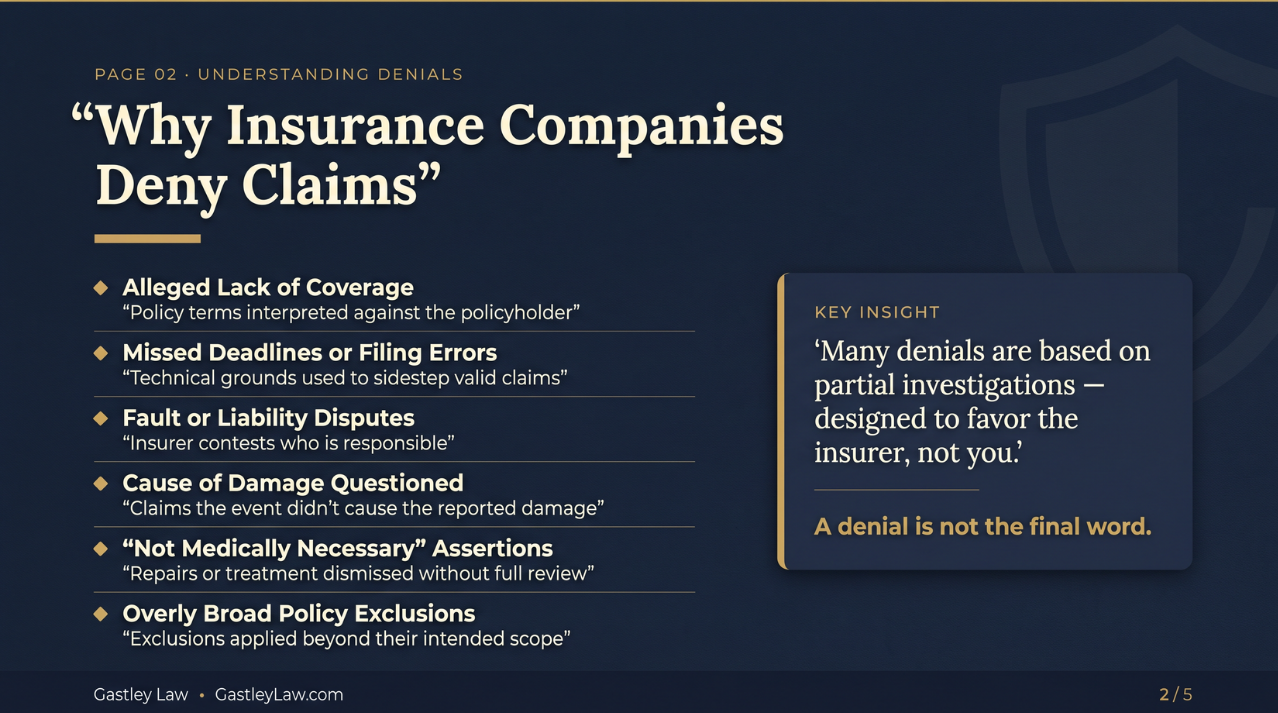
Insurance companies rarely deny claims without a stated reason—but that reason isn’t always legitimate. Common explanations include:
Alleged lack of coverage
Missed deadlines or technical filing errors
Disputes over fault or liability
Claims the damage wasn’t caused by the reported event
Assertions that injuries or repairs are “not medically necessary”
Policy exclusions applied too broadly
Many denials are based on partial investigations or interpretations that favor the insurer, not the policyholder.
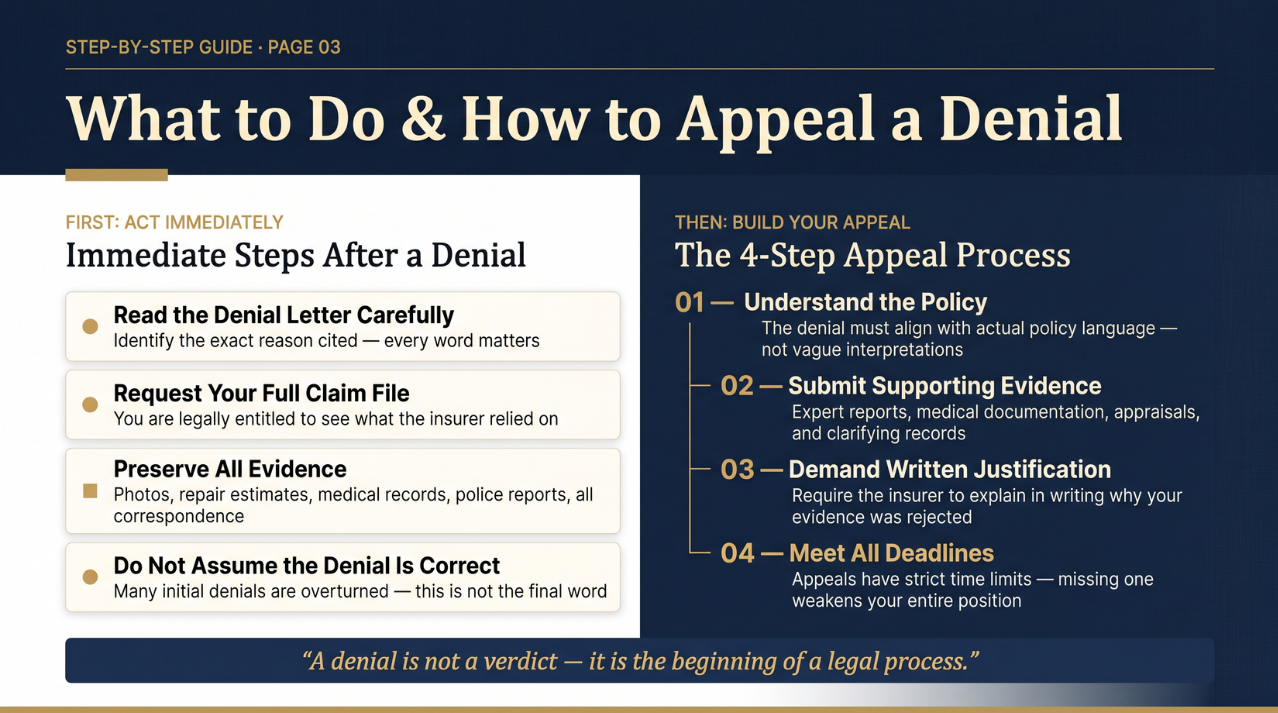
If you receive a denial letter, don’t panic—and don’t give up. Take these steps right away:
Read the denial letter carefully
Identify the exact reason cited and any policy language referenced.
Request the full claim file
You are entitled to see what the insurer relied on to deny your claim.
Preserve all evidence
Photos, repair estimates, medical records, police reports, and correspondence matter.
Do not assume the denial is correct
Many initial denials are overturned once challenged properly.
Appealing a denied insurance claim is a formal process—and doing it correctly matters.
Step 1: Understand the Policy
Insurance policies are contracts. The denial must align with actual policy language—not vague interpretations.
Step 2: Submit Supporting Evidence
Appeals should include:
Additional documentation
Expert reports (medical, repair, appraisal)
Clarifications correcting insurer assumptions
Step 3: Demand Written Justification
Require the insurer to explain—in writing—why your evidence doesn’t change their decision.
Step 4: Meet All Deadlines
Appeals often have strict time limits. Missing one can weaken your position.
An appeal forces the insurer to take a second, more careful look—and creates a paper trail if legal action becomes necessary.
Auto insurance denials often involve:
Liability disputes
Coverage misinterpretations
Undervaluation of damage or injuries
To fight back effectively:
Use police reports and witness statements
Obtain independent repair or medical evaluations
Challenge lowball estimates
Refuse verbal explanations—get everything documented
If your denial involves injuries or serious property damage, review our Personal Injury Lawyer page for broader legal context.
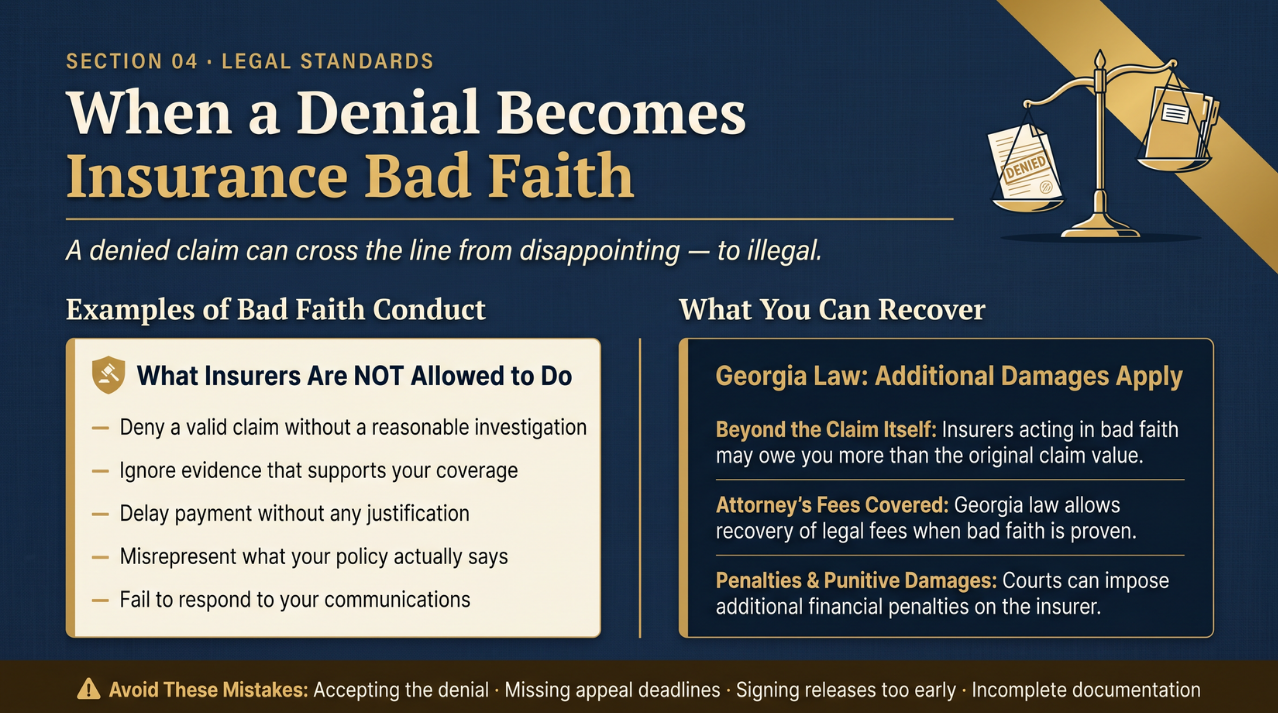
Insurance companies have a legal duty to act in good faith. When they don’t, the issue goes beyond a simple denial.
Examples of insurance bad faith include:
Denying a valid claim without reasonable investigation
Ignoring evidence that supports coverage
Delaying payment without justification
Misrepresenting policy terms
Failing to respond to communications
Bad faith is serious. Under Georgia law, insurers that act in bad faith may be liable for additional damages beyond the claim itself.
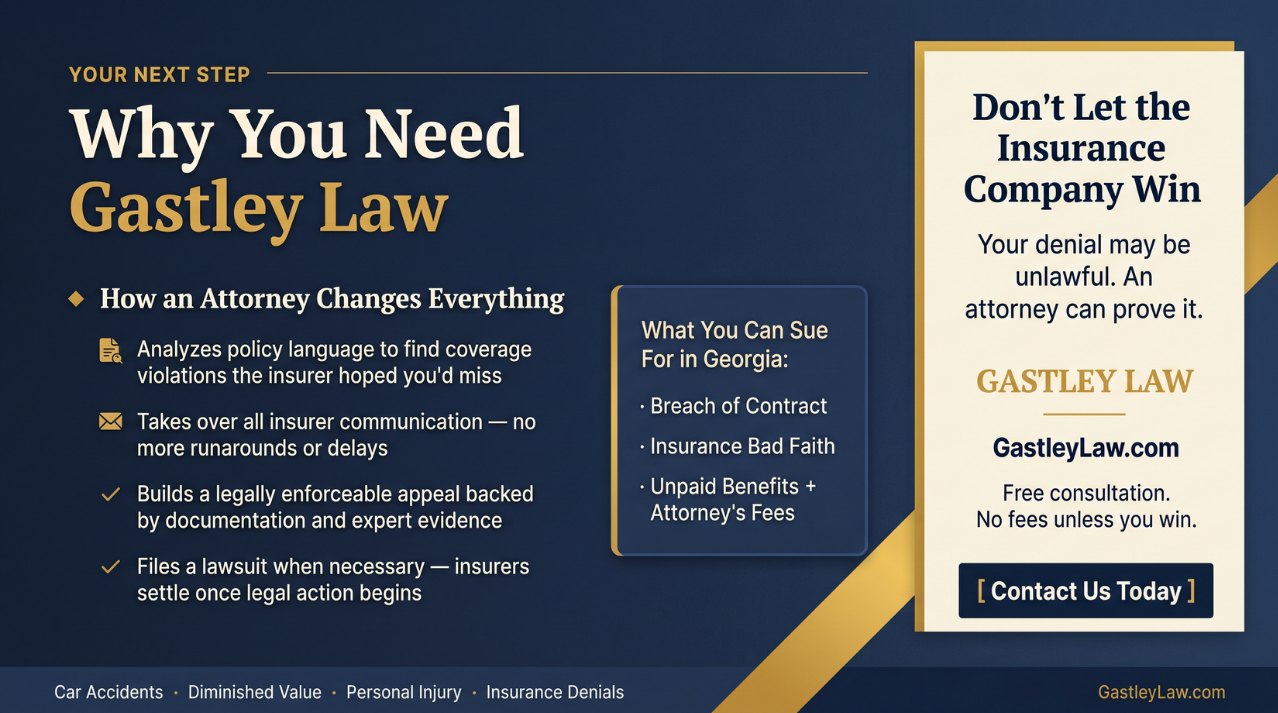
Insurance companies take claims far more seriously once an attorney is involved.
An experienced insurance denial attorney can:
Analyze policy language
Identify coverage violations
Handle all insurer communication
Build a legally enforceable appeal
File a lawsuit when necessary
Most importantly, legal representation levels the playing field. You’re no longer negotiating alone against a system designed to outmaneuver unrepresented claimants.
If appeals fail, litigation may be the next step.
In Georgia, policyholders can file suit for:
Breach of contract
Insurance bad faith
Unpaid benefits
Many insurers settle once legal action begins—because they’re now required to defend their denial in court.
Be cautious: never sign a release or settlement agreement without understanding exactly what rights you’re giving up.
Avoid these missteps:
Accepting the denial without questioning it
Missing appeal deadlines
Providing incomplete documentation
Relying on verbal assurances
Signing releases too early
Insurance companies rely on these mistakes to close files cheaply.
An insurance claim denial is not the end of the road—it’s often the beginning of the real process. Insurance companies depend on policyholders giving up. When you understand your rights, document your claim properly, and push back strategically, denials can be reversed and insurers can be held accountable.
If your insurance claim was denied in Georgia, don’t assume the insurer’s decision is final.
They can deny it—but that doesn’t make the denial lawful. Many valid claims are initially denied and later overturned.
Deadlines vary by policy. Some appeals must be filed within weeks. Always check your policy and act quickly.
No. A denial becomes bad faith when the insurer acts unreasonably, dishonestly, or without proper investigation.
Not always—but legal help is strongly recommended if the insurer is unresponsive, the claim is high-value, or bad faith is involved.
Yes. Georgia law allows lawsuits for breach of contract and insurance bad faith when insurers refuse to honor valid claims.
These cases are often more complex. An attorney can coordinate both aspects to protect your rights fully.