Post-Repair Inspection After Car Accident in Georgia
Repairs can make a damaged vehicle look finished without answering every question about safety, performance, or remaining defects. For Georgia drivers, a careful inspection after collision work can reveal concerns that photographs and an insurance estimate may miss. It also creates a clearer record of what happened.
Request a free case evaluation from Gastley Law at (770) 557-2838.
A post-repair inspection after car accident examines whether collision repairs addressed structural, mechanical, safety, and electronic concerns. Its findings may help document repair quality and support a property-damage review, but they do not automatically prove diminished value. Diminished value is the market loss that can remain because of the vehicle’s accident history, even when repairs are complete.
Understanding what an inspection covers helps you decide when to request one, what records to preserve, and how to separate repair-condition evidence from a valuation claim. The first step is knowing what this inspection is designed to identify.
What Is a Post-Repair Inspection After a Car Accident?
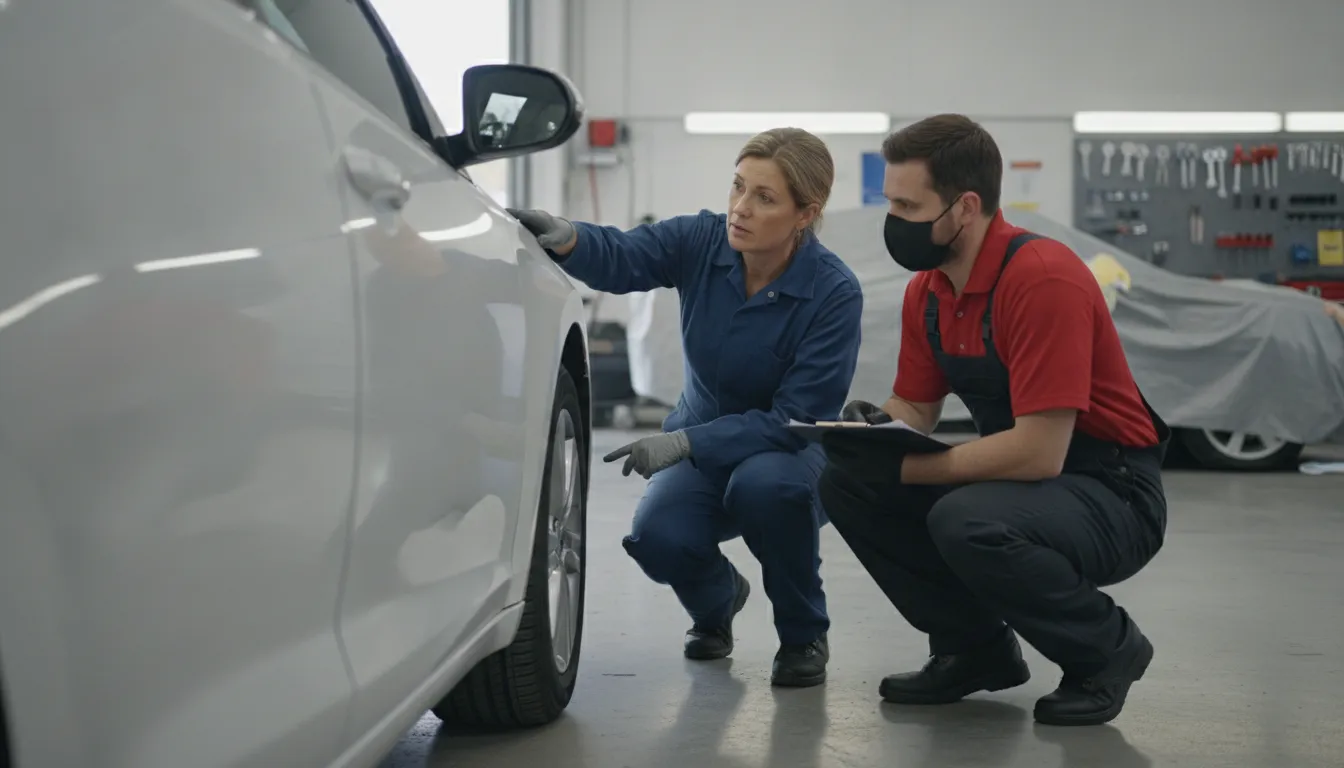
A post-repair inspection after a car accident is an evaluation performed after collision work is marked complete. Its purpose is to assess the condition of the repaired vehicle, identify damage or repair issues that may remain, and document the findings. Because much of a collision repair is hidden behind the vehicle’s panels, an owner may not be able to determine repair quality through a simple walk-around.
The inspection may result in a written report describing unresolved damage or concerns with the completed work. That report can help organize evidence for a conversation with the repair facility or insurer. It is not the same as requesting a second repair estimate. An inspection evaluates the vehicle and documents its condition. It does not automatically create a new price for repairs.
For example, an inspection may help identify leftover collision damage, incomplete work, or a repair concern that deserves further review. The exact scope depends on the vehicle, the collision, the repairs performed, and the records available. Read a report together with repair orders, invoices, photographs, and insurance communications. It does not automatically establish that a claim will be paid or guarantee a particular result.
A post-repair inspection is also different from a diminished-value appraisal. The inspection asks a repair-condition question: Was the vehicle repaired properly, and is there remaining damage or evidence that needs attention? A diminished-value appraisal asks a market-value question: How much value may the vehicle have lost because its accident history remains?
Those issues can overlap in a property-damage claim, but one does not replace the other. A vehicle can be properly repaired and still have reduced market value because of its accident history. Conversely, an inspection may uncover unresolved repair problems that need attention before anyone evaluates post-accident market value. For a broader explanation, review this diminished value claim guide.
For Georgia vehicle owners, keep the inspection report with the rest of the repair file. This makes it easier to evaluate what happened and decide what to do next. Vehicle condition, repair history, insurance coverage, and available evidence all matter.
What Does a Post-Repair Inspection Check?
A thorough inspection looks beyond whether the paint appears fresh or the vehicle drives around the block without an obvious problem. Collision damage can affect components hidden behind body panels. The inspection may compare completed work with repair records and look for conditions that are difficult to see during an ordinary walk-around. The exact scope depends on the vehicle, collision, repair history, and inspector’s qualifications.
Structure, alignment, suspension, and wheels
The inspection may begin with the vehicle’s structure and frame-related components. A technician can look for signs that structural repairs were incomplete or that mounting points remain out of position. When appropriate equipment is available, computerized measuring can compare frame alignment with the manufacturer’s specifications. Alignment concerns can affect handling, steering, tire wear, and component fit.
The inspection may also examine the suspension, steering, brakes, tires, and wheels for damage or installation problems. Fit and finish matter too. Uneven panel gaps, mismatched paint, loose trim, water leaks, wind noise, or a door, hood, or trunk that does not close correctly can point to incomplete work. These findings do not establish the full cause or cost of a problem. Photographs and a written report can document what was observed.
Airbags, seatbelts, sensors, and diagnostic systems
Safety equipment deserves specific attention after a collision. Depending on the impact and vehicle, an inspection may include airbags, sensors, control modules, and seatbelt pretensioners. It may also review warning lights and repair records showing whether damaged safety components were replaced or tested. A diagnostic scan can identify stored faults and provide more information about system communication.
Modern vehicles may require more than a mechanical repair. Cameras, radar sensors, lane-departure features, blind-spot monitoring, adaptive cruise control, and other advanced driver-assistance systems, or ADAS, may need calibration after nearby components are repaired or replaced. Even a small change in sensor position can affect performance. Calibration and verification should follow the vehicle manufacturer’s procedures.
Collision-repair sources identify structural damage, safety systems, suspension, wheels, hidden electronics, scanning, and calibration as potential parts of a post-accident review. The result should be treated as repair-condition evidence. It may reveal unresolved work or organize questions for the repairer and insurer. It does not automatically prove diminished value.
When Should You Request an Inspection in Georgia?
Timing matters because a vehicle can look repaired while important work remains undocumented or incomplete. For a Georgia driver, the best time to arrange a post-repair inspection after car accident damage is usually after the shop says the work is finished. But before you accept the vehicle as fully repaired. That gives an inspector an opportunity to compare the vehicle’s condition with the repair records.
- Request the inspection when the shop says repairs are complete. A closed repair order does not mean every concern has been resolved. An inspection can assess whether listed repairs were completed and document remaining damage. A written report may also be provided to the insurer.
- Arrange it before signing off, if possible. This is especially important if warning lights remain on, the vehicle pulls to one side. The steering wheel is not centered, the ride feels different, or tires show unusual wear. These signs can point to unresolved structural, suspension, or wheel issues.
- Do not ignore fit-and-finish problems. Uneven panel gaps, mismatched paint, loose trim, wind noise, water leaks, or doors that do not close correctly deserve attention. They are practical reasons to seek an independent evaluation.
- Ask questions when records are incomplete. If the repairer cannot provide a final invoice, parts information, alignment results, diagnostic scans, calibration records, or an explanation of supplements, preserve that gap in writing. Keep repair orders, invoices, photographs, findings, and insurer communications.
- Preserve evidence before additional work changes the condition. Photograph warning lights, panel gaps, tire wear, leaks, and other symptoms. Save claim messages and note when you reported each issue. If an inspection identifies a defect, request its findings in writing.
Do not delay simply because the vehicle is usable. If the damage occurred within the last six years, gather records and have the specific facts reviewed promptly. The appropriate inspection and claim steps depend on the vehicle, repairs, documentation, and applicable coverage.
How Can a Post-Repair Inspection After a Car Accident Support a Diminished-Value Claim?
A post-repair inspection after a car accident can create a clearer record of the vehicle’s condition after collision work. It may identify incomplete repairs, remaining damage, alignment concerns, or safety-system problems that are not obvious from a quick walk-around. A qualified inspection can provide information an owner may not be able to confirm alone. Findings can become part of the documentation shared with an insurer or reviewed with a Georgia property-damage attorney.
That evidence answers a different question from diminished value. Diminished value is the market-value loss that may remain after repairs because the accident history can affect how buyers, dealers, or future appraisers view the vehicle. A vehicle can be repaired properly and still be worth less than a comparable vehicle with no reported accident.
What an inspection can document
An inspection report may describe the repaired vehicle and compare observed work with repair records or the invoice. Depending on the vehicle and scope, findings may address fit and finish, structural components, frame alignment, suspension, wheels, warning lights, diagnostic scans, and safety equipment. Preserve the report with repair estimates, invoices, photographs, calibration records, and insurer communications.
Frame-related findings deserve careful review. Evidence of structural damage or questions about frame repair may affect safety and how accident history is evaluated. The significance depends on the vehicle, repair records, damage, and technical evidence. Learn more about frame damage diminished value.
How inspection evidence fits with valuation
| Evaluation | Main question | Useful evidence |
|---|---|---|
| Post-repair inspection | Were repairs completed, and are unresolved condition or safety concerns present? | Inspection report, photographs, scan results, alignment records, and repair invoices |
| Diminished-value appraisal | How much market value may remain lost because of accident history? | Vehicle details, repair history, comparable market evidence, and valuation analysis |
An inspection does not automatically prove that a diminished-value claim is owed. A separate valuation analysis considers the vehicle’s age, mileage, condition, model, repair history, and accident history. Newer and luxury vehicles may experience greater value loss after a wreck. A Georgia diminished value appraisal may help assess the market question.
What Records Should You Keep After Collision Repairs?
Keep a complete file from the first estimate through the final post-repair inspection after a car accident. Good records help you compare work performed with work authorized. They can also explain the vehicle’s history if you discuss property damage or diminished value. They do not automatically prove that an insurer owes a particular amount.
- Original estimate: Save the insurer’s initial estimate, listed parts, labor, operations, and condition notes.
- Supplements and approvals: Keep supplemental estimates, approvals, denials, and explanations of changes. These show what additional work was identified.
- Repair order and final invoice: Request an itemized final invoice. Compare parts and procedures with the estimates. Ask the repair facility to explain unfamiliar terms in writing.
- Photographs and videos: Preserve images from before repairs, during disassembly when available, and after completion. Include damaged areas, panel gaps, finish concerns, warning lights, and mileage. Keep original files.
- Scan and calibration records: Ask for diagnostic scan results when they were performed. Keep records for camera, radar, lane-assistance, blind-spot, airbag, and other safety-system calibration.
- Alignment and inspection results: Save wheel-alignment printouts, computerized measuring results, and the post-repair inspection report. A condition inspection and diminished-value appraisal answer different questions.
- Warranty paperwork: Keep the shop’s written warranty, exclusions, and instructions for reporting a problem. Georgia Consumer Ed states that new motor vehicles have statutory coverage for 24 months or 24,000 miles, whichever comes first. That statement may not apply to every vehicle or dispute, so confirm its applicability. See the official Georgia vehicle repair guidance.
- Rental and loss-of-use records: Retain rental agreements, receipts, transportation costs, dates the vehicle was unavailable, and delay communications.
- Insurer communications: Save letters, emails, portal messages, adjuster names, call notes, requested photos, payment explanations, and settlement offers.
Organize the file chronologically and keep a backup. A practical diminished value claim checklist can help identify missing documents. Repair records may show work quality, while diminished value concerns market-value loss after accident history.
What If the Insurance Company Disputes the Repair or Value?
A disagreement about a repaired vehicle can involve two questions. Are repairs complete and properly documented? Does the vehicle still have lower market value because its accident history is now part of its record? A post-repair inspection may document repair quality or unresolved concerns. It does not automatically establish diminished value.
Organize the repair evidence first
Collect the original estimate, supplements, repair orders, final invoice, before-and-after photographs, inspection findings, scan or calibration records, and insurer correspondence. If the vehicle has a visible defect, warning light, unusual handling, or another concern, describe what happened and when. Ask the repair facility to explain the work in writing.
Then request the insurer’s position in writing. Ask whether it disputes the repair scope, quality, invoice amount, existence of diminished value, or amount offered. A written explanation makes it easier to identify the actual disagreement. If the insurer denied the property-damage claim or stopped communicating, review this guidance for a denied property damage claim.
Get an independent evaluation before deciding
An independent professional may evaluate repair condition, review records, or assess post-accident market-value loss. These are related, but not identical evaluations. A repair inspection can support an argument that work remains incomplete. A diminished-value appraisal addresses the market impact of the accident.
A free case evaluation can help you understand which evidence matters and whether the insurer’s position addresses the right issue. The process may include requesting a revised offer, negotiating, or obtaining an independent appraisal when appropriate.
Consider an appraisal clause only when appropriate
Some policies contain an appraisal clause that may provide a process for resolving a disagreement about the amount of a covered loss. It does not apply automatically to every dispute. Review the policy and obtain advice about whether a Georgia appraisal clause fits before taking that step.
Negotiation, appraisal, or litigation may each be appropriate in different circumstances. The right choice depends on the policy, coverage, repair evidence, vehicle history, communications, and potential value of the claim.
How Can Gastley Law Help With a Georgia Property-Damage Claim?
Gastley Law focuses on Georgia diminished-value and property-damage insurance claims for individual vehicle owners. That focus matters when the immediate repair is only one part of the financial issue. A vehicle may be repaired correctly and still be worth less because its accident history affects how potential buyers view it.
Reviewing the repair record and claim facts
A case evaluation can begin with documents showing what happened to the vehicle and how the claim was handled. Useful materials may include estimates, supplements, repair orders, final invoices, photographs, inspection findings, and insurer communications. If an inspection identifies incomplete work or another repair concern, that evidence may help evaluate vehicle condition. It does not, by itself, establish diminished value.
Gastley Law can review available repair documentation, help assess property-damage issues, and coordinate insurer communications. Depending on the facts, a claim may involve first-party coverage under the owner’s policy or third-party coverage through the other driver’s insurer. The policy, liability facts, repair history, vehicle, and evidence all affect the analysis.
Determining whether a case evaluation is appropriate
Gastley Law’s stated audience includes Georgia owners whose vehicles were damaged within the last six years, whether they were at fault or not at fault. That timeframe is a screening point, not a guarantee that a claim is timely or qualifies. Deadlines and requirements depend on the policy, parties, and facts.
A review can clarify whether repair condition and diminished value should be evaluated separately. No result is guaranteed, and claim value depends on individual facts.
Request a free case evaluation with Gastley Law or call (770) 557-2838 today.
Frequently Asked Questions
What does a post-repair inspection after a car accident check?
It reviews whether documented repairs appear complete. It may identify concerns involving structure, safety systems, suspension, wheels, electronics, or calibration. Ask for written findings and compare them with the repair order and final invoice. An inspection is not the same as a second repair estimate.
Can I choose my own repair shop in Georgia?
Generally, an insurer may not require a claimant to use a particular repair facility under Georgia law. An insurer can provide an estimate or recommend a shop, but you should review the proposed work, supplements, repair records, and inspection results. See the language of O.C.G.A. 33-34-6 in the Georgia code.
Does a successful inspection eliminate a diminished-value claim?
No. A post-repair inspection addresses the condition and completeness of repairs. Diminished value is a separate market-value loss that can remain because the vehicle has an accident history, even when repairs were properly completed. Preserve the inspection report and evidence of pre- and post-accident value.
What records should I keep after the inspection?
Keep the insurer’s estimate, supplements, repair order, final invoice, photographs, inspection findings, scan or calibration records, and communications with the insurer or repair shop. These records can help distinguish an unresolved repair problem from a diminished-value issue.
What should I do if the insurer disputes my findings or value?
Request the insurer’s position in writing, organize the repair and inspection evidence, and consider an independent evaluation or appraisal when appropriate. The next step depends on the vehicle, policy, records, coverage, and claim facts. A Georgia property-damage attorney can review those details before you decide how to proceed.
Request a Free Case Evaluation
A post-repair inspection can clarify whether remaining concerns involve repair quality, documentation, or possible diminished value. If you want to discuss your Georgia vehicle damage and available options, request a free case evaluation from Gastley Law or call (770) 557-2838 today.