
Nationwide Diminished Value Claim in Georgia
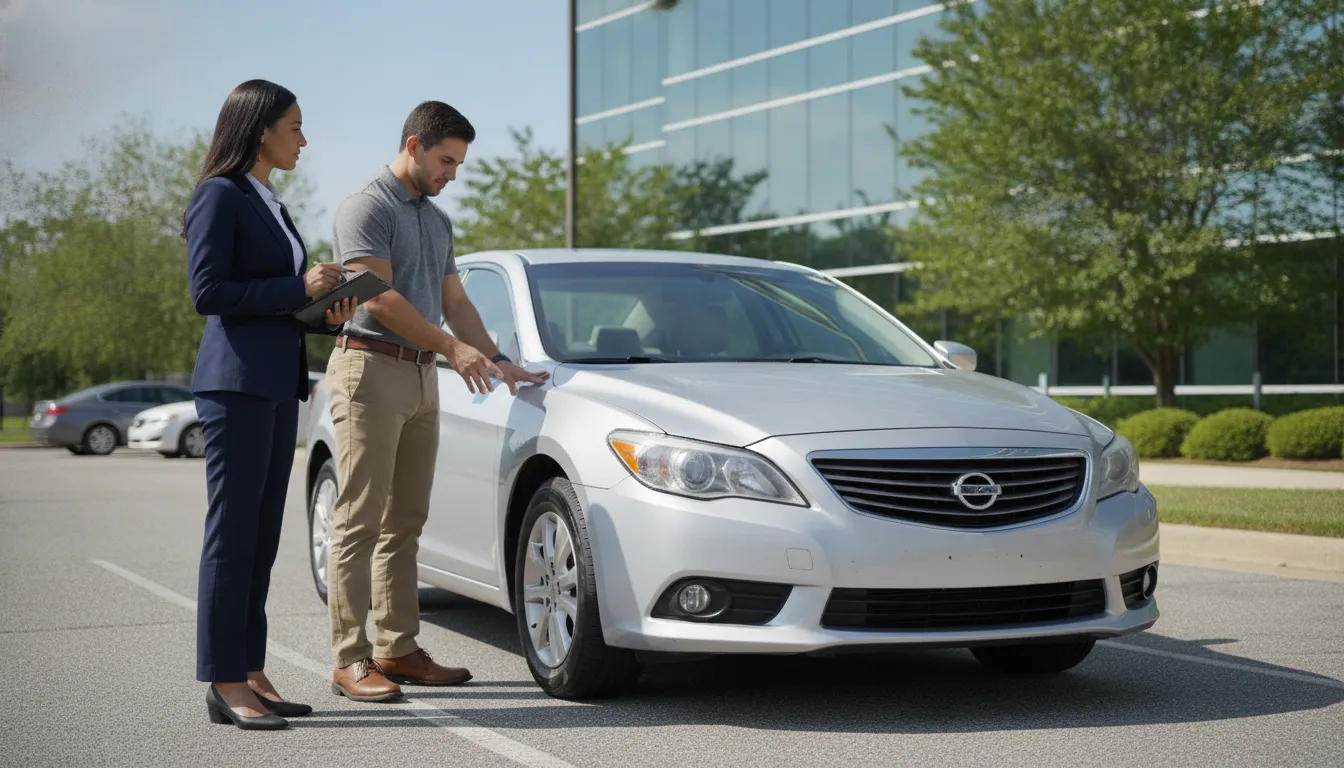
A repaired vehicle can look whole and still be worth less in Georgia’s market. Buyers may discount a car because its history shows a prior accident, even when the repairs were completed correctly. That potential loss is different from the cost of repairing the vehicle itself.
Request a free case evaluation with Gastley Law or call (770) 557-2838.
A nationwide diminished value claim is a request for compensation for the market value your repaired vehicle may have lost because of its accident history. Whether a claim can succeed depends on the claim type, Nationwide policy language, the vehicle and repair evidence, and applicable Georgia law.
Before estimating a claim or responding to an offer, identify whether you are pursuing coverage under your own policy or against another driver’s insurer. That distinction shapes the analysis and provides the starting point for understanding how this process works in Georgia.
What Is a Nationwide Diminished Value Claim in Georgia?
A Nationwide diminished value claim concerns the loss in a vehicle’s market value that may remain after accident repairs are finished. A car can be repaired to safe, drivable condition and still be worth less to a potential buyer because its history now includes a reported collision. Buyers may discount a previously damaged vehicle compared with an otherwise identical vehicle that has never been damaged.
That distinction matters in Georgia. Repairing the visible damage addresses the cost and condition of the vehicle, but it does not automatically erase the accident history from the market’s view. The question is whether the vehicle’s value after the repairs is lower than it would have been without the accident. And what the available policy, evidence, and applicable Georgia law support in the particular claim.
First-party and third-party Nationwide claims are different
A first-party claim is made through your own Nationwide policy. Depending on the policy and the facts, this can include a claim even when the accident circumstances do not fit the usual third-party scenario. A third-party claim is pursued against the insurer for the driver who caused the collision. If the other driver carries Nationwide, you may be dealing with Nationwide as the third-party carrier rather than as your own insurer.
Those claim types can involve different policy provisions, factual questions, and available arguments. Your role in the accident, the terms of the applicable policy, the repair history. And the evidence of market loss can all affect how the claim should be evaluated. For background on the second category, you can review this third-party insurance claim in Georgia resource, then compare that information with the facts of your own situation.
What Nationwide’s repair process does and does not establish
Nationwide’s claim resources discuss coverage and repair support, including repair facilities that may provide a written guarantee for the repairs. A repair guarantee can be important evidence that the work was addressed under the applicable process. It is not, by itself, a valuation of the vehicle’s post-accident market loss. The two questions are related, but they are not interchangeable: one concerns the quality or scope of repairs. While the other concerns what the vehicle may be worth after its accident history is disclosed.
For that reason, a Nationwide diminished value claim should be treated as a fact-specific evaluation, not a guaranteed formula or automatic payment. Nationwide states that claims are handled according to their individual facts and circumstances, policy language, exclusions, conditions, limitations, and applicable law. The same conditions should guide your review. Preserve the policy and claim communications, repair records, photographs, and information about the vehicle before assuming that repairs settle every issue.
Georgia drivers whose vehicles were damaged within the past six years may benefit from prompt review, but timing and eligibility can vary. A careful evaluation can identify whether the matter is first-party or third-party, what documentation is missing, and whether the evidence supports pursuing the remaining market-value loss.
Does Georgia Law Support a Claim Through Nationwide?
Georgia is unusual in how it treats diminished value in the first-party insurance context. A first-party claim is made through your own policy, including situations in which your Nationwide policy may apply after an accident. Georgia regulation establishes procedures for the prompt handling of first-party property-damage claims, but that framework does not turn every nationwide diminished value claim into an automatic payment.
For example, Georgia Regulation 120-2-52 generally addresses when an insurer should acknowledge a first-party claim and provide applicable proof-of-loss forms. It also addresses the timing for affirming or denying liability after completed proof of loss. Investigating coverage when proof of loss is not required, and paying a full undisputed claim after coverage is confirmed. Those time periods apply within the conditions stated by the regulation. They are not a promise that a disputed diminished-value amount will be resolved by a particular date.
The type of claim matters. If you are seeking compensation under your own Nationwide policy, the policy’s first-party provisions, exclusions, conditions, limitations, and applicable Georgia law must be reviewed together. If another driver caused the collision and you are pursuing that driver’s insurer, you may instead have a third-party insurance claim. The evidence and legal issues can differ, even though both claim paths may involve the loss in market value that remains after repairs.
Why the Nationwide policy still controls
Nationwide states that claims are handled according to their individual facts and circumstances, policy language, exclusions, conditions, limitations, and controlling law. That is important for a Georgia vehicle owner evaluating a Nationwide claim. The existence of a Georgia legal framework does not eliminate questions about what coverage applies. What notice or proof is required, whether the claim is first-party or third-party, and how the post-accident loss is supported.
Repairs, even when completed through a repair facility with a written repair guarantee, address the vehicle’s physical condition. They do not necessarily establish what the market would pay for a vehicle with an accident history. A separate diminished-value analysis may be needed to show that distinction. The amount and strength of that evidence can depend on the vehicle, its history, the damage and repairs, market evidence, and the valuation method used.
For a broader overview of the Georgia diminished value law, review the related guide, then return to the Nationwide-specific questions of policy language, claim communications, documentation, and valuation. This article is general information, not a legal conclusion about your claim. A careful review of the policy and claim file is necessary before deciding what rights, deadlines, or response options may apply.
How Do You Build the Evidence for a Nationwide Claim?
A strong file separates the fact of the accident from the remaining market-value loss. A vehicle can be repaired correctly and still be worth less to a future buyer because its history shows prior damage. Build the record in an organized sequence so the policy, repair history, and valuation evidence support the same explanation.
- Preserve the policy and claim communications. Save the relevant Nationwide policy pages, declarations, claim number, notices, emails, letters, adjuster messages, and notes from telephone calls. Identify whether the matter is a first-party claim under your own policy or a third-party claim against another driver’s insurer. Nationwide states that claim handling depends on the individual facts, policy language, exclusions, conditions, limitations, and applicable law. That makes the actual policy and written communications more useful than assumptions about how a claim should work.
- Collect the complete repair record. Request the final estimate, supplements, invoices, parts information, photographs taken by the shop, and documentation showing what work was completed. Keep records of rental, towing, inspections, and any post-repair concerns when they relate to the vehicle’s condition. Nationwide says its network facilities handle paperwork and stay in contact with the carrier during repairs, so those records may help establish the repair timeline and scope. However, a repair guarantee or shop paperwork addresses repair work. It does not, by itself, prove the separate loss in post-accident market value.
- Preserve photographs and vehicle details. Keep clear pre-accident photographs if available, accident-scene images, damage photos, repair-progress images, and post-repair photographs. Record the vehicle’s year, make, model, trim, mileage, options, prior condition, ownership history, and accident history. These details help distinguish this vehicle from a generic comparable and provide context for how buyers may view the accident record.
- Obtain a valuation or appraisal suited to the claim. Evidence should address what the vehicle was worth before the loss and what it may be worth after repairs, rather than simply repeating the repair bill. Diminished-value calculations can vary depending on the source performing the analysis, and inherent diminished value is inherently subjective. A diminished value appraisal can organize the relevant vehicle, damage, market, and repair information into an evaluation for review. Do not rely on an unsupported formula or assume that a percentage guarantees a particular recovery.
- Review Nationwide’s materials against the evidence. Keep the carrier’s valuation, offer, explanation, inspection notes, and any requests for additional information. Nationwide describes its use of a third-party vendor to help determine vehicle value in a total-loss context. But that information should not automatically be treated as a diminished-value conclusion. Compare what the materials actually evaluate with the market-value loss being claimed. If the record is incomplete, request clarification in writing and keep copies of everything submitted.
The goal is not to create the largest file. It is to create a consistent one that lets the policy, repair history, vehicle characteristics, and independent valuation be evaluated together. Outcomes still depend on the specific facts, documentation, policy language, and applicable Georgia law.
What If Nationwide Offers Too Little or Delays the Claim?
A low offer or a long silence does not, by itself, establish that Nationwide mishandled your claim. It does mean you should slow down, compare the response with your records, and identify exactly what remains disputed. Nationwide states that claims are handled according to the individual facts, policy language, exclusions, conditions, limitations, and applicable law. Those details matter in any Georgia nationwide diminished value claim.
Start by reviewing the offer and its support
Read the written offer carefully. Identify whether it addresses diminished value separately, explains the valuation method, and accounts for the vehicle’s age, mileage, condition, repairs, and accident history. Compare the offer with your repair file, photographs, vehicle records, and any independent valuation evidence. A repair guarantee may address the quality of workmanship, but it does not necessarily establish what the vehicle is worth in the market after the accident.
If Nationwide relies on information you do not understand, ask for the documents or explanation supporting the amount. You can also review an insurance settlement offer using a structured comparison of the insurer’s position and your evidence. Keep the discussion focused on the specific gap rather than making a broad accusation.
Respond in writing and preserve the timeline
Send a clear written response that states whether you disagree with the amount, identifies missing support, and attaches the records that answer the adjuster’s concerns. Ask what additional information is required and request a written response. Save the original offer, emails, letters, claim notes, voicemails, inspection reports, and dates of every call. If the claim is delayed, document when you submitted each item, who handled it, what was promised, and whether the reason for the delay changed.
For a first-party claim under your own policy, Georgia Regulation 120-2-52 includes procedures addressing claim acknowledgment, proof-of-loss forms, liability decisions, investigations, and payment of an undisputed amount. The timing rules can depend on what type of claim it is, whether proof of loss is required, and when complete information was received. Do not assume a deadline applies without reviewing the policy, claim history, and applicable law.
Consider the next available path
After reviewing the evidence, policy, and communications, a dispute may be addressed through continued negotiation, an appraisal provision if the policy allows it, or litigation when appropriate. Gastley Law describes this sequence as evaluating the case, requesting the insurer’s offer. Rejecting an inadequate offer, obtaining an independent appraisal, and selecting negotiation, appraisal, or litigation based on the circumstances. You can learn more about insurance dispute options before deciding what fits your situation.
If Nationwide denies the claim, preserve the denial letter and the exact reason given. Then compare that explanation with the policy and your documentation. A denied property damage claim may require a different response from a low valuation, so treating both issues as the same can weaken your review. Because facts and deadlines vary, prompt Georgia-specific legal analysis is more useful than assuming every delayed or low-offer claim has the same answer.
How Much Could a Georgia Diminished Value Claim Be Worth?
There is no universal payout for a Georgia diminished value claim through Nationwide. The amount, if any, depends on the vehicle, the accident, the repairs, the available market evidence, the applicable policy language, and the valuation method used. A repaired vehicle may still carry an accident history that affects what buyers are willing to pay. But that market effect must be supported with evidence rather than assumed.
The vehicle’s age, condition, mileage, prior damage, and repair history all matter. A newer or luxury vehicle may have greater diminished-value potential, while substantial prior damage or high mileage may complicate the analysis. The quality and scope of the repairs also matter, although a repair guarantee addresses the repair work itself, not necessarily the vehicle’s post-accident market value.
| Factor | Why it matters |
|---|---|
| Vehicle age and condition | Buyers may value a newer, well-maintained vehicle differently from an older vehicle with existing wear. |
| Mileage | Mileage helps establish the vehicle’s pre-accident market position and may affect how much an accident history changes buyer demand. |
| Damage and repair history | The severity of the collision, parts replaced, structural work, and documented repairs help show the event’s effect on market perception. |
| Accident history | A reported accident can reduce buyer confidence even when repairs are complete and the vehicle operates properly. |
| Market evidence | Comparable listings, sales information, and other reliable evidence can help support a difference in value. |
| Policy terms and claim type | First-party and third-party claims may involve different policy language, conditions, exclusions, and legal considerations. |
| Valuation method | Different appraisers or valuation sources may reach different results, so the method and assumptions should be examined. |
A study published through the National Association of Insurance Commissioners describes an average expected diminished-value loss estimate of 10% to 20% of direct property damage. That is a research estimate, not a formula, quote, guaranteed result, or prediction for a particular Nationwide claim. The same research recognizes that loss calculations can vary depending on who performs the valuation. And it reports that Georgia’s 17(c) formula has not been well received as a sound method in every analysis.
Nationwide states that claims are handled according to the individual facts, policy language, limitations, and applicable law. Before evaluating an offer, compare its assumptions with the repair file, vehicle history, market evidence, and any independent valuation. The strongest analysis explains how the evidence supports a particular market-value loss without promising that a specific amount will be paid.
When Should You Get Help With a Nationwide Claim?
Professional review may be useful when a Nationwide diminished value claim becomes difficult to evaluate or move forward. A low offer, a denial, repeated delays. Or requests for documentation you do not understand can make it hard to know whether the insurer has considered the vehicle’s post-accident market loss. A review can also help when the claim involves detailed repair records, competing valuation methods, or questions about whether your claim is first-party or third-party.
Situations that deserve a closer review
Consider seeking guidance if the offer appears disconnected from the vehicle’s condition, mileage, age, repair history, or local market. That does not automatically mean Nationwide handled the claim improperly. Its own materials state that claims depend on individual facts, policy language, exclusions, conditions, limitations, and applicable law. Those details should be examined rather than assuming that a general formula or repair guarantee answers the diminished value question.
Timing is another reason to avoid letting a claim sit indefinitely. Gastley Law’s stated service scope includes Georgia vehicles damaged within the past six years. But that is a general eligibility and time-sensitivity point, not a guarantee that every claim remains viable. Policy provisions, evidence, claim type, and applicable deadlines can affect the analysis. Prompt review is especially important if records are incomplete or communications with the insurer have become difficult to track.
What representation may involve
For eligible Georgia consumers, Gastley Law describes a process that can include evaluating the claim, documenting repairs and loss. Requesting the insurer’s offer, responding to an inadequate offer, obtaining an independent appraisal, and pursuing negotiation, an appraisal clause, or litigation when appropriate. The firm handles both claims through a client’s own insurer and claims against another driver’s insurer, though the policy and facts control the available path.
Gastley Law uses a contingency model and fronts case expenses, including appraisal expenses, collecting from compensation recovered under that model. This does not promise that every case will be accepted, that expenses will be identical, or that a particular recovery will result. It can, however, let a vehicle owner ask about representation without assuming that every evaluation or case expense must be paid upfront.
A case evaluation should focus on your policy, accident and repair documentation, vehicle characteristics, valuation evidence, and the applicable Georgia law. For more information about the firm’s diminished value and property damage services, visit Gastley Law’s services.
Request a free case evaluation with Gastley Law or call (770) 557-2838 today.
Frequently Asked Questions
What is the average payout for a Nationwide diminished value claim?
There is no reliable average payout for every Georgia claim. The amount can depend on the vehicle’s age, mileage, condition, damage, repair history, accident history, valuation evidence, claim type, and Nationwide’s policy language. A published NAIC study discusses an estimated range of 10% to 20% of direct property damage. But that is research context, not a guaranteed result or a Nationwide promise.
Is it worth pursuing a diminished value claim with Nationwide?
It may be worth reviewing if your repaired vehicle is worth less because its accident history affects what buyers will pay. The answer depends on your vehicle, documentation, policy, claim type, and applicable Georgia law. Repairs can restore the vehicle’s function without fully restoring its market value, so a repair guarantee does not by itself resolve the separate question of diminished value.
How long does it take to settle a Nationwide diminished value claim?
The timeline varies with the claim type, completeness of the evidence, valuation issues, policy requirements, and whether the amount remains disputed. For certain Georgia first-party property-damage claims, Regulation 120-2-52 addresses acknowledgment, proof-of-loss, liability decisions, investigations, and payment deadlines. Those provisions do not guarantee that every diminished-value dispute will resolve within a specific period.
How can I strengthen my claim against Nationwide?
Keep your policy, claim communications, repair records, photographs, vehicle details, and any valuation or appraisal evidence together. Confirm whether the claim is first-party or third-party, request the insurer’s position in writing, and compare any offer with evidence of the vehicle’s pre-accident and post-accident market value. Nationwide states that claims are evaluated under their individual facts, policy language, limitations, and applicable law, so the supporting documentation matters.
Ready to Discuss Your Nationwide Claim?
A review can help you understand how the accident, repairs, vehicle history, policy language, and available valuation evidence affect your Georgia diminished value claim. Gastley Law can discuss your situation and the information you have gathered without promising a particular outcome.
Request a free case evaluation or call (770) 557-2838 to get started.