
Hire Lawyer for Car Property Damage in Georgia
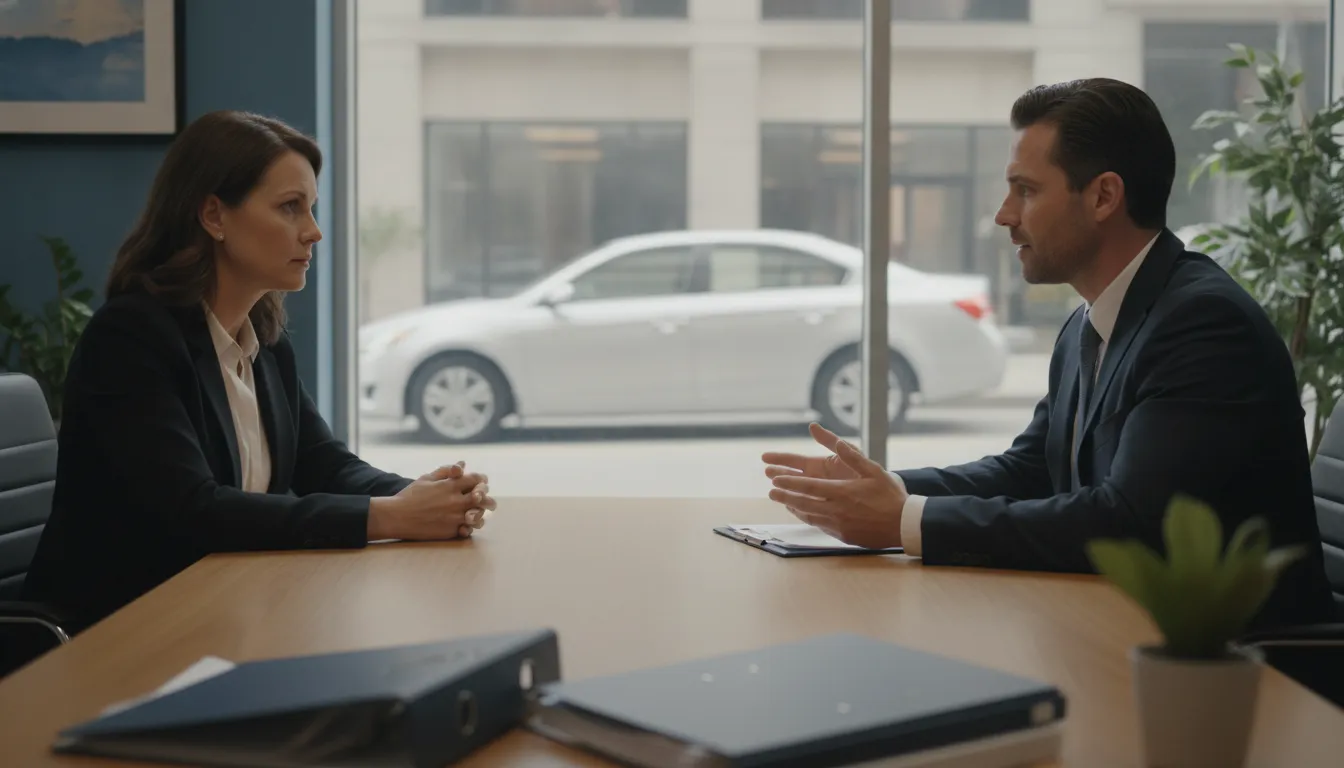
After a Georgia crash, you may wonder whether to hire a lawyer for car property damage. An insurance denial letter may not fully explain your vehicle loss. An insurer may dispute responsibility, undervalue repairs, overlook a related loss, or ignore the reduction in resale value that can remain after repairs. Your next step depends on the claim route, policy, evidence, and insurer response.
Request a free case evaluation with Gastley Law or call (770) 557-2838.
When should you hire a lawyer for car property damage?
You should consider a lawyer when the insurer’s position does not match the damage, the value your vehicle lost, or the facts of your claim. A low offer, denial, prolonged delay, repeated documentation requests, or confusing adjuster messages can all justify getting case-specific guidance. These problems often arise in diminished value claims, where a vehicle may retain a market-value loss even after repairs are completed. Learn more about diminished value claims before deciding what support you need.
An insurance denial letter may address repair costs, liability, coverage, or a separate loss in the vehicle’s market value after repairs. In Georgia, the right response depends on whether you made a first-party claim with your own insurer or a third-party claim against another driver’s insurer. The policy and the denial’s treatment of diminished value also matter.
Before deciding whether litigation is appropriate, separate the types of property loss involved and identify whether the claim is against your own insurer or the other driver’s insurer. That distinction shapes what a claim may cover and which resolution paths are available.
Warning signs that legal help may be useful
Start with a legal evaluation if the insurer offers less than you believe the vehicle’s post-accident loss warrants. Refuses to recognize a claim, or keeps asking for the same records without explaining what remains unresolved. You may also want help when an adjuster gives inconsistent answers about coverage, responsibility, valuation, or the documents required to move forward. A lawyer can review the repair history, vehicle condition, claim communications, and policy issues together rather than treating the insurer’s first position as the final answer.
These considerations can apply whether you were at fault or not at fault. Gastley Law’s documented audience includes Georgia vehicle owners with qualifying damage from an accident within the last six years, including both at-fault and not-at-fault drivers. That does not mean every claim qualifies or that a particular result is available. Vehicle age, condition, repairs, insurance coverage, and the specific facts matter. Newer or luxury vehicles may have greater diminished-value potential, but the assessment remains case-specific.
When handling the claim yourself may be reasonable
Self-handling may be reasonable when the damage and repair records are clear, the insurer communicates promptly. The offer is understandable, and you are comfortable evaluating whether it reflects the vehicle’s remaining loss. Keep photographs, estimates, invoices, valuation materials, correspondence, and every request from the adjuster in one file. Read any release carefully before signing it, because the effect of accepting payment can depend on the claim and the applicable policy or law.
Consider legal help sooner if the process becomes adversarial or stalls, especially when you cannot tell whether the dispute concerns repairs, diminished value, coverage, liability, or documentation. Georgia insurance rules address procedures for first-party private-passenger property-damage claims, but those rules do not automatically resolve every first-party or third-party dispute. A Georgia lawyer can explain how the facts and available claim pathway affect your options. An evaluation is not a promise of recovery. It is a way to understand the strengths, limits, and next steps for your particular property-damage claim.
How does Georgia treat property damage and diminished value claims?
Georgia treats property damage claims differently depending on whose policy is being used. A first-party claim is made through your own insurer, while a third-party claim is pursued through the insurer for the driver who caused the crash. Some qualifying diminished value claims may follow either path, including certain claims involving an at-fault driver’s own policy and claims against another driver’s insurer after a not-at-fault accident. The policy language, accident facts, vehicle condition, and available evidence all matter.
What timing rules apply to a first-party claim?
Georgia’s prompt-settlement regulation applies to first-party property damage claims under personal private-passenger motor-vehicle policies. It requires an insurer to acknowledge a claim within 15 days, unless it pays sooner. Within that same period after receiving notice, the insurer generally must provide applicable proof-of-loss forms and reasonable explanations for using them. These requirements address claim handling, not an automatic deadline for approving every claim.
After receiving a completed proof of loss for a motor-vehicle policy loss, the insurer must affirm or deny liability within 15 days. If the insurer does not require a proof of loss, the regulation calls for a reasonably necessary coverage investigation within 30 days after the claim communication is received. Once coverage is confirmed and the full amount is determined and undisputed, payment must be tendered within 10 days. These time periods can depend on what the policy requires, what information has been submitted, and whether the amount remains disputed. They should not be treated as a universal promise that a claim will be resolved on a particular date. Read the Georgia insurance regulation for the governing language.
How do diminished value and third-party claims fit in?
Diminished value is the market-value loss that can remain after a vehicle has been repaired. A repair invoice alone may not address that separate loss. A first-party claim may involve your own collision or other applicable coverage. A third-party claim may seek property damage, including diminished value, from the responsible driver’s insurer. A federal court order has described Georgia litigation involving third-party property damage claims for diminished value after automobile accidents, showing why the pathway and legal posture matter. It does not establish that every vehicle owner has the same claim or outcome. Review that court document for its specific context.
If an insurer delays, denies the claim, requests the same records repeatedly, or makes an offer you cannot reconcile with the vehicle’s loss. Preserve the communications and claim file before deciding whether to hire a lawyer for car property damage. Gastley Law’s focus is Georgia diminished value and property damage claims, but this article is educational information, not legal advice. A lawyer can evaluate your specific policy, evidence, and claim route before recommending next steps.
What evidence supports a car property damage claim?
A strong property damage claim is easier to evaluate when the records tell a consistent story: what the vehicle was worth before the collision. What happened during the loss, what repairs followed, and how the accident affected its value afterward. No single document guarantees recovery. The useful evidence depends on the vehicle, the repair history, the insurance policy, and whether the claim is first-party or third-party.
Build a record of the vehicle and the loss
Keep the repair order, itemized invoice, parts information, and any supplement or reinspection records. These documents show the work performed and may reveal structural, mechanical, or cosmetic damage that is not obvious from a quick inspection. Before-and-after photographs can add context, especially when they show the location and severity of the impact without altering the original files.
Save the insurer’s letters, emails, text messages, estimates, and adjuster notes. A low offer, denial, delay, or repeated request for the same records may be important when evaluating how the claim has been handled. If the insurer has made an offer, keep the offer and the explanation supporting it rather than relying on memory.
| Evidence | Why it matters |
|---|---|
| Repair records and final invoices | Shows the damage addressed, parts used, and work documented after the collision. |
| Photos and inspection records | Helps connect the vehicle’s condition to the accident and repair process. |
| Repair estimates and supplements | Provides a record of the claimed damage and changes discovered during repairs. |
| Insurer letters and offers | Shows the coverage position, valuation, requests, denials, or disputed amount. |
| Independent appraisal | Can provide a documented opinion about post-accident value loss when appropriate. |
| Vehicle age, condition, and equipment | Helps place the vehicle’s pre-loss market value and potential diminished-value impact in context. |
| Accident and vehicle history | May show the collision history a future buyer or valuation professional could consider. |
Vehicle age and condition matter because newer and luxury vehicles may have greater diminished-value potential after a wreck. A repaired vehicle can still lose market value, even when the repairs are complete. An appraisal may help quantify that issue, but it should be considered alongside the repair file, photographs, and vehicle history, not as a substitute for them.
Gastley Law describes its process as including repair documentation, insurer communications, appraisal coordination, negotiation, and litigation when appropriate. A diminished value claim checklist can help organize the file before seeking an evaluation. Keep the originals, provide complete records, and avoid assuming that any one document establishes the claim by itself.
Lawyer or appraisal provider: which help do you need?
An appraisal and legal representation solve different problems. An appraisal provider may prepare an opinion about how an accident affected your vehicle’s market value. That report can be useful evidence, but it does not itself create an attorney-client relationship or give you someone who can advise you on legal options. If the insurer disputes the claim, delays a decision, or refuses to make a fair offer, the difference matters.
Before you decide whether to hire a lawyer for car property damage, ask what you need beyond a valuation report. The right choice depends on the claim pathway, the insurer’s position, your documentation, and whether the dispute may require formal legal action.
Compare the scope before you choose
For Georgia owners, an appraisal-only option may be reasonable when the claim is straightforward, the insurer is cooperating, and you are prepared to manage the submission yourself. Legal help may make more sense when you received a low offer, a denial, repeated documentation requests, or confusing adjuster communications. Those are not automatic signs that you will recover money, but they are practical reasons to obtain a case-specific evaluation.
Gastley Law describes its role as handling qualifying diminished-value and property-damage claims from documentation and insurer communications through appraisal coordination, negotiation, and litigation when appropriate. Its property-damage services explain that distinction. Ask any provider who will communicate with the insurer, interpret the policy, manage an appraisal-clause dispute, and take the next step if negotiation fails.
What should you do before contacting a lawyer?
A short period of organization can make an initial case evaluation more useful. You do not need to prove the entire claim before speaking with counsel, and you should not delay simply because a document is missing. Gather what you have, preserve the insurer’s communications, and write down what happened while the details are fresh. A Georgia property damage claim may involve repair costs, diminished value, or a dispute about what the insurer must pay, so the relevant records depend on your situation.
Build a clear record of the damage and the dispute
Use the following steps as a practical starting point. They help separate the vehicle’s condition from the insurer’s position and give a lawyer enough context to identify the next issue to investigate.
- Save the core vehicle records. Gather photographs from before and after the accident, repair estimates, invoices, repair orders, inspection records, and any vehicle history information you already have. If the vehicle has an accident history, note how it may affect resale or trade-in value. A diminished value claim checklist can help you identify gaps without guessing which evidence will ultimately decide the claim.
- Collect every insurer communication. Keep the claim number, adjuster’s name, emails, letters, recorded offer, denial, requests for additional documents, and notes from phone calls. Repeated requests, confusing messages, delays, or a low offer can be important context, but do not assume any one problem automatically establishes liability or a particular recovery.
- Write down the claim pathway. Identify whether you presented the claim to your own insurer or the other driver’s insurer. Whether you were at fault or not at fault, and when the damage occurred. Gastley Law focuses on qualifying Georgia vehicles damaged within the last six years, but eligibility remains case-specific.
- Do not rush to accept or reject an offer. Review the offer and ask what it includes. If the dispute involves an appraisal clause, read the policy language before taking action. If you are considering an insurance appraisal demand letter, legal guidance can help clarify whether appraisal addresses the issue you actually have. If an offer appears inadequate, review the options discussed in what happens after you reject a diminished value offer.
- Prepare focused questions. Ask whether the lawyer handles diminished value and property damage claims in Georgia. Can communicate and negotiate with the insurer, addresses appraisal-clause disputes, and can pursue litigation when appropriate. Bring your records to a case evaluation, and use the firm’s contact page if you want to discuss the facts with Gastley Law.
These steps do not replace legal advice. They simply preserve useful information and make it easier to explain the vehicle, the repairs, the insurer’s position, and the outcome you are seeking.
A Georgia checklist for deciding whether to seek legal help
Not every property-damage claim requires an attorney. If the damage is straightforward, the insurer communicates clearly, and the offer appears consistent with the vehicle’s condition and documentation, you may be comfortable handling the claim yourself. A case evaluation can still help you understand what you may be overlooking, especially when diminished value remains after repairs.
Consider seeking an evaluation when these signals appear
- The insurer made a low offer. Compare the offer with your repair records, the vehicle’s pre-accident condition, and the possibility that its accident history affects resale or trade-in value.
- Your claim was denied or delayed. Ask what policy language, evidence, or investigation supports the decision. Repeated requests for the same documents can also justify getting another perspective.
- The adjuster’s explanation is confusing. If you cannot tell whether the issue concerns coverage, fault, valuation, repairs, or a missing document, legal guidance may clarify the next step.
- An appraisal dispute is developing. An appraisal report can address value, but it is not the same as legal representation. A lawyer may be useful if the dispute involves an appraisal clause, negotiation strategy, or possible litigation.
- Your vehicle or claim fits the firm’s stated focus. Gastley Law says it focuses exclusively on diminished-value and property-damage insurance claims for Georgia vehicle owners. Its knowledge base says the firm serves qualifying vehicles damaged within the last six years, including claims involving both at-fault and not-at-fault drivers. Those facts do not establish eligibility by themselves, but they can help you decide whether to ask questions.
When handling the claim yourself may be reasonable
Self-handling may be reasonable when the insurer has acknowledged the claim, explained its position, and is reviewing complete documentation without an apparent valuation dispute. Keep copies of the accident report, repair invoices, photographs, title and ownership records, insurer correspondence, and every offer. Avoid accepting or signing a release until you understand what the payment resolves.
A consultation is an opportunity to review your circumstances, not a promise that a claim will qualify or produce a particular result. Gastley Law publishes information about its experience and Georgia focus, but no firm statistic guarantees what an individual owner will recover. The firm’s founder and lead attorney, David Gastley. Earned a Juris Doctor from Emory University School of Law and has been a Georgia Bar member since 2019, according to the firm’s published information. Vehicle condition, repair history, policy terms, evidence, and Georgia law can all affect the analysis.
If you are unsure whether your situation warrants help, gather your records and request a case evaluation. The goal is to make an informed decision about your claim, whether that means continuing on your own or obtaining representation.
Frequently Asked Questions
What falls under property damage after a Georgia crash?
Property damage can include reasonable repair costs, the vehicle’s value after repairs, loss-of-use expenses when supported, or the valuation of a total loss. Diminished value is the difference between the vehicle’s pre-accident and post-repair market value. The available categories depend on the claim type, the evidence, responsibility for the crash, and applicable policy language.
Can I sue after an insurer denies my claim or makes a low offer?
Potentially, but a denial or low offer does not automatically establish that a lawsuit will succeed. First determine whether you are pursuing a first-party claim under your policy or a third-party claim against the at-fault driver’s coverage. Review the insurer’s explanation, preserve your records, and consider negotiation, an applicable appraisal process, a Georgia insurance complaint, or litigation based on the facts.
How much can I sue for property damage?
There is no universal amount. A potential recovery is tied to the loss you can prove, such as repair expenses, diminished value, loss of use, or a supported total-loss valuation. Repair records, photographs, vehicle information, insurer correspondence, and valuation evidence can help establish the amount. Do not treat an online estimate or an adjuster’s first offer as a guaranteed case value.
How long can a property damage case take?
The timing varies with liability disputes, coverage questions, repair status, valuation evidence, insurer responsiveness, and whether the matter resolves through negotiation, appraisal, a regulatory complaint, or court. Preserve communications and invoices while the claim is open. A Georgia attorney can evaluate the facts and explain the available path without promising a fixed deadline or outcome.
Ready to Discuss Your Georgia Property-Damage Claim?
If a crash left you dealing with repair concerns, diminished value, or an unresolved insurer response, a case review can help clarify which options may fit your situation. Request a free case evaluation with Gastley Law or call (770) 557-2838 to discuss your Georgia vehicle property-damage or diminished-value claim.