
Geico Diminished Value Claim Georgia: What to Do When Denied
When Geico sends you a denial letter or a $0 offer on your Georgia diminished value claim, it feels like a closed door. But a denial letter is not the end of your case. Geico uses tactics like their 17c formula and flat denials to make claimants give up. Under Georgia law, you have the right to demand fair compensation for your car’s lost market value.
Call Gastley Law today at (770) 557-2838 for a free case evaluation. We have recovered $2.4 million for Georgia drivers fighting Geico denials. We can help you fight your Geico diminished value claim Georgia denial.
A Geico diminished value claim Georgia is often met with a flat denial or a low offer based on the insurer’s own 17c math rule. This rule is not the law and often leads to payouts three to five times lower than the real market loss you suffered. You can fight back by sending an outside appraisal and a demand letter that points to O.C.G.A. 33-4-7 to force a fair payment. Gastley Law helps by fronting the cost of these outside reports and taking Geico to small claims court to recover the money the insurer refuses to pay. We have recovered $2.4 million for Georgia drivers, proving that a denial letter is just the start of the fight for your rights.
Why Does Geico Deny So Many Georgia Diminished Value Claims?
A Geico diminished value claim in Georgia is a request for compensation when a car loses resale value after an accident. Geico often denies these claims or offers $0 using their internal 17c formula, which is not Georgia law. You have the right to challenge that denial with independent proof.
Geico often starts the process by telling you that your claim is worth nothing. They might say that because your car was fixed, it has no lost value. This is a common tactic to see if you will give up early. In Georgia, insurance firms must pay for the drop in a car’s resale value after a crash, but they rarely do so without a fight. Here is what you need to know about their common tactics.
Common Denial Tactics Used by Geico.
When you file a Geico diminished value claim in Georgia, the firm often offers far less than your car lost in value. They use the 17c formula, a math tool designed to keep payouts small. This formula is not part of Georgia law, yet they apply it to minimize what they pay. You might also deal with stall tactics where agents stop returning calls or ask for the same papers multiple times. Some drivers get moved from agent to agent, restarting the loop. These delays wear you down until you take a low payout or stop asking.
Georgia Law Protects Your Right to Fair Value.
You do not have to accept a $0 offer from Geico. Georgia law says a wrecked car is worth less than one never in a crash. You can find more facts on what diminished value is under Georgia law and how to protect your rights. This legal right applies whether you file against your own plan or the other driver’s insurance.
Under Georgia code section 33-4-7, firms must act in good faith when they handle your claim. If they refuse to pay a fair amount within 60 days of a proper demand, they could face extra fees. The state insurance office checks these rules. You have six years from the date of the crash to take legal action for your lost car value.
Mistakes That Lead to Denials.
Many people make simple mistakes that give Geico a reason to deny their claim. One big error is taking the very first offer they send you. Once you sign a release form, you lose the right to ask for more money later. You should also avoid using only the repair shops that Geico picked, as they may not note the full loss to your car’s value. The biggest mistake is fighting Geico without a private appraisal. Geico relies on their own data that favors the firm. Getting your own report shows them you know your car’s real resale value.
Does the 17c Formula Really Determine What Geico Must Pay in Georgia?
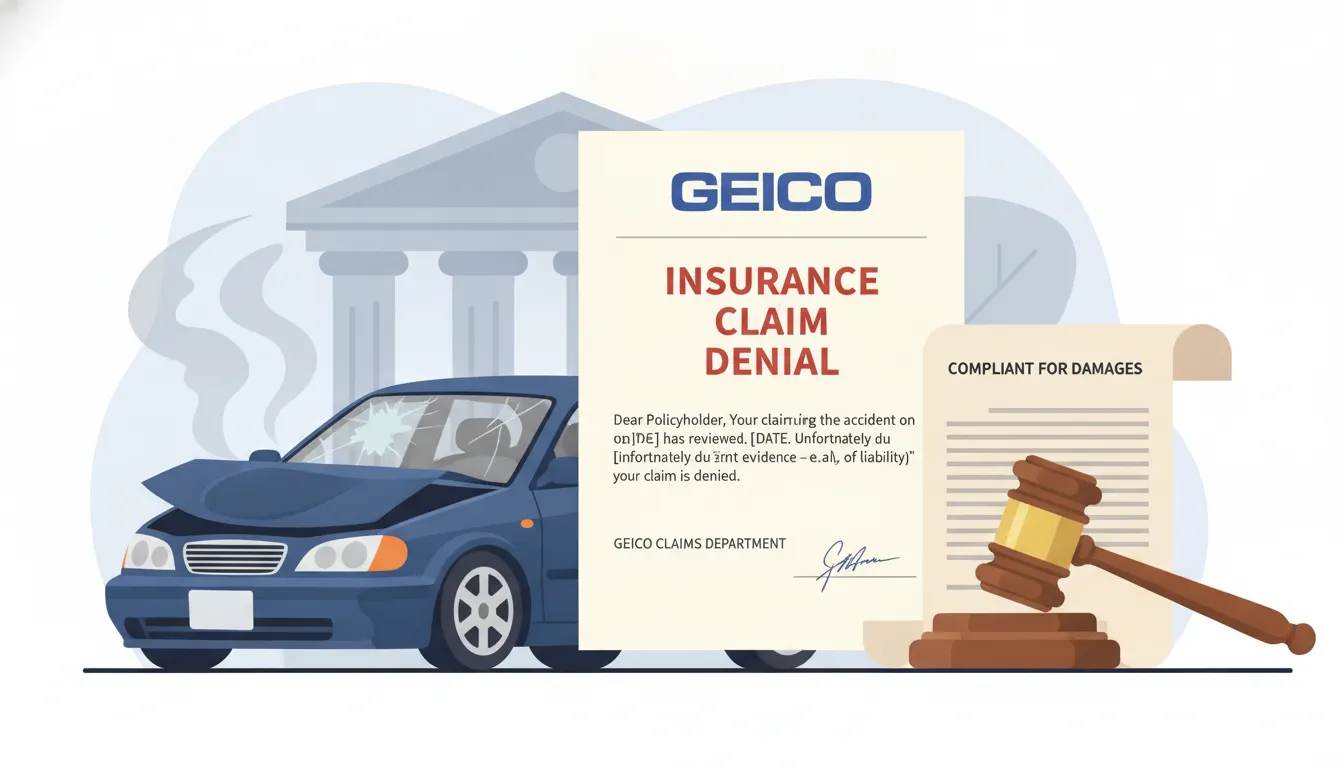
The 17c formula is a calculation method Geico created to minimize diminished value payouts. It caps your claim at 10% of the car’s value and applies deductions for damage and mileage. This formula is not Georgia law, and you are not required to accept its results under any statute or court rule.
Geico often uses this tool to lower your payout. This math starts with a 10% cap on your car’s value. Then, it uses a damage scale to drop that number even more, often cutting the check in half again. If you file a Geico diminished value claim in Georgia, you will likely see this formula in action. It is the main reason why your check is so small.
How the 17c math works.
The 17c formula uses three parts. First, it takes 10% of the car’s book value as the max. Next, it applies a damage scale from 0 to 1. Last, mileage adjusts the number down further. For a car worth $25,000, the 10% cap is $2,500. With average damage and mileage, the offer drops to a few hundred dollars. This is far less than the real trade-in loss.
The truth about 17c and Georgia law.
Many people think the 17c formula is Georgia law, and Geico adjusters may encourage that belief. This is not true. The Georgia Supreme Court ruled in Mabry v. State Farm that insurers must pay for lost value. The court did not say they must use 17c.
The Georgia Office of Commissioner of Insurance oversees how these firms behave. While firms can use tools to start a talk, they cannot force a bad formula on you. The 17c system was built by an insurer, not a judge or a law maker. Its only goal is to save the company money. Knowing what diminished value is under Georgia law helps you see through this trick.
Why a private report beats a formula.
A formula cannot see the real car market. A private report from a professional appraiser uses real sales data showing what buyers pay for cars with and without accident records. In most cases, a private report gets you 3 to 5 times more than a 17c offer. See the comparison below.
| Comparison Point | Geico 17c Formula | Private Appraisal Report |
|---|---|---|
| Starting Value | $25,000 | $25,000 |
| How Loss is Found | Fixed 10% Formula | Local Market Sales Data |
| Maximum Payout | Hard 10% Cap ($2,500) | No Fixed Cap |
| Damage & Mileage | Points to Lower Value | Real-World Market Impact |
| Final Check | $750 – $1,500 | $3,500 – $5,500 |
What Should You Include in an Appeal Packet When Geico Denies Your Claim?
A strong appeal packet includes your repair invoice, accident photos, an independent appraisal report, local market data from similar vehicles, and a formal demand letter citing O.C.G.A. 33-4-7. This documentation forces Geico to take your claim seriously and often leads to a much higher offer.
When you fight a Geico diminished value claim Georgia denial, your proof must be strong. A basic ask for more money will not work. You need a formal appeal packet that shows how much value your car lost. This packet gives the adjuster a reason to pay now. It also builds your case if you need to sue later.
Gather your repair and value data.
Start by collecting the facts of the repair. You need the full bill from a good shop that shows the damage. Pair this with clear photos of the car both during and after the work. These photos prove the car has a history of major work that stays on its record. Even a car that looks new will sell for less if it was in a big crash.
You also need to show what similar cars sell for now. Find three to five local ads for your exact car that have no crash history. This shows what your car was worth before the wreck. You can then compare these to the lower prices for cars with a damage history. This data helps prove what diminished value is under Georgia law in a way that Geico cannot ignore.
Get a professional appraisal.
The most vital part of your packet is a report from an expert. Geico uses a math tool to keep payouts low, but Georgia law does not force you to accept that low number. A pro will look at your car and write a report based on real market trends. At Gastley Law, we front the cost for this independent appraisal. This report gives you a firm number to demand from the firm. It also shows Geico that you have expert help for your claim.
Send a formal demand letter.
The last step is to put all your proof into a formal demand letter. This letter should list the exact amount of money you need. You must mention the shop work, the report findings, and the market data. To get Geico to move fast, your letter should cite O.C.G.A. 33-4-7. This Georgia law allows for extra fees if a firm fails to pay a fair claim within 60 days.
- Collect your shop bill. Get a final copy that lists all parts and labor done to the car.
- Take high-quality photos. Show the scale of the damage and the quality of the new work.
- Hire an expert. Use a pro who knows the Georgia market and whose reports carry weight.
- Find local car ads. Use ads for clean cars of the same model to set your base value.
- Draft the demand letter. State your claim amount and cite the law to show you know your rights.
When to Invoke the Appraisal Clause Against GEICO.
The appraisal clause in your insurance policy lets you hire an independent appraiser when you disagree with Geico’s valuation. If the two appraisers cannot agree, an umpire makes the final decision. This process forces Geico to consider real market data instead of their formula, often doubling or tripling your settlement without a lawsuit.
Many drivers do not know that their insurance plan likely has a hidden tool. This is the appraisal clause. It is a part of your deal that lets you fight back. You can use this clause to settle a fight about how much your car is worth. This move can force the firm to pay a fair amount without you having to go to court.
How the Appraisal Clause Works.
The process starts when you hire your own appraiser who knows the Georgia car market. GEICO then picks their own expert. The two review the damage and similar car sales to agree on a fair price for your loss. Knowing the GEICO diminished value claim process helps you stay ahead of their next move.
If the two experts cannot agree, they must pick a third person called an umpire. The umpire looks at the data from both sides and makes a final choice on the value of the claim. If any two of these three people agree on a number, that number is set. This path is often faster than a lawsuit.
Countering GEICO’s Blacklisted Appraisers.
GEICO often tries to tilt the scales in their favor. They keep a secret list of experts they do not like. If you hire someone on that list, the firm might just ignore your report. They may claim the expert is not fair or does not use the right data. Gastley Law knows which pros GEICO respects and which ones they dismiss. We help you pick a pro who can stand up to their tough tactics. By picking the right expert, you can avoid the traps the firm sets for people who try to fight alone.
Need help building an appeal packet that Geico cannot ignore? Call (770) 557-2838 now for a free case evaluation. Our attorneys know exactly how to counter Geico’s tactics and get you the compensation you deserve.
Can You Take GEICO to Small Claims Court in Georgia?
Yes, you can take GEICO to small claims court in Georgia when they refuse to pay fair diminished value. Georgia law gives you six years from the accident date to file, and you do not need a lawyer to start the process. Small claims court forces GEICO to defend their low offer or face a judgment for the full amount you deserve.
Many drivers feel stuck after a zero-dollar offer. But Georgia law is on your side. Georgia gives you six years to file, giving you time to take legal action if the insurer will not play fair.
Why Small Claims Court Works.
Small claims court is a fast way to solve a value dispute. It is also called Magistrate Court in Georgia. GEICO often hopes you will give up after they deny your claim. But when you start a case, it changes things. GEICO must then spend time and money to fight your claim in court. This move often forces them to make a much better offer before the trial starts. Most cases end in a settlement long before anyone has to walk into a courtroom.
The Gastley Law Legal Model.
Gastley Law has a clear plan for taking GEICO to court. We have won hundreds of trials and settled many claims for our clients. You do not need a lawyer in small claims court, but having one helps you win. We know how to show the court that the GEICO math is wrong. Our team uses real market data to prove how much value your car lost.
Under Georgia law, you may get your legal fees paid if the insurer acts in bad faith. If GEICO denied your claim, you should learn how to file a GEICO diminished value claim the right way. Gastley Law covers all costs for the experts, which can be up to fifteen hundred dollars. You pay us nothing unless we get money for you. There is no risk to you when you choose to fight for the money you deserve.

What Mistakes Can Hurt Your Geico Diminished Value Claim in Georgia?
Small mistakes early in the process can cost you thousands of dollars on your Geico diminished value claim. The three most costly errors are accepting the first offer, signing a release too early, and fighting without an independent appraisal. Avoid these traps to protect your right to full compensation.
Accepting the First Offer Without Question.
When Geico sends a $0 offer or a low check, many people accept it because they feel relieved the process is over. Once you cash that check or sign a release form, you give up your right to ask for more money later. Georgia law supports your right to fair value for your car’s lost market worth. The first offer is almost never the best offer.
Signing a Release Form Too Early.
A release form is a legal document that ends your claim forever. Geico may ask you to sign one before they send a payment. If you sign it, you cannot reopen the claim later, even if you discover your car lost far more value than they paid. Never sign a release until you have a complete picture of your car’s value before and after the accident.
Fighting Without an Independent Appraisal.
The biggest mistake Georgia drivers make is trying to fight Geico without real proof. The insurer uses its own data and formulas to keep your payout low. Without an independent appraisal from a certified expert, you have no objective evidence to counter their numbers. An independent report shows your car’s true lost market value based on real sales data. See how professional proof fits into first-party diminished value claims and why this evidence is your strongest tool.
Waiting Too Long to Act.
Georgia gives you six years to file a diminished value claim, but waiting hurts your case. The longer you delay, the harder it is to prove the accident caused the value loss. Photos fade, repair records get lost, and Geico may argue that normal wear and tear caused the drop. Start the process as soon as your car is repaired and you have the final repair invoice in hand.
How Gastley Law Fights Geico Denials (And Wins)
Gastley Law uses a proven three-step model to fight Geico diminished value denials. We fund the independent appraisal, send a formal demand citing Georgia law, and file in small claims court if Geico refuses to pay. This approach has recovered over $2.4 million for Georgia drivers who were told their claim was worth nothing.
Fighting a major insurer alone can feel like a lost cause. Geico has teams whose job is to pay you as little as possible. But you do not have to go it alone. Gastley Law has built a model that turns the tables on big insurers. We make the process easy for you while we handle the legal fight.
How Our Model Works.
Our model starts with no money from you. We pay for the expert appraisal report upfront. For most drivers, this cost alone stops them from fighting back. By covering it ourselves, we remove the biggest barrier to a fair claim. After the report is ready, we send a formal demand letter to the adjuster citing Georgia law. If they still refuse to pay, we take them to trial. We have done this hundreds of times, and we know what it takes to win.
What Sets Us Apart.
Most law firms do not take on diminished value cases because the amounts are small. But we have a specialized practice built for exactly these claims. We use expert reports that stand up to the tough reviews GEICO uses. We pick appraisers who have a strong track record in Georgia courts. We also front all costs so you have zero risk. Because we take these cases to trial, GEICO knows we mean business. Our attorneys have a track record of winning verdicts when insurers refuse to pay. You can read more about our Geico diminished value claim process and how we build each case.
Real Results for Georgia Drivers.
Our results speak for themselves. We have recovered over $2.4 million for Georgia drivers who were told their claim was worth nothing. We have taken hundreds of cases to trial and won most of them. Each case uses Georgia law to make sure our clients get fair compensation for their car’s lost value. Learn more about what diminished value is under Georgia law and how our team can help you recover what you are owed.
Frequently Asked Questions.
How long do I have to file a diminished value claim in Georgia?
You have six years to file a diminished value claim in Georgia starting from the accident date. This period covers claims against your insurer and the at-fault driver. Even years after the repair, you can recover the loss in your car’s resale value if you act within this window.
How much does it cost to hire a diminished value lawyer?
Most people worry about the cost of a lawyer. Gastley Law works on a contingency fee model. You do not pay any money upfront. We front all the costs for your case, including the expert appraisal. We only take a fee if we win money for you. This makes it risk free to fight GEICO for your claim.
What happens if GEICO ignores my demand letter for sixty days?
If GEICO does not pay or respond within sixty days of a formal demand, they may face extra costs. According to Georgia law, insurers who act in bad faith can be forced to pay a fine and your legal fees. This law helps make sure insurance companies take your claim seriously.
Can I use the appraisal clause if GEICO offers zero dollars?
Yes, you can use the appraisal clause even if GEICO issues a zero dollar offer. This clause is a part of most insurance policies in Georgia. It lets you hire an expert to check the value of your car. If their value is higher than the GEICO offer, a neutral third party can decide the final amount GEICO must pay you.
Fight your Geico diminished value claim denial.
Call Gastley Law today at (770) 557-2838 for a free case evaluation. You pay nothing unless we recover money for you. Let our experienced attorneys fight Geico and get you the full compensation your car’s lost value deserves.
Starting your claim today ensures you do not miss out on the money you are owed. Proof gets old and memories fade, so acting fast gives you an edge when you deal with tough agents. You do not have to face Geico alone or settle for a check that does not cover your real losses.
Ready to get a free case review for your Georgia diminished value claim? Call (770) 557-2838 to talk to a property damage expert about your case.