
Towing and Storage Fees: What You Need to Know
It’s a shocking but true reality: the bill for towing and storage fees can sometimes cost more than the actual repairs to your vehicle. These daily charges add up with alarming speed, turning a manageable situation into a financial crisis while you wait for insurance adjusters to do their job. A car sitting in a tow yard for just a couple of weeks can rack up a bill well over a thousand dollars. This guide is designed to help you stop that clock. We will show you how to prevent these costs from escalating and what to do if you’re already facing a massive bill.
Key Takeaways
- Act quickly to minimize costs: Storage fees are charged daily and start the moment your car arrives at a tow yard. To keep the bill from growing, immediately tell the at-fault driver’s insurance company where your car is and arrange to move it as soon as possible.
- Know your rights to prevent overcharging: Georgia law requires towing companies to be transparent. You have the right to see a written fee schedule, receive an itemized bill, and pay with a major credit card, which helps you identify and question suspicious fees.
- Challenge unfair charges with solid proof: If a bill seems too high, document every conversation, take photos of posted rates, and keep all receipts. You can pay “under protest” to get your car back and stop the fees, then file a formal complaint to recover your money.
What Are Towing and Storage Fees?
After a car accident, your mind is racing with concerns about your safety, the other driver, and the damage to your vehicle. But soon after, a new set of worries can creep in, starting with what to do with your damaged car. If it’s not drivable, it will need to be towed from the scene. This is where towing and storage fees come into play, and they can quickly become a significant financial burden. These charges are completely separate from your car’s repair costs, and they can add up to hundreds or even thousands of dollars if you aren’t careful.
Towing fees are the charges for transporting your vehicle from the accident scene to a repair shop or a storage lot. Storage fees are the daily charges the tow yard or storage facility bills you for keeping your vehicle on their property. Insurance companies are often responsible for covering these costs, but they may try to argue that the fees are unreasonable or that you waited too long to move your car. Understanding how these fees work is the first step in protecting yourself from paying more than you should. It helps you know what to expect and gives you the confidence to question a bill that seems too high. Let’s break down exactly how these costs are calculated and what factors can make them skyrocket.
How Towing Fees Are Calculated
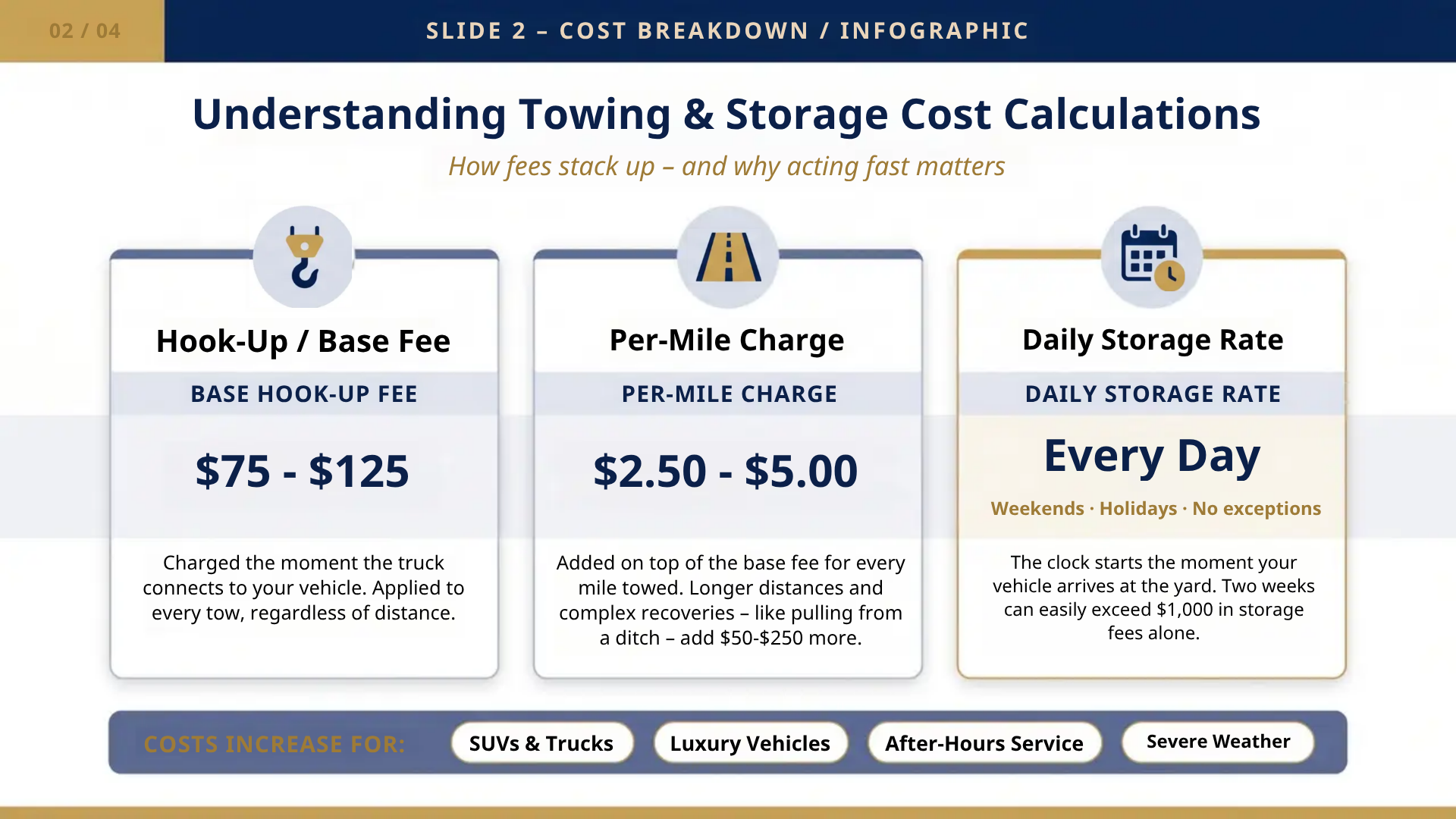
Towing fees aren’t a simple flat rate; they depend on several different factors. The final price on your bill is a combination of a base fee and other variables related to your specific situation. Most towing companies charge a hook-up or base fee that typically covers the first five to ten miles of the tow. After that, they add a per-mile charge. According to industry experts, these towing costs can vary, but you can generally expect a base fee between $75 and $125, with an additional $2.50 to $5.00 for each extra mile. A short, local tow might cost you around $150, while a long-distance one could be $450 or more.
Why Daily Storage Fees Add Up So Fast
If your car is taken to a storage yard after an accident, the clock starts ticking on daily fees immediately. These charges can be a real shock if you’re not prepared for them. Tow yards charge a daily rate to keep your vehicle on their lot, and this fee is charged every single day, including weekends and holidays. As one legal resource points out, these storage fees can quickly become incredibly expensive, sometimes running into thousands of dollars if a vehicle is left for an extended period. This is why it’s so important to act fast. The longer your car sits, the higher the bill gets, creating a stressful financial situation on top of everything else.
Key Factors That Affect Your Final Bill
Beyond the basic distance of the tow, several other details can increase your final bill. The type of vehicle you drive plays a big role. A standard sedan is the cheapest to tow, but if you have an SUV, a truck, or a luxury vehicle, the cost will be higher because it may require a larger tow truck or special equipment. The time of the tow also matters. Expect to pay more for services at night, on weekends, or during holidays. Bad weather can also lead to higher rates. Furthermore, if your car is in a hard-to-reach spot, like a ditch or a narrow alley, you’ll likely face an additional charge for the complex recovery, which can add another $50 to $250 to your bill.
Common Reasons for Towing and Storage Charges
Towing and storage fees can pop up when you least expect them, turning a stressful situation into a costly one. While many people associate these charges with car accidents, they can happen for several other reasons. Understanding why your car might be towed and how these fees accumulate is the first step toward managing them effectively and protecting your wallet.
After a Car Accident
This is one of the most common scenarios. If your car isn’t drivable after a collision, it will be towed from the scene to a storage yard. From the moment it arrives, the clock starts ticking on daily storage fees. These charges can add up incredibly fast, sometimes reaching hundreds or even thousands of dollars while you’re waiting for the insurance company to inspect the vehicle. The longer your car sits, the higher the bill gets. This is why it’s so important to act quickly when handling your property damage claim. Delays from the insurance adjuster can leave you responsible for a massive storage bill, making a bad situation even worse. Towing fees are only one part of a larger property damage claim, and an experienced Atlanta diminished value attorney can help identify additional losses you may be entitled to recover.
Impoundment for Parking Violations
We’ve all had that moment of panic wondering if we parked in the right spot. Unfortunately, a simple mistake like parking in a restricted zone, blocking a driveway, or having too many unpaid tickets can lead to your car being towed and impounded. When this happens, you’ll face an initial towing fee plus daily storage charges. These fees are set by local regulations and can vary, but they are non-negotiable if you want to get your car back. You’ll need to pay the full amount owed to the impound lot before they will release your vehicle, so addressing the situation immediately is key to keeping costs down.
Tows from Private Property
Parking on private property, like an apartment complex, shopping center, or a private business lot, comes with its own set of rules. If you violate their parking policies, the property owner has the right to have your vehicle towed at your expense. The towing company will take your car to their lot and will not release it until you pay for the tow and any accrued storage fees. These companies are legally allowed to hold your vehicle as collateral for the payment. If you believe your car was towed unfairly or the fees are excessive, it can be a difficult battle to fight on your own, and it might be time to contact an attorney to understand your rights.
When Your Car Breaks Down
Even a mechanical failure can lead to towing and storage fees. If your car breaks down on the side of a busy highway or in a location where it can’t be left, you’ll need to call a tow truck. The cost of this service depends on several factors, including the distance to the repair shop, the type of vehicle you have, and the time of day. If your car needs to be stored temporarily before it can be repaired, you could also face storage fees from the tow yard or the auto shop. While these costs aren’t typically part of an insurance claim unless you have specific roadside assistance coverage, they are an unexpected expense every driver should be prepared for.
Know Your Rights with Towing and Storage Fees
After the stress of a car accident, the last thing you need is another headache from towing and storage fees. These charges can quickly spiral, sometimes costing more than the initial repairs. It’s a frustrating situation, but you aren’t powerless. Georgia has laws in place to protect consumers from predatory towing practices, and understanding your rights is the first step to making sure you aren’t overcharged.
Towing companies are required to operate with a degree of transparency and fairness. This means they can’t invent charges on the spot or hide their fee structures from you. From the moment your car is hooked up to the day you retrieve it, there are rules they need to follow regarding notification, payment methods, and the reasonableness of their rates. While the specifics can vary slightly depending on your city or county, the core principles remain the same. Knowing what to expect and what you’re entitled to can save you hundreds, or even thousands, of dollars and give you the confidence to challenge a bill that just doesn’t seem right.
Your Right to Notification and Payment Rules
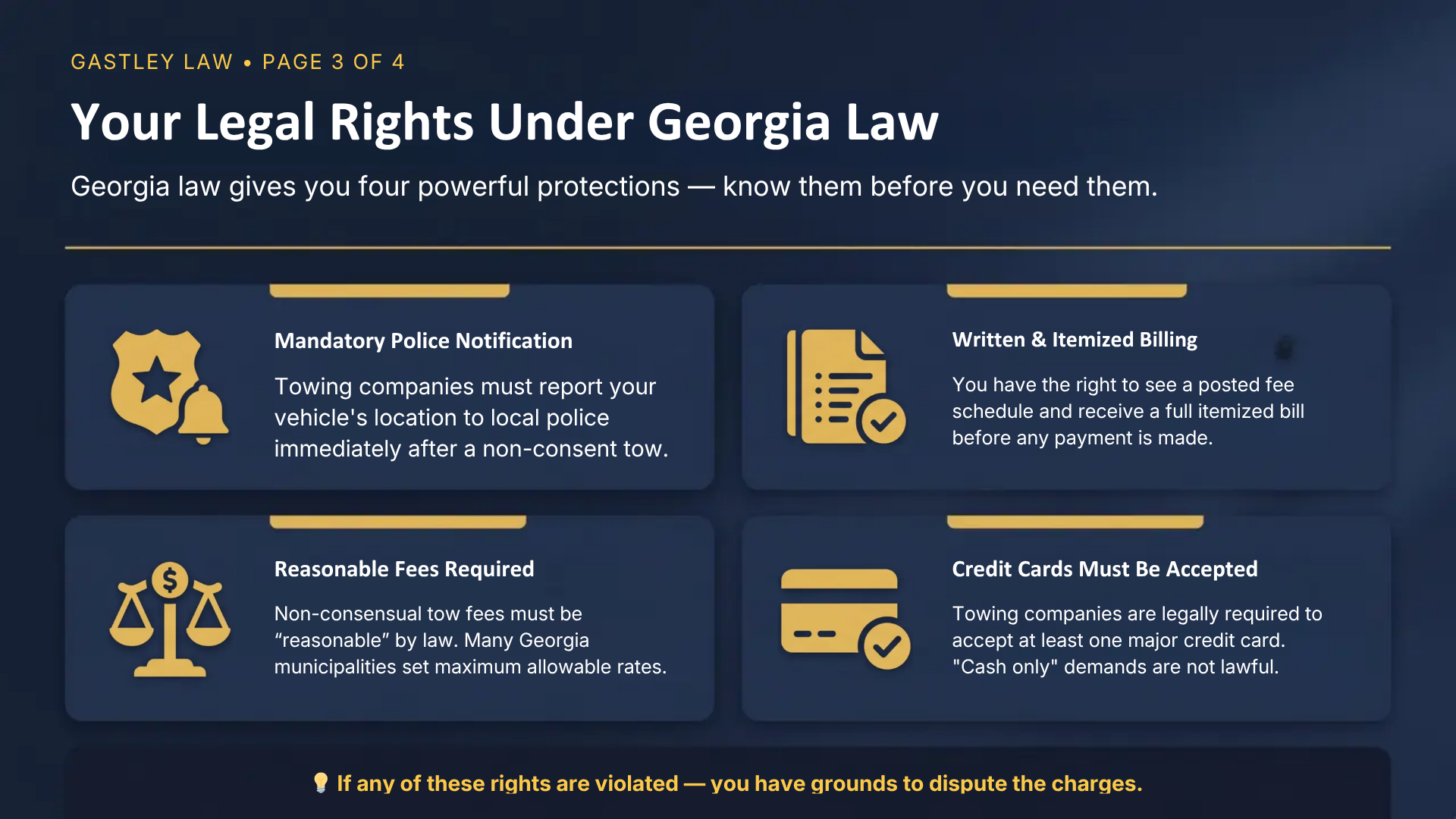
You have the right to know where your vehicle is and who has it. If your car is towed without your consent, the towing company is generally required to notify the local police department with information about the tow, including where your vehicle is being stored. When it comes to paying the bill, you also have rights. A legitimate towing company must provide you with options. They cannot demand payment only in cash. Under Georgia law, towing companies must file their rates and accepted forms of payment, which typically include major credit cards. Always ask for an itemized invoice before you pay so you can see exactly what you are being charged for.
Your Right to Fair and Reasonable Fees
Towing companies can’t just pull a number out of thin air. In Georgia, fees for non-consensual tows must be reasonable. Many cities and counties establish maximum rates for towing and storage to prevent price gouging after an accident or impoundment. If you believe a charge is excessive, check the website for the local municipality where your car was towed to see if a fee schedule is published. If you can’t find one, or if the fees still seem inflated, you can report the company. The Georgia Consumer Protection Division is a key resource for understanding your rights and filing a complaint against predatory practices.
Your Right to See a Written Fee Schedule
Transparency is not optional. You have the right to see a clear, written schedule of all fees a towing company charges. This isn’t a secret document; it should be made available to you upon request at the storage facility. Before you pay to retrieve your vehicle, ask to see their posted rates. This list should detail everything from the initial hook-up fee and per-mile towing charge to the daily storage rate and any after-hours release fees. If an employee is quoting you a price, it should match the official, posted schedule. This simple step helps you verify each charge and question anything that doesn’t add up.
How to Dispute Unfair Charges
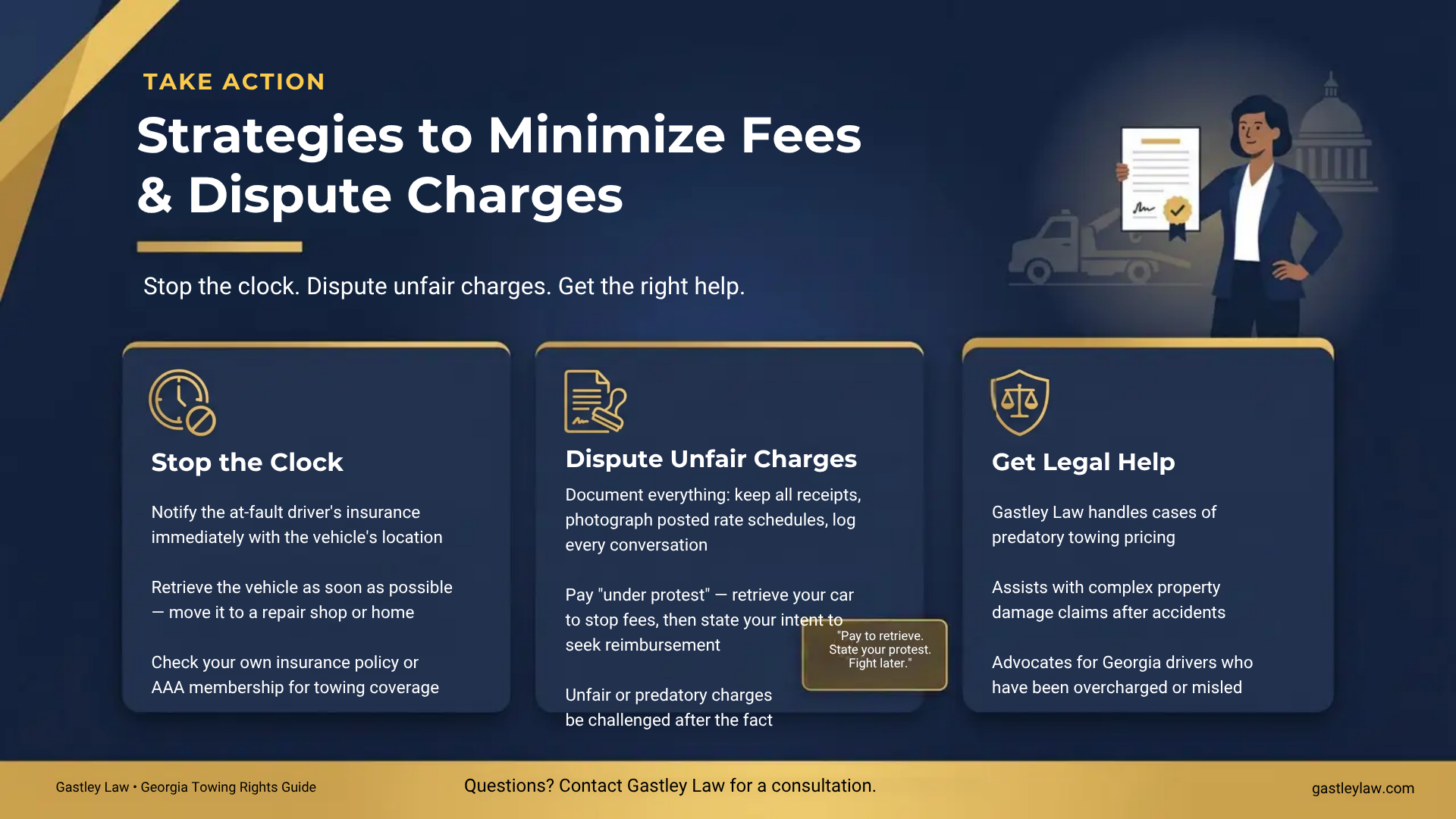
If you’ve reviewed the fee schedule and your bill still seems unfairly high, you can and should dispute it. The immediate challenge is that storage fees accumulate daily, so you’ll likely need to pay the bill to get your car back. When you pay, state clearly that you are doing so “under protest” and get a receipt. From there, gather all your documentation: the itemized bill, photos of the fee schedule, and any communication you had with the company. You can file a formal complaint with Georgia’s consumer protection agency. If the charges are significant or the company is unresponsive, it may be time to get legal help. An experienced attorney can help you fight back and recover what you’re owed. Contact us to see how we can help.
How to Lower or Eliminate Towing Fees
Dealing with a car accident is overwhelming enough without the added stress of surprise towing and storage fees. These costs can pile up quickly, turning a bad situation into a financial nightmare. The good news is you have more control than you might think. By taking a few strategic steps right after an incident, you can significantly reduce or even completely avoid these expensive charges. It’s all about acting quickly, knowing your options, and understanding who is responsible for what. Let’s walk through the practical steps you can take to protect your wallet and get your car back without breaking the bank.
Take Swift Action After an Accident
The first few hours after an accident are critical. If your car has been towed, one of the most important things you can do is immediately notify the at-fault driver’s insurance company of your vehicle’s location. If you don’t tell them where it is, they may argue they aren’t responsible for the mounting storage fees. By giving them the information right away, you put the ball in their court. It becomes their responsibility to either move the vehicle or approve the costs, preventing them from shifting the financial burden onto you. A quick phone call can save you hundreds, if not thousands, of dollars.
Pick Up Your Vehicle ASAP
This might seem obvious, but it’s the single best way to stop the financial bleeding. Tow yards charge a daily storage fee, and it doesn’t take long for that bill to grow. Even if you’re waiting for an insurance adjuster to inspect the damage, you should try to get your car out of the tow yard as soon as you can. You can have it moved to a collision repair shop or even your own home. The longer it sits, the more you’ll owe. Don’t wait for the insurance company to handle it; be proactive and arrange to retrieve your vehicle to keep costs from spiraling out of control.
Review Your Insurance Coverage
Before you pay out of pocket, take a moment to review your own coverage. You might already have benefits that can help with towing costs. Many auto insurance policies include some form of towing or roadside assistance. Don’t stop there, though. Memberships like AAA often cover towing expenses. Even some credit cards offer roadside assistance as a cardholder perk. It’s worth making a few calls to check all your potential resources. Understanding what your insurance coverage includes can save you from paying for something you were already entitled to.
Simple Ways to Avoid a Tow
The easiest way to avoid towing fees is to avoid getting towed in the first place. If your car is still drivable after an accident, move it to a safe location off the main road. If it can’t be driven, see if you can push it into a nearby parking lot or side street where it can stay temporarily without being a hazard. If a tow is absolutely necessary, having the number of a trusted local towing company on hand is always a good idea. Relying on the first tow truck that arrives on the scene might not be your most cost-effective option. Taking control of the situation can make all the difference in managing your property damage claim.
What to Do When Fees Seem Too High
It’s incredibly frustrating to see a bill for towing and storage that’s way higher than you expected. Those daily storage fees can pile up fast, turning a minor inconvenience into a major financial headache. When you’re staring at a huge bill, it’s easy to feel powerless, especially when the tow yard holds your car hostage until you pay. But you have more control than you think. Taking a few strategic steps can help you challenge excessive charges and get your vehicle back without overpaying. Many people simply pay what they’re told because they don’t know they can question the bill.
The key is to act quickly and arm yourself with the right information. Don’t just accept the first number they give you. By understanding the rules, documenting everything, and knowing who to call for help, you can effectively push back against unfair practices. Whether it’s a simple misunderstanding or a case of predatory pricing, there’s a clear path forward. From keeping meticulous records to knowing when to bring in a professional, you can take control of the situation. Here’s what you can do when the fees seem too high.
Document Everything
Your best defense against unfair fees is a solid paper trail. From the moment your car is towed, start keeping detailed records of everything. Get a copy of the initial towing receipt and any other paperwork you’re given. If you speak with someone from the towing company, write down their name, the date, and a summary of your conversation. Take clear photos of any posted signs at the tow yard that list their rates. Since storage fees are added daily, keeping a log of your attempts to retrieve your vehicle is also important. This documentation will be your proof if you need to dispute the charges later on.
Know Georgia’s Towing Laws
You can’t argue against an unfair charge if you don’t know the rules. In Georgia, towing companies are regulated, and there are laws in place to protect consumers. For example, the law sets requirements for what information must be on the invoice and how companies must notify you. The Georgia Department of Public Safety oversees these regulations. Taking some time to understand your rights gives you the confidence to question fees that don’t seem right. If a towing company isn’t following the law, you have a much stronger case for getting the charges reduced or dismissed.
How to Negotiate with the Towing Company
Once you have your documentation and understand the local laws, you can try to negotiate directly with the towing company. Call them or visit the office in person, and stay as calm and professional as possible. Lay out your documents and clearly explain why you believe a charge is incorrect, referencing the specific laws if you can. Ask for an itemized bill that breaks down every single fee. Sometimes, companies are willing to negotiate if they see you’ve done your homework. Remember, you have the right to pay with cash or a major credit card, so don’t let them tell you otherwise.
File a Complaint with Consumer Protection
If the towing company refuses to negotiate and you’re still convinced the fees are predatory, your next step is to file a formal complaint. The Georgia Attorney General’s Consumer Protection Division is the state agency that handles these issues. You can submit a complaint online, providing all the documentation you’ve gathered. The agency can investigate the company for deceptive or unfair practices. While this process can take time, it puts official pressure on the towing company and can lead to a resolution. It also helps protect other consumers from facing the same problem in the future.
When to Call a Property Damage Attorney
Sometimes, the situation is too complex or the amount of money is too high to handle on your own. If you’ve tried everything and are still hitting a wall, it might be time to call a professional. A property damage attorney can review your case, deal with the towing company and insurers on your behalf, and fight to protect your rights. They understand the legal system and know how to challenge unjust fees effectively. If you feel overwhelmed or believe you’re being taken advantage of, getting legal help can make all the difference. Please contact us for a case evaluation.
Myths About Towing and Storage Fees, Busted
After an accident, misinformation can spread quickly, especially when it comes to unexpected costs like towing and storage. Believing these myths can lead to costly mistakes and a lot of unnecessary stress. Let’s clear up a few common misconceptions so you can handle the situation with confidence and keep your money where it belongs: in your pocket.
Myth: “Insurance Covers Everything Automatically”
It’s easy to assume your insurance company will handle every single charge after a crash, but that’s not always the case. While it’s uncommon for insurance to completely refuse to pay for towing, your policy has limits. Coverage for towing and storage might be capped at a certain amount or only apply under specific conditions. You need to read your policy’s fine print to understand what’s covered. If you find yourself in a situation where your insurer is pushing back on these fees, it’s a good idea to get a professional opinion on your property damage claim.
Myth: “There’s a Grace Period for Storage Fees”
This is a particularly dangerous myth. Many people think they have a few days to figure things out before storage fees kick in, but that’s incorrect. The clock starts ticking the moment your car arrives at the tow yard. In fact, storage fees start adding up every single day your vehicle sits there. These daily charges can quickly snowball from a minor inconvenience into a massive bill, sometimes reaching thousands of dollars. The longer you wait to retrieve your car, the more you’ll owe, which is why acting fast is so important.
Myth: “All Towing Rates Are the Same”
If only it were that simple. Towing fees are not standardized and can vary widely from one company to another. Several factors change towing costs, including the distance your car is towed, the type of vehicle you have (a large truck costs more than a sedan), and even the time of day. An after-hours or weekend tow will almost always be more expensive. Don’t assume the first quote you get is the only price available. It’s always wise to ask for a detailed breakdown of charges upfront so you aren’t surprised by the final bill.
Myth: “Disputing a Tow is Risk-Free”
While you absolutely have the right to dispute a charge you believe is unfair, it’s not a risk-free process. The tow company will not release your vehicle until the bill is paid in full. While you are fighting the charge, storage fees continue to accumulate daily. This puts you in a tough spot, as the amount you owe will keep growing. Georgia’s laws, like the Predatory Towing Prevention Act, give towing companies the right to charge fees for their services. If you’re facing an unreasonable bill, it’s often best to pay it to stop the fees and then seek reimbursement from the at-fault party or your insurer.
Related Articles
- Car Accident Settlement Negotiations in Georgia
- How to Get the Most Money for Your Totaled Car
- What’s a Fair Settlement for Car Damage?
- How to Dispute an Auto Damage Claim
- What to Do If You Disagree with a Total Loss Adjuster
Frequently Asked Questions
What is the very first thing I should do if my car is towed after an accident?
Your first move should be to find out where your car was taken and immediately notify the at-fault driver’s insurance company of its location. This simple step is crucial because it puts the responsibility on them to inspect the vehicle promptly. If you delay, the insurer might argue they aren’t liable for the storage fees that piled up while they were unaware of the car’s whereabouts.
Who is ultimately responsible for paying the towing and storage bill?
Generally, the at-fault driver’s insurance company is responsible for covering reasonable towing and storage costs as part of the property damage claim. However, you are the one who has a contract with the tow yard, so they will look to you for payment. It’s often best to pay the bill to get your car released and stop the daily fees, then seek full reimbursement from the insurance company.
Can I just leave my car at the tow yard and let the insurance company deal with it?
This is a common and very costly mistake. Storage fees begin the moment your car arrives and are charged every single day, including weekends. Leaving your car there while you wait for the insurance company can cause the bill to grow into thousands of dollars. You should be proactive and arrange to have your vehicle moved to a repair shop or your home as soon as possible to stop these fees from accumulating.
The tow yard is demanding I pay in cash. Is this allowed?
No, that is not allowed in Georgia. State law requires towing companies to accept other forms of payment, which must include at least one major credit card. They cannot legally force you to pay only in cash. You also have the right to request an itemized invoice and see their posted fee schedule before you pay anything.
My storage bill is already huge. What can I do if I think the charges are unfair?
Don’t feel defeated. First, pay the bill “under protest” to get your car back and stop the fees from growing. Be sure to get a detailed, itemized receipt. Then, gather all your documentation, including photos of their posted rates and notes from any conversations. You can file a complaint with the Georgia Attorney General’s Consumer Protection Division. If the amount is significant, contacting a property damage attorney can be the most effective way to challenge the charges and recover your money.