The person on the other end of the phone, the insurance adjuster, handles claims like yours every single day. They are trained negotiators whose primary goal is to protect their company’s bottom line. You, on the other hand, are likely going through this for the first time while also dealing with the stress of an accident. This guide is designed to level that playing field. It’s a practical playbook that pulls back the curtain on the insurance industry’s tactics. We’ll give you the strategies and insights you need to confidently negotiate an insurance settlement and advocate for the full value of your claim.
After a car accident, the path to getting compensated can feel confusing. The insurance settlement process is how most claims are resolved, and understanding it is the first step toward getting the money you deserve. It’s essentially a series of negotiations between you (or your lawyer) and the insurance company to agree on a payment amount without having to go to court. While this avoids a long legal battle, it also means you need to be prepared to advocate for yourself. Let’s walk through what the process looks like, from filing your claim to reaching a final agreement.
Think of an insurance settlement as a formal agreement. You agree to accept a specific amount of money from the insurance company, and in return, you release them from any future liability for the accident. This is the most common way car accident claims are handled because it’s typically faster and less expensive than a full-blown lawsuit. The goal is to reach a number that fairly covers all your losses, from vehicle repairs and medical bills to your car’s diminished value. Reaching a fair settlement requires careful documentation and a clear understanding of what your claim is truly worth.
The negotiation process kicks off the moment you file a claim. First, the insurance company assigns an adjuster to investigate the accident and assess the damages. After you’ve gathered all your evidence (like repair estimates and medical records), your attorney will send a demand letter to the insurer outlining your losses and requesting a specific settlement amount. The insurer will then review your demand and respond with an approval, a denial, or, most commonly, a counteroffer that’s lower than what you asked for. This is where the real negotiation begins, as your lawyer will communicate back and forth with the adjuster to reach a fair compromise.
There’s no one-size-fits-all answer for how long a settlement takes. The timeline can range from a few weeks to several months, or even longer. Several factors can influence the duration, including the severity of your injuries, whether you’re still receiving medical treatment, and how complex the accident was. If there’s a dispute over who was at fault or if the insurance company is slow to respond, you can expect delays. While most cases settle without going to court, having an experienced attorney manage the process ensures your claim keeps moving forward and you don’t feel pressured into an unfair, early offer.
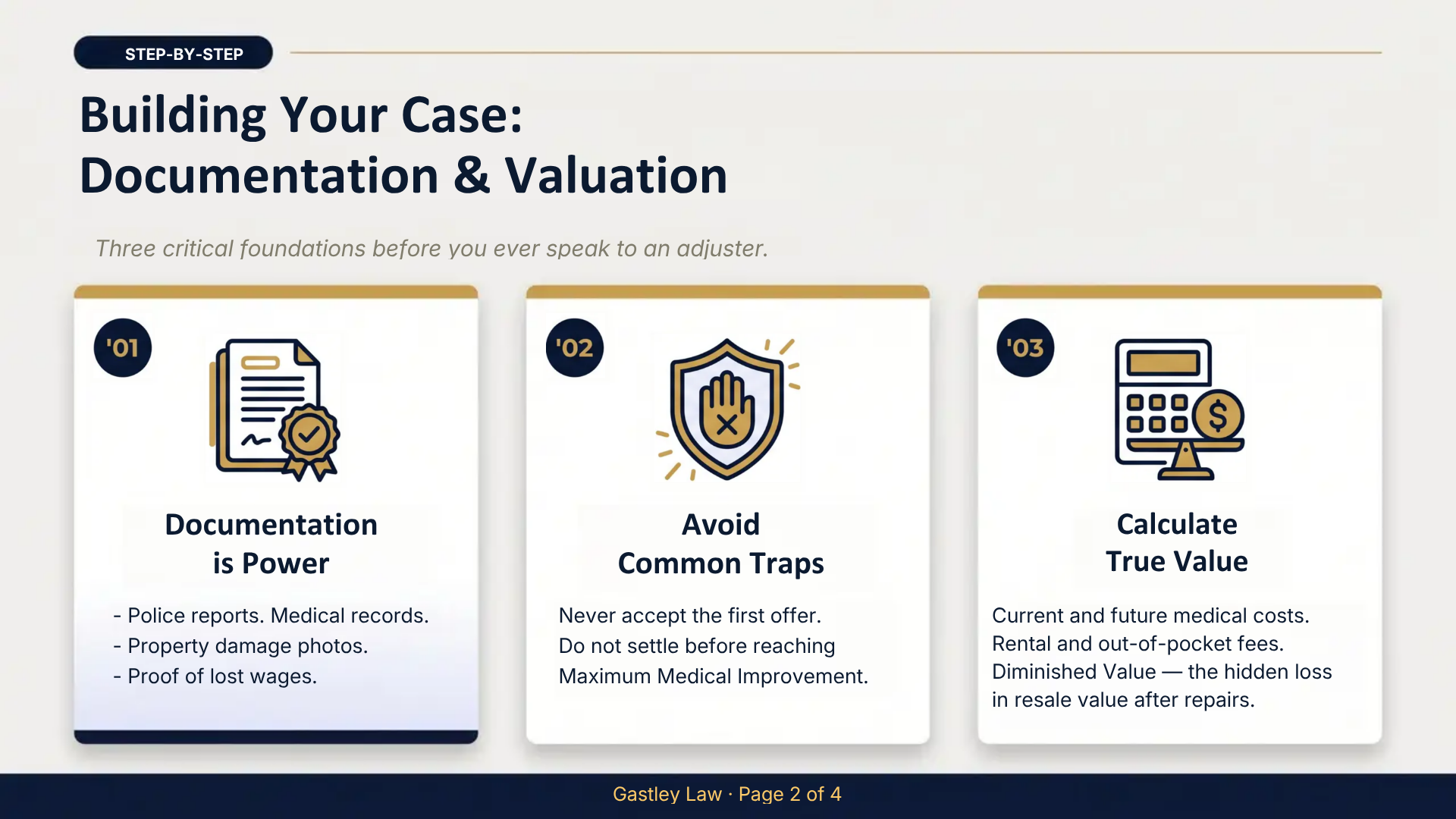
When you file an insurance claim, the strength of your case depends on the quality of your documentation. Think of yourself as a detective building a case where every piece of paper, every photo, and every receipt is a crucial piece of evidence. The more organized and thorough you are from the start, the better prepared you’ll be to counter a lowball offer from the insurance company. Keeping everything in a dedicated folder, either physical or digital, will make the process much smoother and show the adjuster that you mean business.
Your health should always be your first priority after an accident. It’s important to see a doctor right away, even if you feel fine, and report every single ache or pain. Some injuries don’t show up immediately, and having a medical professional’s assessment from the beginning is key. This creates a direct link between the accident and your injuries. Make sure to keep a detailed file of everything: visit summaries, medical bills, prescription receipts, and physical therapy notes. This paper trail is essential for establishing the extent of your injuries and proving the need for your treatments when you talk to the insurance company.
The official police report is one of the most important documents you can have. It serves as an unbiased summary of the incident, containing details like the date, time, location, weather conditions, and contact information for everyone involved, including witnesses. The officer’s notes and diagrams can also provide a clear, official account of the accident, which is difficult for an insurance adjuster to dispute. You can typically get a copy of the report from the local police department that responded to the scene. Having this document on hand ensures that the core facts of your case are clear and consistent from the very beginning.
Your car took a hit, and now you need to prove exactly how much damage was done. Start by taking photos and videos of your vehicle from every angle as soon as it’s safe to do so. Capture close-ups of the damage and wider shots to show the full context. Don’t stop there; get at least two detailed repair estimates from reputable body shops. This shows the insurance adjuster that you’ve done your homework and gives you a solid baseline for negotiations. This visual evidence is critical for any property damage or diminished value claim.
An accident doesn’t just affect your health and your car; it can also impact your paycheck. If you had to miss work for doctor’s appointments, physical therapy, or simply because you were recovering, you are entitled to compensation for those lost wages. To prove your losses, ask your employer for a letter that details your job title, pay rate, and the specific hours or days you missed due to the accident. You should also gather pay stubs from before and after the incident to show the difference in your income. This documentation is essential to demonstrate the financial impact the accident had on your life.
When you’re trying to get a fair settlement, it’s easy to make a misstep that can cost you. Insurance adjusters handle these negotiations every day; you don’t. They know the common traps that people fall into, and they often use them to their advantage. Knowing what to watch out for can help you protect your claim and stand your ground. Let’s walk through some of the most frequent mistakes people make and how you can steer clear of them. By avoiding these errors, you put yourself in a much stronger position to get the compensation you actually deserve for your property damage and other losses.
It can be tempting to take the first offer an insurance company throws your way. You want to get this over with, and a check in hand feels like a win. But here’s the thing: that first offer is almost always a lowball. Insurance companies are businesses, and their goal is to pay out as little as possible. They count on you being eager to settle quickly without realizing the full scope of your losses. Before you even think about accepting, you need a clear understanding of your claim’s true worth, including the diminished value of your vehicle after repairs. Don’t let their urgency rush you into a bad deal.
If you were injured in the accident, one of the biggest mistakes you can make is settling your claim before you’ve finished medical treatment. You might feel okay a week after the crash, but some injuries have delayed symptoms or require long-term care you can’t predict. Once you sign that settlement agreement, you can’t go back and ask for more money if you need additional surgery or physical therapy down the road. It’s critical to wait until your doctor confirms you have reached maximum medical improvement (MMI) so you have a complete picture of your past, present, and future medical expenses.
Your claim is only as strong as the evidence you have to support it. Keeping detailed and organized records is non-negotiable. This includes everything: the police report, photos of the accident scene and vehicle damage, repair estimates, medical bills, doctor’s notes, and even a log of your conversations with the insurance adjuster. If your records are messy or incomplete, it gives the insurance company an easy opening to question the validity of your expenses or the severity of your damages. Our firm’s legal representation often involves helping clients gather and organize this crucial documentation to build a solid case.
After an accident, be very careful about what you say to the other driver and the insurance adjuster. A simple “I’m so sorry” can be misinterpreted as an admission of fault, even if you were just being polite. When you speak with the adjuster, stick to the facts. Don’t speculate on what caused the crash or offer information they didn’t ask for. They may try to use your own words against you to reduce your settlement. If you feel pressured or unsure how to answer a question, it’s perfectly fine to say you’re not ready to make a statement and need to speak with an attorney first.
Once you have all your documents in order, you can move into the negotiation phase. This is where you advocate for the compensation you deserve. It’s less about confrontation and more about presenting a clear, fact-based case for why your claim is worth what you’re asking. The key is to be prepared, confident, and persistent.
Insurance adjusters handle claims all day, every day, but you have the advantage of knowing your own case inside and out. Your goal is to show them that you’ve done your research and won’t be swayed by a low initial offer. This process can feel intimidating, especially when you’re still recovering from an accident. However, remember that you are in control of your claim. The insurance company is not there to do you a favor; they are fulfilling a contractual obligation. By calculating your damages, understanding what similar claims are worth, and making a strong opening demand, you set the stage for a successful negotiation. Remember, this is a business transaction, and approaching it with a calm, professional mindset will serve you well. Don’t let emotions cloud your judgment. Stick to the facts, present your evidence clearly, and be ready to stand your ground. The adjuster’s job is to settle for the lowest amount possible, but your job is to ensure you receive a fair amount that truly covers all your losses.
Before you can negotiate, you need a number. Your claim’s total value is more than just the initial repair estimate for your car. A fair settlement should cover all your losses, both current and future. The amount of your settlement depends on several factors, including the severity of your injuries, the total of your medical bills, any money you lost from being unable to work, and your pain and suffering. Don’t forget to include the diminished value of your vehicle, which is the loss in resale value your car suffers even after being repaired. Tally up every single expense, from prescriptions and physical therapy to rental car fees, to arrive at a comprehensive total.
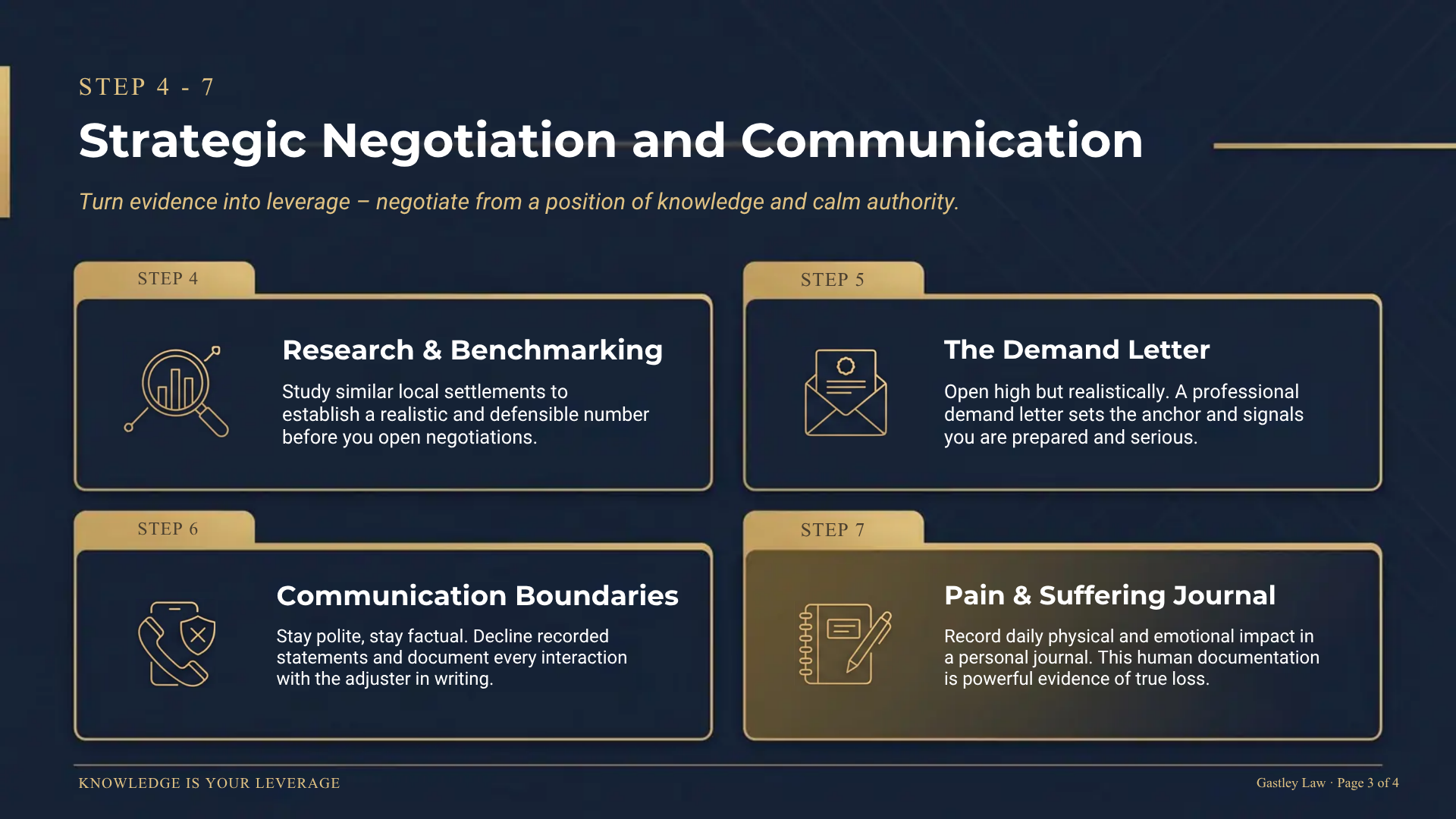
It helps to have a general idea of what others have received for similar accidents, but remember that there isn’t one set amount for injury settlements. The final figure depends heavily on the specific details of the case, like how serious the injury is and the total economic damages. You can look up public records of court verdicts in your area for similar accidents to get a ballpark idea. However, every situation is unique, so these numbers should only serve as a rough guide. An experienced attorney can provide a much more accurate assessment based on the specifics of your case and their knowledge of local insurance practices.
Your first move in a negotiation is sending a demand letter with your initial settlement figure. This number should be ambitious but realistic, and always higher than the minimum you’re willing to accept. Expect the insurance company’s first offer to be low; it’s just a starting point, not the final amount. Never accept it right away. By starting with a well-documented, higher number, you give yourself room to negotiate down. Your demand letter should clearly outline all your damages and include the evidence to back it up, showing the adjuster you’ve built a serious case.
Insurance companies are businesses, and their primary goal is to protect their bottom line. This means they want to pay as little as possible on claims. Adjusters may use various tactics to achieve this. For example, they might try to blame you for the accident, question the severity of your injuries, or delay the process to pressure you into accepting a lower offer out of frustration. Being aware of these strategies can help you stay focused and not get discouraged. If you feel the insurer is not negotiating in good faith, it might be time to get in touch with a lawyer who can advocate on your behalf.
Talking to an insurance adjuster can feel like walking a tightrope. You want to be helpful and move your claim forward, but you also need to protect your interests. The adjuster’s job is to resolve your claim for the lowest possible amount, so every conversation is a negotiation. Knowing how to communicate effectively from the very first call can make a significant difference in the outcome of your settlement. The key is to be prepared, professional, and clear about your boundaries.
That first call from the insurance adjuster sets the tone for your entire claim. It’s best to keep this conversation brief and factual. Be polite but firm. You can confirm basic details like your name, address, and the date of the accident, but avoid going into detail about your injuries or who was at fault. A good strategy is to let them know you are still gathering information and are not ready to discuss the specifics of the accident or a potential settlement. This shows you are organized and in control, preventing them from catching you off guard.
Insurance adjusters will almost always ask you to provide a recorded statement. You are not legally required to give one, and it’s often in your best interest to politely decline, at least initially. Adjusters are trained to ask questions that might lead you to unintentionally downplay your injuries or admit partial fault. Anything you say can be used later to justify a lower settlement offer. It’s better to wait until you have all your medical records and repair estimates organized. Before you agree to any recording, it’s a smart move to seek legal advice about your property damage claims.
Once you have a clear picture of your damages, you can send the adjuster a formal demand letter. This letter officially kicks off settlement negotiations. Your letter should clearly outline the facts of the accident, the extent of your injuries, and a detailed breakdown of your financial losses. Include copies of all your medical bills, repair estimates, and proof of lost wages. Don’t forget to describe the physical and emotional impact the accident has had on your life. Conclude with a specific settlement amount you believe is fair compensation for your damages.
From the beginning, establish clear boundaries with the insurance adjuster. The most important rule is to never admit fault. Even saying something as simple as “I’m sorry” can be twisted and used against you. Stick to the facts you can prove. It’s also helpful to keep your communications in writing as much as possible. After a phone call, send a follow-up email summarizing what was discussed. This creates a paper trail and prevents misunderstandings. If you ever feel pressured or overwhelmed, remember you can contact a lawyer to take over communications for you.
When you walk into a negotiation with an insurance adjuster, your strongest asset is a well-supported claim. It’s not enough to just say what you think you’re owed; you have to show them with clear, organized proof. Building a strong position is about creating a compelling story backed by facts. The more evidence you have, the harder it is for the insurance company to justify a low offer. Think of it as building a case. Every document, every photo, and every note is a piece of the puzzle that demonstrates the full extent of your losses.
A strong negotiation position also comes from consistency and clarity. When your story is the same across all your documents and conversations, it builds credibility. This preparation shows the adjuster that you are serious, organized, and ready to advocate for the full compensation you deserve. It shifts the dynamic from them telling you what your claim is worth to you showing them exactly why your valuation is correct. This is where you can take control of the process and work toward a fair outcome.
A messy file can lead to a messy negotiation. The best way to show an adjuster you mean business is with a claim that is organized and easy to follow. Start by gathering every single document related to your accident and its aftermath. This includes all medical bills, doctor’s notes, therapy reports, and prescription receipts. Collect photos of the accident scene, your vehicle’s damage, and any visible injuries. You should also have proof of lost income, like pay stubs or a letter from your employer confirming the dates you missed work. Keeping everything in a dedicated folder or binder makes it easy to find what you need when you’re on the phone or drafting a letter. This level of organization is a key part of our legal representation.
Your claim isn’t just about the bills you can stack up; it’s also about the human cost of the accident. “Pain and suffering” is the legal term for the physical discomfort and emotional distress you’ve experienced. To prove this, keep a daily journal. Write down your pain levels, your emotional state, and any daily activities you can no longer do or that have become difficult. Did you miss a family event? Are you unable to sleep through the night? These personal details paint a powerful picture of how the accident has impacted your quality of life, providing crucial support for your claim beyond just the numbers.
One of the biggest mistakes people make is settling a claim before they know the full extent of their medical needs. A settlement is final, so if you realize you need surgery six months down the road, you can’t go back and ask for more money. Before you agree to any offer, talk to your doctor about your long-term prognosis. Ask them to provide a written opinion on any future treatments, physical therapy, or medications you might need. Having a professional estimate of future medical costs is essential for ensuring your settlement is truly fair and covers all your needs, both now and in the future. If you’re facing this situation, it’s a good time to contact us for guidance.
While you can handle some minor insurance claims on your own, there are times when bringing in a professional is the smartest move you can make. Think of it this way: you’re an expert at your job, and a lawyer is an expert at theirs. When the stakes are high and the process gets complicated, having an attorney in your corner can make all the difference. This is especially true for complex issues like diminished value, where insurance companies are often reluctant to pay what you’re truly owed.
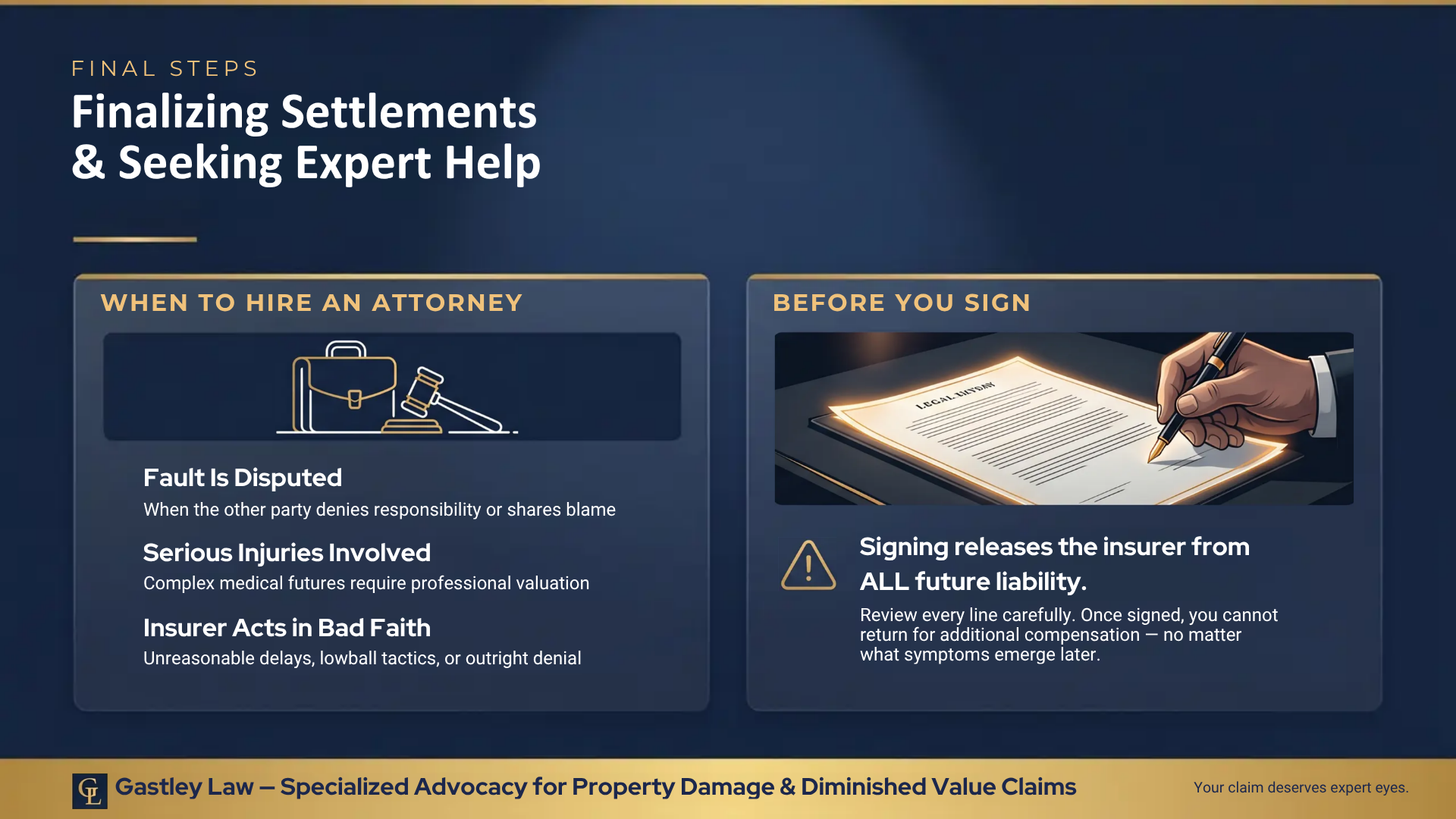
An attorney takes the burden of stressful negotiations off your shoulders. They understand the law, recognize the insurance company’s tactics, and know how to build a case that forces a fair outcome. If you find yourself in a situation where the fault is being disputed, your injuries are significant, the insurer is acting in bad faith, or you’ve simply hit a dead end in your talks, it’s time to consider legal help. A lawyer levels the playing field and ensures your rights are protected every step of the way, so you can focus on getting your life back to normal.
If there’s any question about who caused the accident, you can bet the insurance company will use that uncertainty to reduce or deny your claim. When fault is disputed, the situation quickly becomes a case of “he said, she said.” An attorney can cut through the confusion by gathering critical evidence, like police reports, traffic camera footage, and witness statements, to build a clear and convincing argument on your behalf.
If the insurance company has already denied your claim based on a fault dispute, a lawyer can step in to appeal the decision. They will handle all communication and continue negotiating until a fair resolution is reached, protecting you from being unfairly blamed for an accident you didn’t cause.
When an accident results in serious injuries, the complexity of your claim increases tenfold. You’re not just dealing with car repairs; you’re facing medical bills, potential lost wages, and the possibility of long-term care. Calculating the true cost of these damages is incredibly difficult, and insurance adjusters will often push for a quick, low settlement before the full extent of your injuries is even known.
An experienced attorney has the resources to properly investigate your accident and develop a claim that accounts for all your losses, both present and future. They work with medical experts to document your injuries and fight to secure the financial recovery you need. This allows you to focus on what matters most: your health and recovery.
Insurance companies are businesses, and their goal is to pay out as little as possible. Sometimes, they cross the line from negotiation to bad faith tactics. This can look like unnecessary delays, constant requests for duplicate paperwork, or making a ridiculously low offer and refusing to budge. They might also pressure you into giving a recorded statement to twist your words later.
If you feel like you’re being ignored, misled, or bullied, it’s a major red flag. A lawyer recognizes these strategies immediately and knows how to counter them. Hiring legal representation sends a clear message that you won’t be taken advantage of and are prepared to fight for fair compensation.
You’ve submitted your evidence, sent a demand letter, and negotiated patiently, but the insurance adjuster simply won’t offer a reasonable settlement. When you’ve reached a stalemate, it can feel like you have no options left. This is the perfect time to bring in a lawyer. An attorney can re-energize stalled negotiations with their legal authority and experience.
Often, a formal letter from a law firm is enough to make the insurer take your claim more seriously. If that doesn’t work, your lawyer can advise you on the next steps. While most cases settle out of court, the ability to file a lawsuit provides powerful leverage that can finally bring the insurance company to the table with a fair offer. If you’ve hit a wall, don’t give up; contact us instead.
You’ve done the hard work of negotiating, and a settlement offer is finally on the table. Reaching this point is a huge step, but the process isn’t quite over. The final steps are just as important as the first, as they determine when and how you get paid. It’s essential to handle this last phase with care to ensure the agreement is fair and you receive the compensation you deserve without any surprises.
Before you celebrate, take a deep breath and focus on these last few details. This is where having a legal expert on your side can make all the difference, protecting you from signing away your rights or accepting less than you’re owed. Let’s walk through what you need to do to cross the finish line.
Once you agree on a number, it’s important to understand exactly how the payment will be handled. The settlement check isn’t typically sent directly to you. Instead, the insurance company sends it to your lawyer’s office. Your attorney will then place the funds into a trust account, deduct their agreed-upon fees and any case-related costs, and then issue the remaining balance to you.
This is standard practice, but you should receive a clear breakdown of all deductions. Before anything is finalized, make sure you understand the net amount you will receive. This transparency ensures there are no misunderstandings about the cost of your legal representation and that you know precisely what to expect in your bank account.
Along with the settlement, you will be asked to sign a release form. This document is legally binding and extremely important. By signing it, you are officially agreeing to release the other party and their insurance company from any future liability related to the accident. In simple terms, you give up your right to sue them for more money later on, even if new injuries or damages appear.
You only get one chance to get this right. Never sign a release form without having your attorney review it first. They will ensure the language is fair and that you aren’t unknowingly giving up important rights. If you have any doubts or questions, it’s always best to get in touch with an attorney before putting pen to paper.
After you’ve signed the release and your attorney has processed the payment, the case is officially closed. While most property damage and injury cases are resolved through settlements, sometimes negotiations stall. If the insurance company refuses to offer a fair amount, your lawyer might suggest filing a lawsuit. However, this is usually a last resort, as insurers often prefer to settle rather than go to court.
Be aware that some insurance companies use tactics to delay payment or try to shift blame, even at this late stage. They might drag their feet sending the check or dispute minor costs. Having a lawyer who understands how to handle these strategies is your best defense, ensuring your diminished value claim and other damages are paid promptly and in full.
A diminished value claim is about recovering the loss in your car’s resale value after an accident. Even with perfect repairs, a car with an accident history is worth less than one without. This claim seeks compensation for that specific drop in market value. It’s a separate part of your property damage settlement that insurance companies often don’t volunteer to pay, which is why having proof and a solid argument is so important.
It’s almost never a good idea. The first offer is typically a starting point for negotiation and is calculated to be the lowest amount the insurance company thinks you might accept. They are counting on you wanting a quick resolution. Before you agree to anything, you need to have a complete understanding of all your damages, including potential future medical needs and your car’s diminished value, to ensure the offer truly covers everything.
You should consider contacting a lawyer as soon as you can. The early stages of a claim are critical, as insurance companies begin their investigation right away. An attorney can advise you on what to say (and what not to say) to adjusters, help you preserve important evidence, and make sure you don’t make any missteps that could harm your claim down the road.
Yes, in many cases you can. Georgia law allows you to recover damages as long as you are found to be less than 50 percent at fault for the accident. Your settlement amount would then be reduced by your percentage of fault. Because fault can be a major point of dispute, this is a situation where having legal representation is extremely helpful to protect your right to compensation.
You are not legally required to provide a recorded statement to the other driver’s insurance company. It’s often best to politely decline their request, at least until you’ve had a chance to speak with an attorney. Adjusters are trained to ask questions in a way that can get you to unintentionally hurt your own claim. It’s safer to provide information through your lawyer or in a written demand letter where your words are carefully chosen.