
Diminished Value Claim on an Electric Vehicle in Georgia
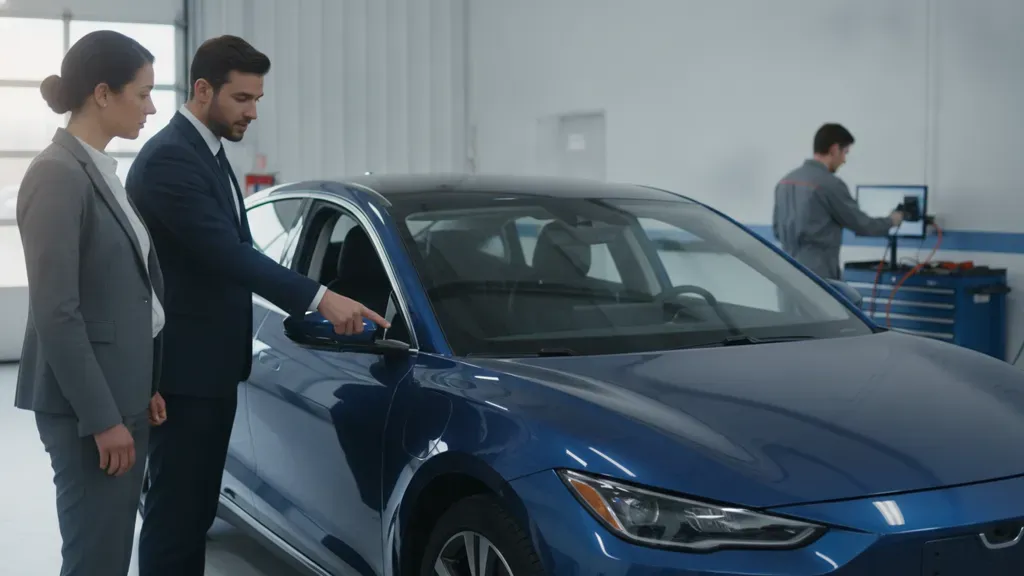
A diminished value claim on an electric vehicle can be worth pursuing after a Georgia crash, even when the vehicle has been repaired. An accident history may make buyers question the battery, high-voltage components, structural repairs, safety systems, and long-term reliability. The key is to build an evidence-based claim that explains how the collision changed the EV’s market value, rather than relying on a generic estimate.
Request a free case evaluation with Gastley Law or call (770) 557-2838 to discuss your Georgia EV claim.
What is diminished value on an electric vehicle?
Diminished value is the difference between what a vehicle was worth before a collision and what it is worth after repairs because the accident is now part of its history. A repaired EV can look and drive normally while still selling for less than an equivalent vehicle with no accident history. That loss is separate from the cost of repairing the car.
Electric vehicles raise additional questions for prospective buyers. They may want proof that the battery pack, thermal management system, high-voltage wiring, charging system, sensors, and software were properly inspected after the collision. They may also be concerned about future repair costs, limited EV-certified repair facilities, and whether the vehicle received manufacturer-directed procedures. Those concerns can affect the market even when a repair facility reports that the visible damage was fixed.
Georgia’s diminished-value framework recognizes that a vehicle may lose value even after proper repairs. The Georgia Supreme Court decision in State Farm Mutual Automobile Insurance Co. v. Mabry is discussed in Gastley Law’s Georgia diminished value law guide. The decision does not create a special EV formula or guarantee a particular recovery. Your claim still depends on the policy, the facts of the collision, the vehicle’s condition, and reliable evidence of the post-repair loss.
Why EV diminished value claims need vehicle-specific evidence
A conventional vehicle claim may focus heavily on the accident history, repair quality, mileage, and comparable sales. Those factors still matter for an EV, but an EV claim should also address whether the collision created uncertainty about systems that buyers cannot evaluate during a short test drive.
- Battery condition: A documented battery inspection can help show whether the high-voltage battery and related components were checked after the crash.
- High-voltage system work: Records should identify any inspection, isolation, replacement, or repair involving high-voltage wiring, connectors, inverters, or related components.
- Structural and underbody damage: Damage near the battery enclosure or vehicle structure may raise questions that ordinary exterior repair photos do not answer.
- Charging and thermal systems: Diagnostic results and repair records can help address concerns about charging performance, cooling, and related components.
- Advanced driver assistance systems: Radar, cameras, sensors, and calibration reports matter because a collision can affect systems that support braking, steering, or collision warnings.
- Repair credentials and procedures: The repair facility’s EV training, manufacturer procedures, parts used, supplements, and final quality checks can affect buyer confidence.
- EV market comparables: The appraisal should compare the vehicle with similar trim, age, mileage, battery configuration, options, and accident history, not just with a broad average for all cars.
These factors do not automatically prove a larger loss. They show why an insurer’s quick calculation may not capture the market questions attached to a particular electric vehicle. A strong claim connects each concern to documented facts about the vehicle and the local market.
Can you file a diminished value claim if the EV battery was not damaged?
Possibly. Diminished value is not limited to a battery replacement or a visible mechanical defect. Accident history alone can affect resale value, and buyers may discount an EV because they cannot confirm every consequence of a prior impact. At the same time, a battery that was not damaged does not automatically establish a particular amount of diminished value.
The practical question is what changed in the market’s view of the vehicle. A claim can be stronger when it includes the vehicle history report, pre-accident condition, repair records, diagnostic documentation, post-repair inspection, and comparable EV evidence. If an insurer says the car has no diminished value because it drives normally, ask how it measured the difference between your repaired EV and an otherwise comparable EV with a clean history.
Do not skip the battery documentation simply because the repair estimate did not list battery work. Ask the repair facility or qualified technician what inspections were completed, whether any diagnostic codes were cleared, and whether the final records identify the condition of the high-voltage system. Keep the answer in writing.
Does Georgia law allow a diminished value claim for an EV?
Georgia does not require an electric vehicle to use a separate diminished-value formula. The same core question applies: has the accident caused a measurable loss in the vehicle’s market value? The vehicle type changes the evidence that may be relevant, but it does not turn the claim into a battery-replacement claim.
The claim path may depend on who was responsible for the collision and which policy applies:
- Another driver caused the crash: You may pursue the vehicle’s property damage and diminished value through the responsible driver’s liability insurer, subject to the claim facts and available coverage.
- You caused the crash: A first-party claim may involve your own policy. Georgia first-party diminished-value principles are important, but coverage terms and the insurer’s handling of the loss still matter.
- The other driver was uninsured or unavailable: Your policy may provide a different route, and the relevant coverage must be reviewed before assuming a claim is available.
Gastley Law focuses on Georgia vehicle owners, including people whose own insurance is involved. The firm’s first-party diminished value claim guide explains why fault alone does not answer every coverage question. A free case evaluation can help identify which insurer, policy, and evidence are relevant.
How to build a Georgia EV diminished value claim
1. Protect the vehicle and obtain complete repair records
Keep the original estimate, supplements, final invoice, photographs, parts information, repair notes, and any documentation showing the repair facility’s qualifications. Ask for records relating to battery inspection, high-voltage safety, charging-system testing, structural measurement, and ADAS calibration when those systems were involved or could reasonably have been affected.
If a repair record says only that the vehicle was repaired, request clarification. A future buyer or appraiser needs more than a statement that the car passed a basic visual inspection. The goal is not to manufacture a defect. It is to preserve the evidence showing what was inspected, what was repaired, and what was ruled out.
2. Get the vehicle history and establish pre-accident condition
Obtain the vehicle history report and keep proof of the EV’s mileage, trim, options, service history, battery warranty status, prior condition, and ownership history. Gather pre-accident photographs, service records, purchase documents, trade-in discussions, and listings for comparable vehicles when available.
Pre-accident condition matters because an appraisal should not treat every EV of the same model as identical. Mileage, options, battery configuration, prior damage, maintenance, and local demand may all affect the baseline value.
3. Request the insurer’s diminished-value position in writing
Ask the insurer whether it evaluated diminished value and request the methodology, data, and documents used. If the adjuster relies on the fact that repairs were completed, ask how the insurer considered the accident history and EV-specific market concerns. Keep every letter, email, estimate, claim note, and settlement offer.
The Georgia diminished value claims guide explains the broader claim process. It is useful background, but an EV claim should add the battery, high-voltage, repair-certification, and market-comparison evidence specific to the vehicle.
4. Review the 17c calculation carefully
Some insurers use a version of the 17c formula or another internal estimate. That calculation may be a starting point, but it is not a special legal formula for electric vehicles and should not be treated as the only possible measure of loss. An EV may have vehicle-specific facts that a standardized calculation does not capture.
Use the existing 17c diminished value formula explanation to understand what the formula attempts to measure. Then compare it with a vehicle-specific appraisal that addresses EV trim, battery configuration, mileage, accident history, repair quality, and comparable market data. Do not assume that a calculator result is a final claim value.
5. Obtain an appraisal that understands EVs
An appraisal should explain the pre-loss value, post-repair value, relevant comparables, accident-history effect, repair quality, and any EV-specific market concerns. Ask whether the appraiser has experience valuing electric vehicles and can explain how the report treats battery documentation, high-voltage inspection, ADAS calibration, and current market data.
An appraisal is evidence, not a guarantee. Its usefulness depends on the quality of the information supplied and the reasoning behind the conclusion. Gastley Law’s diminished value appraisal guide explains how an appraisal can support negotiations without replacing the need for vehicle-specific proof.
Have an insurer’s EV offer or appraisal already? Request a free case evaluation with Gastley Law or call (770) 557-2838 before accepting a low offer.
6. Compare the offer with the evidence
Review whether the offer accounts for the accident history, repair severity, battery and high-voltage documentation, vehicle history, mileage, trim, options, and comparable EV sales. A low offer may be based on a generic vehicle value, a limited set of comparables, or an assumption that proper repairs eliminate all market loss.
Write down the specific gap between the offer and your evidence. For example, the issue may be that the insurer used the wrong trim, ignored a major structural repair, failed to review battery diagnostics, or selected comparables with different mileage and options. Specific objections are more useful than simply saying the offer is unfair.
7. Negotiate, use available dispute procedures, or evaluate litigation
Once the evidence is organized, respond in writing and ask the insurer to reconsider. Depending on the policy and claim type, the next step may involve additional negotiation, an appraisal clause, a demand, or litigation. These paths have different requirements, deadlines, and risks.
Gastley Law’s guide to fighting an insurance low-ball offer covers general negotiation principles. An attorney can help determine whether an EV-specific appraisal is enough, whether the policy provides a dispute process, and whether the available evidence supports further action.
8. Do not wait until records disappear
Vehicle data, repair records, diagnostic reports, photographs, and comparable listings are easier to obtain close to the repair date. Gastley Law focuses on Georgia vehicles damaged within the last six years, but the fact that a claim may still be timely does not make delay a good strategy. Policies, evidence, vehicle condition, and market conditions can change. Ask for legal guidance promptly if an insurer has denied the claim, made a low offer, or stopped responding.
How is EV diminished value calculated?
There is no single number that applies to every electric vehicle. A defensible estimate usually compares the EV’s fair market value immediately before the collision with its value after repairs, while accounting for the facts that influence buyer demand. The analysis may consider:
- Make, model, trim, model year, mileage, options, and battery configuration.
- Pre-accident condition, service history, prior damage, and remaining warranty information.
- Damage location and severity, including structural or underbody damage.
- Repair quality, parts, supplements, calibration, and EV-certified procedures.
- Battery, charging, high-voltage, thermal, and diagnostic documentation.
- Accident-history reporting and comparable listings or sales for similar EVs.
- Local Georgia market demand and the difference between a repaired vehicle and one with a clean history.
The difference between diminished value and ordinary depreciation is important. Depreciation affects most vehicles as they age. Diminished value is the additional market loss associated with the collision and its history. A claim should separate those concepts rather than blame the accident for every change in value.
What if the insurer declares the EV a total loss?
A total-loss settlement is different from a post-repair diminished-value claim. If the insurer declares the EV a total loss, the central dispute is usually the vehicle’s actual cash value and the deductions applied to the settlement. A vehicle that is repaired and returned to service may present a diminished-value issue instead.
Some claims involve both questions at different points, such as a dispute over whether an EV should be repaired or totaled. Do not let the words “total loss” end the analysis. Review the valuation, comparable vehicles, options, mileage, battery configuration, salvage treatment, and any applicable policy provisions. Gastley Law’s Georgia totaled-car settlement guide addresses the separate total-loss path.
When should a Georgia EV owner speak with an attorney?
Consider a case evaluation when the insurer denies diminished value, offers a number without explaining its method, ignores EV-specific records, treats the vehicle as ordinary despite material battery or structural concerns, or pressures you to accept a release before you understand the claim. Legal advice can also help when the other driver disputes fault, the policy language is unclear, the EV was leased or financed, or the repair involved high-voltage or structural components.
Bring the claim number, policy information, repair estimate and final invoice, photographs, vehicle history report, appraisal, diagnostic records, insurer correspondence, and settlement offer. A complete packet allows the attorney to evaluate the claim instead of guessing about the vehicle’s condition.
Gastley Law handles diminished value and property damage claims for Georgia vehicle owners. The firm states that it can evaluate claims involving a vehicle damaged within the last six years and offers a free case evaluation. No result is guaranteed, and the value of any claim depends on its facts and evidence.
Frequently Asked Questions
Can I file a diminished value claim for a leased electric vehicle?
Possibly, but a lease can affect who owns the vehicle and who may have an interest in its reduced value. Review the lease terms, insurance policy, claim documents, and any instructions from the lessor before signing a release or accepting a settlement.
Can I make an EV diminished value claim if I was at fault?
A first-party claim may be available depending on the policy and the circumstances. Georgia first-party diminished-value law is different from a third-party claim against another driver’s insurer, so do not assume that being at fault automatically ends the inquiry or guarantees recovery.
What if the insurer says the EV was repaired correctly?
Proper repairs address physical damage, but they do not automatically answer whether the vehicle’s market value changed because of the accident history. Ask the insurer to explain how it evaluated diminished value and provide the battery, high-voltage, ADAS, repair, and comparable-market evidence supporting your position.
Do I need a special EV diminished value appraisal?
There is not a separate legal form that every EV owner must use, but an appraiser who understands EV valuation can address battery configuration, repair procedures, diagnostics, technology changes, and comparable vehicles more effectively. The report should explain its evidence and methodology rather than simply apply an unexplained percentage.
How long do I have to pursue the claim in Georgia?
Deadlines depend on the legal theory, policy, parties, and facts. Gastley Law focuses on vehicles damaged within the last six years, but you should not rely on a general timeframe without reviewing your specific claim. Preserve records and seek advice promptly.
How much is an electric vehicle diminished value claim worth?
There is no reliable flat amount or universal percentage. The potential value depends on the EV’s pre-accident market value, mileage, trim, damage, repairs, battery and system documentation, accident history, comparable vehicles, and the evidence available to prove the loss.
Request a free case evaluation with Gastley Law or call (770) 557-2838 today to discuss your Georgia electric vehicle diminished value claim.