
How to Get the Most Money from Insurance for a Totaled Car

Watching a flatbed tow truck haul your wrecked car away is only the start of your headache. Insurance companies often try to settle these claims as quickly and cheaply as possible.
Request a free case evaluation with Gastley Law or call (770) 557-2838 today.
Insurance for a totaled car should pay the actual cash value of your vehicle at the time of the wreck. Under Georgia insurance rules, carriers must value your vehicle using objective databases to set this amount fairly. However, adjusters often use biased software that misses recent upgrades and local market conditions to offer you a lowball settlement. Do not let the insurance company rush you into accepting a quick check before you verify their math. To get the maximum payout, you should gather your own evidence of what your car was actually worth. This includes local dealer listings of similar cars and a detailed list of your car’s pre-accident condition and options.
Navigating this insurance process can feel hard, but you do not have to accept an unfair payout. To protect your wallet, you must understand the answer to the first major question: How much does insurance pay for a totaled car?
How Much Does Insurance Pay for a Totaled Car?
When you file a claim, getting fair payment from your insurance for a totaled car is often a battle. Many drivers assume they will get enough cash to buy a matching car or pay off their loan. But the actual payout depends on specific math. To get a fair deal, you must know how insurance companies decide what your car is worth.
Actual cash value basics
Your insurance payout is based on the actual cash value of your car. This cash value is what your car was worth on the open market just before the crash. It is not what you paid for the car, and it is not what a new car costs today. The insurer looks at the local market to find what similar cars sell for in your area.
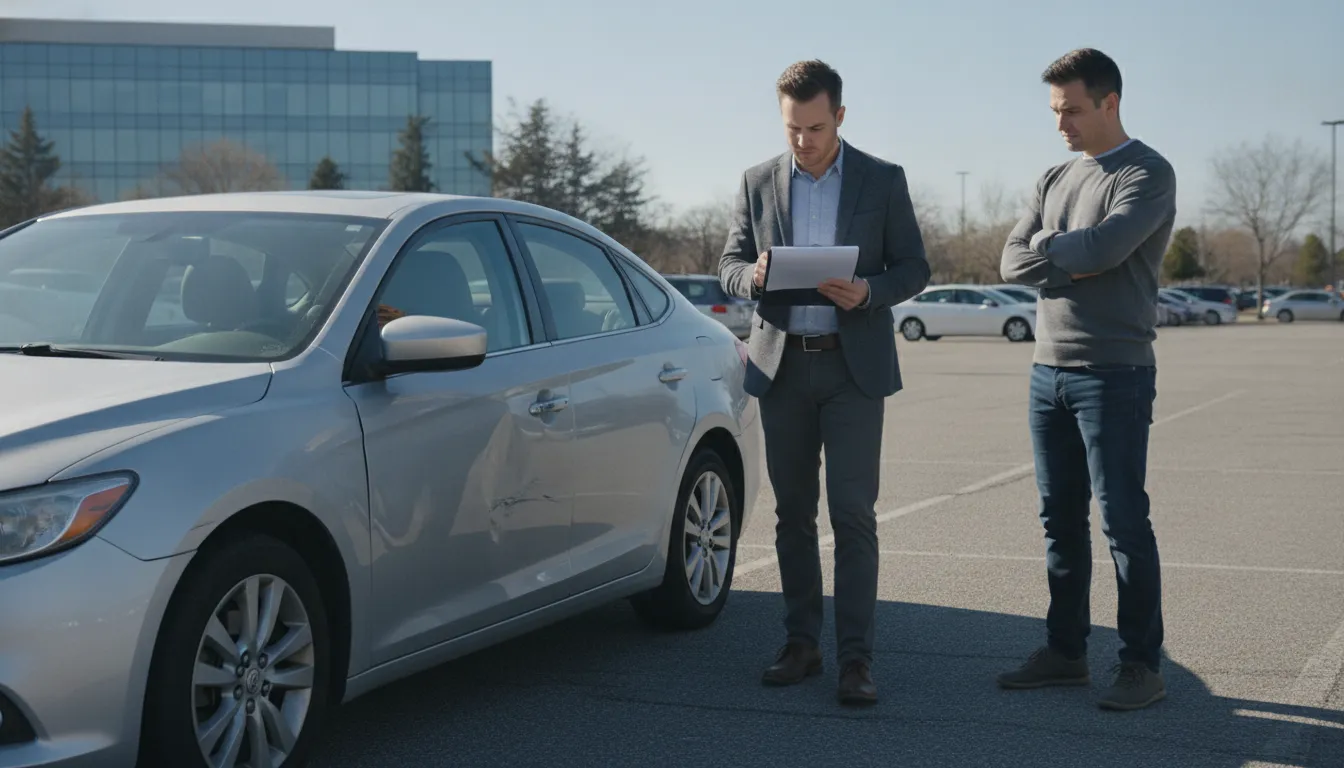
Some drivers wonder if they can claim lost worth on top of this payout. In Georgia, a standard insurance payout for a totaled car does not cover diminished value. This is because the company buys the whole car from you, so you do not own a repaired car that has lost market appeal. Instead, your focus must be on pushing the cash value as high as possible.
To do this, you must show the insurer that your car was in great shape. You can use old repair bills, new tire receipts, and clean records to prove its worth. If you do not fight for these details, the adjuster will likely give a low quote to save the company money.
When a car is a total loss
Insurance companies will write off a car when the cost of repairs is too high. Guidelines from the Texas Department of Insurance show that a car is totaled if repair costs are close to or greater than its value. In most cases, if the shop quote is near the pre-crash book value, the company will stop the repair process. This protects them from paying for a fix that costs more than the car is worth.
Most firms do not wait for repair costs to go over the full value. They may total the car if repairs reach seventy or eighty percent of that value. This is because they know hidden damage often turns up once the shop tears the car down. It is safer for them to pay you the cash value and sell the wreck for scrap.
This means your car can be totaled even if the frame looks fine. Simple things like air bags going off or minor engine cracks can raise the repair bill past the limit. Once the insurer makes this choice, they will make you an offer based on their math.
Loans and your payout
A common shock for drivers is how loans affect the final check. Your insurer sets your payout based only on the cash value of the car at the time of the crash. They do not look at what you still owe on your car loan. If your car is worth less than your loan balance, the insurer will not pay the difference.
If you owe more than the car is worth, you must pay the rest of the loan yourself. Your insurer will send the check to your lender first. To protect your wallet, you must fight for a higher cash value. A higher cash value means you owe less on the gap.
This is why knowing how actual cash value works is so important. You cannot rely on the insurance company to look out for your loan balance. You must treat the total loss process as a negotiation where every dollar counts.
How Do Insurers Value a Totaled Car in Georgia?
When you seek money from insurance for a totaled car, you must know how adjusters value your vehicle. Insurers do not look at what you paid for the car. They also do not care how much you still owe on your car loan. Instead, they find the Actual Cash Value of the vehicle at the exact time of the crash.
Actual Cash Value Versus Book Value
To find this cash value, insurers often use generic book value lists rather than looking at real market prices. According to standard auto guides, these generic tools often fail to reflect the true market value of a well-maintained vehicle. If you took good care of your car, the book value might be far too low. Adjusters use these low numbers to save money for the insurance firm.
| What insurers use | What it misses | What to do |
|---|---|---|
| Generic book value lists. | Local selling prices, low mileage, and great condition. | Gather local listings of similar cars for sale. |
| The flawed 17c formula. | The true value of your vehicle. | Ask for the basis of the offer and dispute it. |
| First-offer adjustments. | Recent upgrades and custom parts. | Submit your receipts for those upgrades. |
The Problem with the Flawed 17c Formula
Many adjusters will try to use the 17c formula to find what they owe you. You must know that this formula is a flawed insurance method designed to undercut the true value of your vehicle. It is not a valid tool for finding what your car is worth. Insurers use it because it lowers their payouts and protects their profits.
Also, insurers often do not include your recent vehicle upgrades or changes in their first offer. If you put new tires, a fresh engine, or custom parts on your car, the insurer might ignore them. You have the right to fight for a higher payout that includes these items.
Once you agree on a fair price, the law is on your side to get your money fast. Georgia state rules say that insurers must send your payment within ten days after the claim is settled. This rule is detailed in the Georgia Department of Insurance regulations. Knowing these strict timelines helps you keep pressure on the adjuster throughout the insurance payout process.
Keeping Your Vehicle and Salvage Value
After a wreck, you might want to keep your car even if the insurer totals it. You do have this choice in some cases, but you must understand how it affects your cash payout. If you choose to keep the vehicle, the insurer will subtract the car’s salvage value from your final settlement.
Salvage value is what the insurance firm could get by selling your wrecked car to a scrap yard. If your car is worth five thousand dollars and the salvage value is one thousand dollars, your check drops to four thousand dollars. You will also need to work with the state to get a salvage title before you can drive or rebuild the car.
What Should You Document Before You Accept Any Offer?
When you file a claim for insurance for a totaled car, you must prove its true value. Insurance adjusters use standard book values that often ignore the real state of your car. To fight a low offer, you need a strong paper trail that shows how well you maintained your car before the crash. This proof makes it much harder for the insurer to underpay you.
Georgia Insurance Claim Timelines
The state of Georgia has clear rules to keep your claim moving. Under Georgia state insurance rules, an insurance company must acknowledge your claim within 15 days of getting your notice. If they do this by phone or in person instead of writing, they must put a dated note in your claim file. Once you settle the claim, the insurer must pay you within 10 days. These rules stop companies from dragging out your claim without a good reason.
If they need more time to decide on your claim, they must tell you. They have to send this notice within five business days after their first deadline passes. This letter must explain why they need more time to finish their review. If they fail to send this notice on time, they break state rules.
The Proof of Loss Requirement
Your insurance company may ask you to send a formal proof of loss form before they pay. Georgia law says the company must send you these forms within 15 days of your claim notice. They must also give you clear, plain details on how to fill them out. After you send the finished forms back, the insurer has 15 days to accept or deny liability for your auto policy. This formal timeline ensures that your claim does not sit on an adjuster’s desk.
Knowing these rules helps you track your insurance payout process. Keeping your own log of these dates ensures the insurer does not drag out your claim. You will know when they are late and when you can push back.
Steps to Document Your Vehicle
To get a fair payout, you should gather these files before you sign any settlement papers. Use these steps to build your case and protect your rights:
- Find old photos. Gather clear photos of your car from before the crash to prove its clean shape. These pictures show the state of the body and the inside before the crash. Take shots of the dashboard to show the exact mileage as well.
- Take new photos. Capture the current damage from many angles at the scene or tow yard. Make sure you get close-ups of the point of impact and any broken parts. These photos stop the adjuster from ignoring the damage from the wreck.
- Get service logs. Collect receipts for recent oil changes, new tires, and brake jobs. These records show that you kept the car in top running order. A well-kept engine commands a higher cash value than a bad one.
- List your upgrades. Save bills for custom wheels, new stereo systems, or engine parts added in the last year. Insurers often omit these from their first offer. Provide these receipts to prove the added value of each change.
- Gather sales receipts. Keep the original bill of sale and purchase papers if you bought the car just before the crash. It sets a clear baseline value for a car you just bought.
- Track all dates. Write down every call, email, and letter with the insurance adjuster. Keep a log of when you sent each proof of loss form. This timeline is vital if you need to dispute delays under state law.
Negotiation Tactics That Increase Your Payout
Rejection of the first offer
Getting fair insurance for a totaled car requires a clear plan. When you try to settle the insurance payout for a totaled car, you must use smart tactics. The first and most basic rule is to never accept the first offer from the adjuster. Insurers often start with a low offer because they want to close the claim quickly and save money. If you accept this first number, you leave money on the table. You have the right to say no and ask for a full report on how they found the value.

Many drivers don’t know that they can still seek legal help after cashing a check. At Gastley Law, we help clients who have already cashed lowball insurance checks, though we prefer to consult first. You aren’t locked out of a fair settlement just because you needed quick cash. But getting legal advice early is the best way to protect your rights.
Local market comparable sales
To back up your counter-offer, you must show proof of what your vehicle is worth. This means finding local sales of the same make, model, and year with similar mileage and features. Do not rely on generic online guides, as they often miss the true market rate in your city. Provide the adjuster with three to five local listings of matching cars for sale. This proof forces the insurer to raise their offer to match the local market.
You should check every policy that might cover your loss. Sometimes, more than one plan applies to your crash. Under Georgia insurance regulations, if several coverages are involved, payments not in dispute must be sent within ten days. This is true as long as the payment ends known liability. This law stops insurers from holding up your money. Also, once the full claim is settled, the company must pay you within ten days. This speed helps you start the insurance payout process for a new car.
The vehicle appraisal clause
If you and the adjuster cannot agree, you can use the appraisal clause in your policy. This clause lets both sides hire an independent appraiser to find the true value of the car. If the two appraisers do not agree, they select a neutral umpire to make the final call. Vetting independent appraisers is vital because some are blacklisted by insurance companies. At Gastley Law, we have deep skill in the appraisal clause dispute process. We vet appraisers to make sure they aren’t blacklisted.
You should also be aware of common tricks when trying to resolve your claim. The Consumer Financial Protection Bureau warns that scams targeting disaster victims often increase during recovery periods. Even if there was no recent storm, bad actors use these times to offer fake help. Always check the license of anyone you hire to help with your car. At Gastley Law, we work on a pure contingency fee model. We front all appraisal and court costs, so you pay nothing unless we win your case.
What About a Financed Car That Is Totaled?
When you have a car loan or lease, getting insurance for a totaled car is more complex. The main thing to know is that your loan contract does not change how the insurance company values your car. The payout is based only on the market value of the car right before the crash, not on how much money you still owe.
The lender-first payout process
If your car is financed, the insurance company will not send the claim check to you. Instead, the payout goes to your lender first to pay off the loan. Under Georgia insurance rules, insurers must send payments within ten days once a claim is settled.
Your lender will use this money to cover your loan balance. If there is any cash left over after the loan is fully paid, the lender will send the rest to you. But if the payout is not enough to cover the full loan, you are still on the hook for the rest.
How actual cash value affects your loan
The insurance company sets your payout based on the car’s actual cash value. This is the market value of the car, which drops the moment you drive it off the lot. Because cars lose value fast, you might owe more on your loan than the car is worth. If the insurer says your car is worth fifteen thousand dollars but your loan is twenty thousand, you still owe five thousand dollars.
How to handle the unpaid loan balance
If you owe more than the car’s value, you must pay the rest to your lender. This is where gap coverage helps. Gap insurance is a special policy that covers the gap between the car’s market value and your loan balance. If you do not have gap coverage, you must pay the rest out of your own pocket.
It is also vital to know that you cannot claim diminished value if your car is totaled. In Georgia, a totaled car is paid out based on its market value before the crash, not its loss of value. To see how these cases differ, read about the insurance payout for a totaled car. If your insurer gives a low payout offer, fighting for a fair price is the best way to reduce your debt.
When Should You Hire a Lawyer for a Totaled Car?
Dealing with an insurance company after a wreck is hard. You might feel stuck if they give you a low offer or ignore your calls. Knowing when to get legal help can make a big difference in your payout.
Low offers and slow adjusters
Most people do not need a lawyer right away. But you should think about one if the insurer refuses to deal with you fairly. Under state law, companies must follow strict rules when they handle insurance for a totaled car in Georgia. If they stall, miss deadlines, or make lowball offers, a lawyer can act as a powerful leverage tool. You cannot claim diminished value on a total loss. But you still have the right to challenge your insurance payout for a totaled car.
Insurance adjusters are trained to pay as little as possible. They often use generic book value databases that miss the real local market value of your vehicle. They might also ignore recent upgrades you made to the car. When they refuse to adjust their offer based on real-world market proof, you need a lawyer to step in and level the playing field.
How a property damage firm makes a difference
It is important to choose the right kind of law firm. Many firms only focus on personal injury claims because those cases pay more. Gastley Law is different. We are property damage and diminished value experts, not a personal injury firm. We focus strictly on getting you the full actual cash value of your vehicle. If you are confused by how the adjuster worked out your offer, it can help to look at the wider insurance payout process.
We operate under a clear contingency fee model. This means we front all upfront expenses for your case. We pay for outside appraisals, which usually cost between 200 and 1,500 dollars. You do not pay us anything unless we recover money for you. This structure removes all money risk from your shoulders.
We also specialize in working through the appraisal clause dispute process. This involves vetting outside appraisers to ensure they are not blacklisted by insurance companies. Many adjusters try to push you toward appraisers who favor the insurance company. We make sure you work with an unbiased expert who will find the true value of your car.
Aggressive small claims court action
When insurance companies refuse to deal fairly, we do not simply back down. Many other firms will accept a low offer just to avoid a fight. Our team takes an aggressive path. We will pursue legal action in small claims court to challenge lowball offers. This pressure often forces insurers to pay the full value of your vehicle.
You also have time on your side in Georgia. The state gives vehicle owners a six-year statute of limitations to file property damage claims. This means you can still seek help even if your accident happened a few years ago. You can even reach out if you already received or cashed an initial check from the insurer. However, starting the process early is always the best way to protect your rights.
Request a free case evaluation with Gastley Law or call (770) 557-2838 today.
Frequently Asked Questions
Can I keep my car if it is totaled?
Yes, you can keep your car in Georgia, but the insurance company will subtract the salvage value from your total check. According to Kelley Blue Book, you must also get a salvage title from the state. You can then choose to fix the car or sell it for parts yourself.
What to do when your car is totaled and you still owe money?
If you still owe money on your car loan, the insurance payout goes to your lender first. According to Progressive, if the payout does not cover the full loan balance, you must pay the rest yourself. Gap insurance can help cover this extra cost if you have it.
Is it better to have a car totaled or repaired?
This depends on the repair cost compared to your car’s value. According to the Texas Department of Insurance, insurers will total a car if repairs cost about the same as its worth. Fixing a heavily damaged car can also leave hidden safety issues.
Is it hard to insure a totaled car?
Yes, it is often hard to get insurance for a car that was once totaled. Most insurers will not write a policy for a car with a salvage title. You must first rebuild the car, pass a state safety test, and get a rebuilt title. Even then, you may only qualify for basic liability coverage.
Ready to get a fair payout for your totaled car?
If you accept the first insurance offer, you will lose thousands of dollars on your car. Waiting to challenge their valuation only makes it much harder to gather the fresh proof you need to win. Insurance adjusters use biased database tools to protect their profits and reduce what they pay you. Our firm specializes in vehicle property claims and knows how to counter low valuations. Our Georgia team will review your claim, front all appraisal costs, and fight to get you every dollar. You pay nothing upfront and nothing at all unless we win and recover money for you.
Ready to get a fair payout? Request a free case evaluation with Gastley Law or call (770) 557-2838 today.