
Georgia Rideshare Accident Property Damage Claim Guide
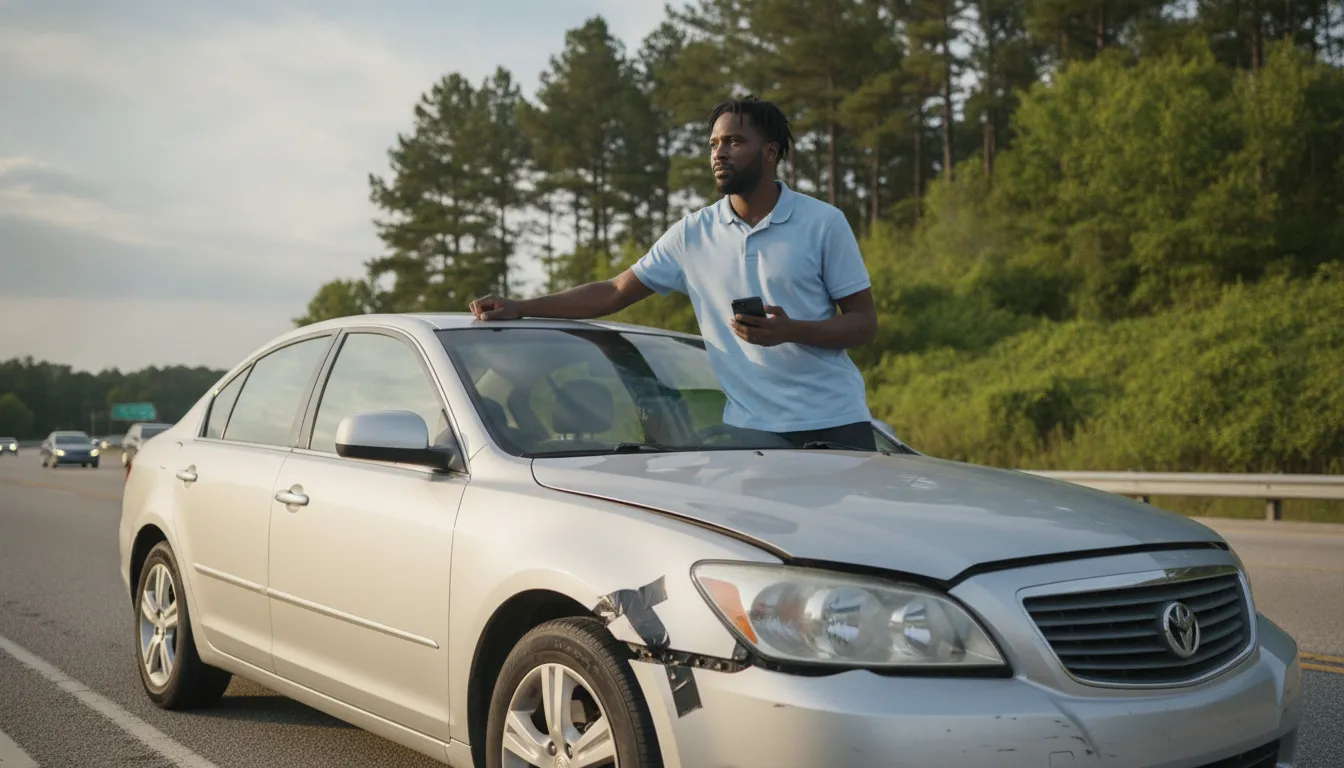
A rideshare crash can create a property-damage claim that is more complicated than an ordinary collision because the driver’s app status may affect which policy responds. Offline driving, waiting for a request, traveling to pick up a passenger, and carrying a passenger can involve different coverage questions.
Request a free case evaluation with Gastley Law or call (770) 557-2838 today.
A Georgia rideshare accident property damage claim usually turns on who was at fault, the driver’s status in the rideshare app, the applicable personal or rideshare policy, and the damage being claimed. Preserve the app record, crash documentation, repair records, and insurer communications before deciding how to proceed.
This guide explains how those coverage layers can affect vehicle repairs, total loss, towing, loss of use. And diminished value, then walks through the evidence and claim-handling steps that matter in Georgia.
How Rideshare Status Changes a Georgia Property Damage Claim
A rideshare driver’s app status can affect which insurance policy or coverage layer an insurer investigates after a crash. Georgia law recognizes different periods of transportation network company service, including time when a driver is logged in and available to accept a request. And time after the driver accepts a request until the ride or transaction is complete. The precise facts and applicable policy language still matter, so an insurer should not treat every rideshare collision as the same type of claim.
Offline: the personal policy may be the starting point
When a driver is completely offline, the driver’s personal auto policy may be the initial source of information about coverage. That does not answer every property-damage question, particularly if the driver was using the vehicle for another purpose or the policy contains relevant exclusions. The claim may also involve the other driver’s liability coverage if that driver caused the collision. The key is to document the driver’s status rather than assume that a rideshare connection automatically controls the claim.
Available, en route, or carrying a passenger
When the driver is logged onto the platform and available to accept a ride. Or has accepted a request and is traveling to the pickup, the applicable insurance analysis can change. It may change again once a passenger is onboard or the ride is otherwise underway. Georgia’s transportation network company statute requires a primary motor vehicle policy that recognizes the driver as a TNC driver and explicitly covers TNC services. The statute also addresses property damage to others during defined periods. But the actual claim still depends on the facts, fault, policy terms, and the type of loss being presented. See the statutory language in Georgia’s TNC insurance law.
For a Georgia rideshare accident property damage claim, preserve evidence showing the status at the time of impact. Helpful records may include screenshots or platform records showing whether the driver was offline, available, en route. Or on-trip, along with the crash report, photographs, repair estimate, towing records, and communications from each insurer. These details help identify the relevant carriers and keep a property-damage evaluation separate from a bodily-injury claim.
Do not rely only on a verbal description of the trip. Ask for the policy information and claim position in writing, and compare the insurer’s explanation with the app records and policy language. If the vehicle was repaired, the evaluation may also need to address whether the damage affected its market value after repair. A careful review can clarify whether the dispute concerns fault, coverage, the amount of repair damage, or a separate diminished-value issue.
What Insurance May Pay After a Rideshare Crash
The property-damage portion of a rideshare claim is not limited to the first repair estimate. Depending on the crash facts, the applicable policy, and whether the vehicle can be repaired, a claim may involve several separate categories of loss. The driver’s app status, fault, policy language, and available records can all affect how an insurer evaluates each component.
Repair costs are usually supported by an itemized estimate, photographs, inspection findings, and invoices. If the vehicle is repairable, the claim should account for the work reasonably needed to return it to its pre-crash condition. Keep supplements from the repair shop because hidden damage may not appear until teardown. If the vehicle is a total loss, the issue changes from repair cost to the vehicle’s pre-crash value. Supported by condition, mileage, equipment, comparable vehicles, and other valuation evidence.
Towing and storage may also be part of the property-damage claim when those services were reasonably related to the crash. Preserve the tow bill, storage charges, release documents, and communications showing why the vehicle remained at the facility. Promptly addressing storage can help avoid charges that grow while the coverage dispute continues.
A vehicle that cannot be used may create a rental or loss-of-use issue. Save rental agreements, receipts, transportation records, and documentation showing the dates the vehicle was unavailable. A driver may need to establish both the period of unavailability and why the requested transportation expense was reasonable. For a broader explanation of this category, see Gastley Law’s Georgia loss of use claim guide.
Finally, a repaired vehicle may be worth less after the crash even when the repairs are complete. That potential diminished-value component should be supported by the vehicle’s pre-crash condition, repair history, damage details, and a qualified evaluation. It is distinct from the repair bill and should not be treated as an automatic percentage or assumed amount.
| Loss category | Useful records | Claim issue |
|---|---|---|
| Repairs | Estimates, photos, invoices, and supplements | Whether the work and related damage are supported |
| Total loss | Valuation evidence, vehicle records, and comparable listings | Whether the valuation reflects the vehicle’s pre-crash condition |
| Towing and storage | Tow bill, storage invoices, and facility communications | Whether the services and duration were reasonably necessary |
| Rental or loss of use | Rental receipts, transportation records, and repair timeline | Whether the requested period and expense are documented |
| Diminished value | Repair file, vehicle history, condition evidence, and evaluation | Whether the post-repair reduction in value is established |
Organizing these records by loss category can make it easier to identify what has been paid. What remains disputed, and which insurer or policy is being asked to respond.
Evidence to Preserve for a Georgia Rideshare Accident Property Damage Claim
A strong evidence file helps connect the crash, the rideshare trip, the vehicle damage, and the amount you are requesting. Preserve the original records whenever possible, and keep copies in one dated folder. Do not rely on an app screen or email remaining available indefinitely.
Capture the rideshare trip status
Save screenshots showing whether the driver was offline, logged in and available, en route to a pickup, or carrying a passenger. Include the date, time, trip or ride-request details, pickup and drop-off information, and any messages exchanged through the platform. Georgia law separates periods when a driver is logged on and available from the period after a ride request is accepted. The status shown in the app can therefore help identify which policies and parties may need to be evaluated. See the relevant provisions in Georgia’s transportation network company insurance statute.
Document the scene and the vehicle
Take clear photos and video of every damaged area, the vehicle’s position, the roadway, traffic controls, debris, and the other vehicles involved. Photograph the vehicle from several distances before repairs begin. If damage appears minor, document it anyway. Close-up images can show impact points, while wider images help explain how the collision occurred. Keep the original files with their metadata when available, and note who took them and when.
Keep official and repair records
Obtain the police or incident report and preserve any exchange-of-information details. Keep every repair estimate, supplement, invoice, parts record, payment receipt, and final work order. If the vehicle is towed, save towing and storage invoices, authorization forms, and release records. These documents help establish what work was recommended, what was actually completed, and which costs arose directly from the crash.
Track transportation and vehicle ownership costs
Save rental-car agreements, rideshare receipts, public-transit records, and other transportation expenses tied to the vehicle’s repair or unavailability. These records may support a loss-of-use request, depending on the applicable coverage and claim facts. Also gather the title, registration, loan or lease documents, and payoff information when relevant. Ownership and financing records can matter when an insurer evaluates a total loss, lienholder payment, or the vehicle’s pre-crash value.
Preserve every insurer communication
Keep claim numbers, adjuster names, call logs, emails, letters, estimates, recorded-statement requests, and written offers or denials. After an important phone call, write down what was said and confirm material points in writing. Avoid deleting messages or accepting an estimate without understanding what it includes. If the vehicle is repaired, retain evidence of the pre-accident condition and completed work because a repair history can be relevant to a Georgia diminished value claim.
How to File and Track the Claim
- Protect people and report the crash. Move to a safe location when possible, contact emergency services for immediate hazards or injuries, and follow Georgia reporting requirements that apply to the collision. Keep the focus of this claim on vehicle damage, but do not leave before gathering the basic crash information you can safely obtain. Record the date, location, vehicles, drivers, witnesses, and responding agency or report number.
- Preserve the app and trip status. Take screenshots showing whether the rideshare driver was offline, logged in and available, en route to a pickup, or carrying out a trip. Save the trip receipt, request details, cancellation messages, and any in-app crash report. Georgia law recognizes distinct transportation-network-service periods, including time when a driver is logged on and available and time after a ride request is accepted. Those details can affect which policy or carrier evaluates the property-damage claim. See the applicable Georgia transportation network company insurance statute.
- Identify every potentially applicable carrier. Ask for the rideshare driver’s personal insurer, the platform’s claim contact, and the other driver’s liability insurer, if another vehicle was involved. Do not assume that one automatic policy covers every phase of the trip. Coverage may depend on fault, policy language, the platform, and the driver’s status in the app. Keep claim numbers, adjuster names, phone numbers, and email addresses in one written log.
- Give prompt notice under the applicable policy. Report the collision to the carriers that may have a role and follow each policy’s instructions. This is not a statement that every policy has the same notice deadline. Ask what forms, proof of loss, inspection, repair estimate, or authorization the carrier requires, and keep copies of everything submitted. For covered first-party property-damage claims arising under personal private-passenger policies. Georgia’s claim-settlement regulation addresses acknowledgement and proof-of-loss procedures, but whether that regulation applies depends on the claim and policy. Review the Georgia first-party property-damage regulation.
- Document the vehicle damage and related losses. Photograph the vehicle from multiple angles before repairs when safe, preserve tow and storage invoices, obtain a detailed repair estimate, and keep rental or alternative-transportation records. If the vehicle is repaired, retain final invoices and records showing the work performed. A repair claim may also involve loss of use or supported diminished value, depending on the facts and applicable coverage. A separate Georgia loss of use claim guide explains how unavailable-vehicle expenses are evaluated.
- Submit a complete claim packet and track written responses. Organize the crash report, photographs, app records, policy information, estimates, invoices, receipts, and a concise description of the damage. Send the packet through a traceable channel and request written confirmation of what the insurer received. Calendar follow-ups, record every conversation, and ask the adjuster to identify missing documents or the specific policy provision supporting a decision. A phone estimate is not a substitute for preserving the written position.
- Decide whether to escalate. Compare the insurer’s response with the evidence, policy language, and documented losses. If the carrier delays, denies coverage, or offers less than the supported value. Request the explanation in writing and consider whether an appraisal, negotiation, or legal review fits the claim. Rideshare status and multiple coverage layers can make that review fact-specific. An attorney can help assess whether to appeal an insurer’s claim denial or challenge the valuation.
What to Do When an Insurer Delays or Offers Too Little
An insurer’s delay, denial, or low offer does not necessarily resolve the value of a Georgia rideshare property damage claim. First, identify which policy and claim type are involved. Coverage may depend on whether the rideshare driver was offline, available for a request. En route, or carrying a passenger, as well as fault and the language of the applicable policies. Keep the driver’s app status and the insurer’s position in your records.
Respond in writing and ask what is missing
Use a clear written response rather than relying only on phone calls. State whether you disagree with the decision or valuation, identify the specific damage items you believe were omitted, and attach the records supporting your position. Those records may include photographs, the crash report, repair estimates, invoices, towing or storage bills, rental documentation, and communications with the platform or insurers.
If the adjuster says the claim cannot be evaluated, ask for a precise list of the missing information. Request clarification about the policy being applied, the coverage period the insurer believes controlled. The reason for any exclusion, and the parts of the repair estimate or vehicle value that were rejected. Keep copies of every submission and note when each document was sent. A complete, organized file makes it easier to identify a genuine coverage question from a simple documentation gap.
Review a denial or low offer carefully
A denial letter should be read against the policy language and the facts of the crash. Check whether the insurer addressed the driver’s rideshare status, fault, vehicle ownership, and the particular property damage being claimed. If the issue is valuation, compare the offer with supported repair costs and other documented losses. Depending on the facts, the claim may involve repairs, total-loss valuation, towing or storage, loss of use, or post-repair diminished value. Do not assume that every category applies automatically.
For a broader explanation of the process, see Gastley Law’s guide to how to appeal an insurer’s claim denial. If the insurer has made an offer that does not account for documented vehicle damage or related losses, review how to challenge a low property damage offer.
Consider negotiation, appraisal, or legal evaluation
Some disputes can be addressed through a documented negotiation. An independent appraisal may also be appropriate when the disagreement centers on vehicle value or repair scope, but an appraisal process is not automatically available for every claim. Review the policy and the facts before treating it as an option. A Georgia attorney can evaluate whether the claim is first-party or third-party, assess the insurer’s explanation. And determine whether negotiation, an applicable appraisal clause, or another legal step fits the situation. A legal evaluation cannot guarantee a recovery, but it can help clarify the available paths before you accept an offer or abandon a disputed claim.
When a Georgia Rideshare Driver Should Seek Claim Help
Consider a claim evaluation when the property-damage issues are difficult to sort out or the insurer’s response does not account for the full impact on your vehicle. That may include a low repair estimate, a denial based on trip status. Uncertainty about which carrier should respond, or a dispute over whether the vehicle’s resale value declined after repairs.
Common reasons to request an evaluation
- The offer appears incomplete. A payment may address visible repairs while leaving questions about towing, storage, loss of use, total-loss valuation, or supported diminished value. Keep the estimate, photographs, invoices, and every insurer communication so the offer can be reviewed against the available records.
- The insurer denies or delays the claim. Rideshare claims can involve the driver’s personal policy, a platform’s coverage, and the other driver’s liability carrier. The relevant path may depend on whether the driver was offline, available for a request, en route, or completing a ride. A written explanation can help identify the stated reason for the decision and which policy language the insurer is applying.
- Carrier responsibility is unclear. A first-party claim is made under your own physical-damage coverage. A third-party claim is pursued against another driver’s insurer. A driver may need to evaluate both possibilities, rather than assuming that the rideshare platform or one carrier automatically handles every loss.
- Important records are missing. Save the app status, trip information, crash report, repair and towing records, photographs, rental documentation, and messages with adjusters. Missing records do not automatically defeat a claim, but they can make coverage, fault, and the vehicle’s loss harder to establish.
Gastley Law is a Georgia practice focused on vehicle property damage and diminished value claims. The firm represents individual vehicle owners in both first-party and third-party matters, with a stated service scope for vehicles damaged within the last six years. Its process may include organizing repair documentation, assessing the insurer’s offer, coordinating communications, and considering an appraisal, negotiation, or other next step when appropriate. The right approach depends on the facts, policy terms, and available evidence.
To learn more about Gastley Law’s property damage claim representation, or to review information about a Georgia diminished value claim, use the linked resources and gather your claim file before requesting an evaluation.
Request a free case evaluation with Gastley Law or call (770) 557-2838 today.
Frequently Asked Questions
Who may be responsible for a rideshare vehicle’s property damage?
Responsibility depends on the collision facts, including which driver caused the crash, the driver’s rideshare status, and the policies that apply. A claim may involve the at-fault driver’s insurer, the rideshare company’s policy, the driver’s own coverage, or more than one insurer. Georgia’s Department of Insurance explains that liability coverage generally pays for damage to another person’s property when the insured is found at fault. Preserve the app status and identify every potentially relevant carrier before accepting a settlement.
Does my coverage change when I am logged into a rideshare app?
It can. Georgia law distinguishes periods when a transportation network company driver is logged in and available to accept a request from the period after the driver accepts a request. The available coverage depends on the specific trip status, fault, policy language, and whether the claim involves your vehicle or someone else’s vehicle. Georgia law also requires a transportation network company to maintain or arrange a primary motor vehicle policy for covered services. See Georgia’s TNC insurance statute.
What records should I keep after a rideshare crash?
Keep screenshots showing your app status, photographs of the vehicles and scene, the crash report, repair estimates. Towing and storage invoices, rental records, insurer communications, and any messages exchanged with the platform or adjuster. Do not discard damaged parts or authorize repairs without understanding what evidence the insurer may need. A complete file helps separate repair costs, related expenses, and any supported diminished-value claim.
How quickly must an insurer respond to my property damage claim?
For covered first-party property-damage claims under applicable personal private-passenger policies, Georgia rules generally require an insurer to acknowledge notice within 15 days. The rule also addresses proof-of-loss forms and decisions after completed proof of loss, but the timeline can depend on the claim type and coverage. Request the insurer’s position in writing and keep a dated record of every submission and response. See Georgia Rule 120-2-52.
Ready to Review Your Georgia Rideshare Claim?
Coverage and claim handling can depend on the driver’s trip status, the policies involved, and the records supporting the vehicle damage. A review can help clarify which issues deserve attention before you respond to an insurer. To request a free case evaluation, contact Gastley Law or call (770) 557-2838.