
Florida Property Damage Claim: A Practical Guide
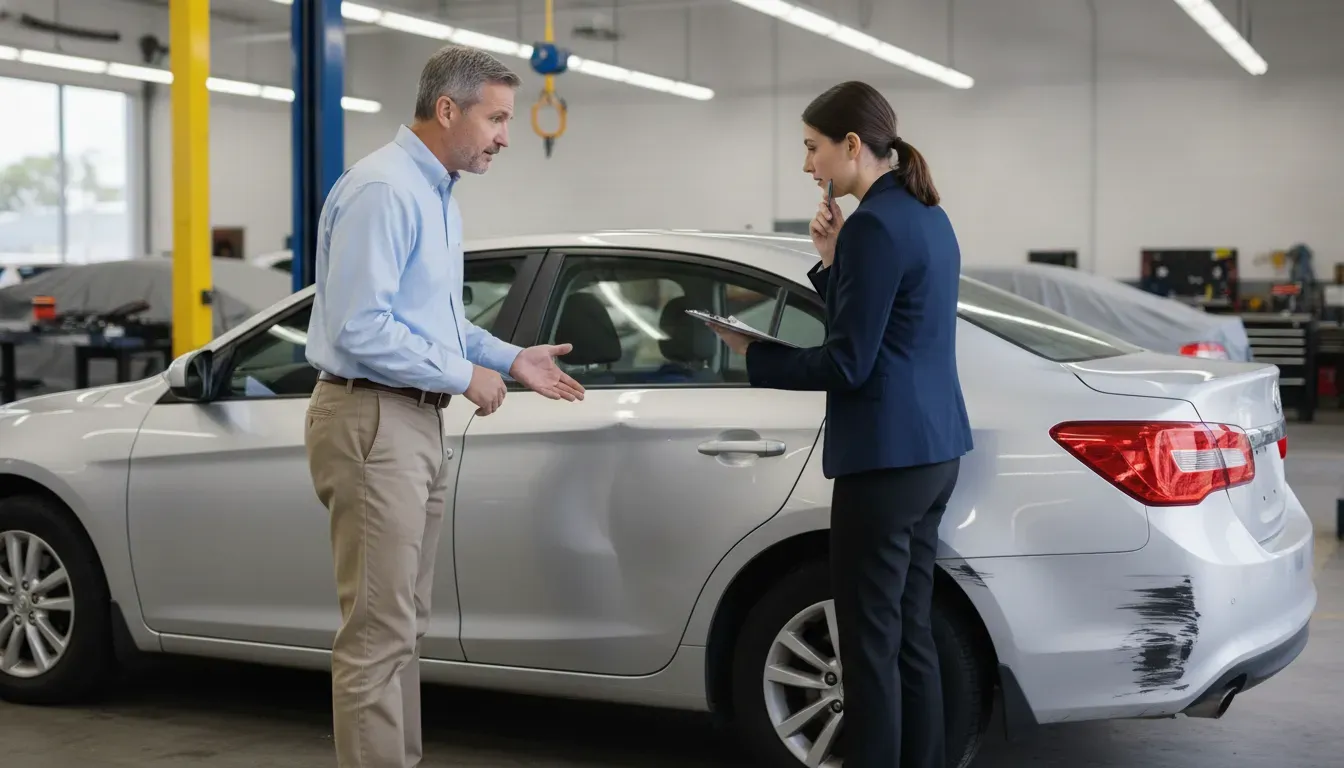
A Florida property damage claim can involve much more than sending an insurer a repair estimate. You may need to prove how the crash happened, preserve evidence of the damage, compare repair or total-loss valuations, and respond when the carrier delays or undervalues the claim. This guide explains practical steps for Florida vehicle owners while keeping Florida law separate from Georgia-specific rules.
For Georgia vehicle owners only: request a free case evaluation with Gastley Law or call (770) 557-2838. Gastley Law serves Georgia claims and does not represent Florida residents through this guide.
Florida reader next step: For help with a Florida insurance concern, review the Florida Department of Financial Services consumer contact page. To look for Florida-licensed counsel, use The Florida Bar Lawyer Referral Service. These resources do not replace advice about your specific claim or policy.
What is a Florida property damage claim?
A Florida property damage claim seeks payment for covered physical or financial losses to a vehicle and related transportation needs after a crash or another covered event. The claim may be made against your own policy, the at-fault driver’s liability coverage, or both depending on the facts, the available coverage, and the policy terms.
A vehicle property damage claim is different from a bodily injury claim. It generally focuses on repair costs, a total-loss settlement, reasonable related expenses, and other provable losses tied to the damaged vehicle. The insurance policy, the cause of the loss, the available limits, and Florida’s applicable rules all affect the result.
First-party and third-party claims
- First-party claim: You seek benefits under your own auto policy, such as collision or comprehensive coverage, subject to the policy’s terms and deductible.
- Third-party claim: You seek payment from the insurer for the driver or other person whose conduct caused the damage.
- Mixed claims: You may communicate with more than one insurer while coverage, fault, and payment responsibility are evaluated.
Do not assume that the same deadlines, duties, or dispute options apply to every claim. Read the declarations page and policy, identify whether you are a first-party or third-party claimant, and ask the carrier to identify the coverage basis for its position in writing.
What should you do first after vehicle damage in Florida?
After a crash, use this short sequence before the vehicle is repaired or moved. The order may change if anyone is injured or the vehicle is unsafe, but the goal is to protect people first and preserve the claim record second.
- Address safety and report the incident. Move out of danger when possible, seek medical help for injuries, and contact law enforcement as appropriate.
- Record the scene. Photograph the vehicles, damage, roadway, conditions, and identifying information. Write down witness names and contact details.
- Exchange information. Save the other driver’s name, contact information, vehicle details, insurance information, and the incident or crash report number.
- Notify the insurer promptly. Report the loss, obtain a claim number, ask for the adjuster’s contact information, and request instructions about inspection and photographs.
- Pause before major repairs. Ask whether the insurer must inspect the vehicle or approve the repair plan. Keep receipts for towing, storage, and reasonable steps needed to prevent additional damage.
Build an evidence file
Create one folder for the claim and save original copies of:
- The crash report, incident number, and photographs of the scene.
- Photos and video of every damaged area, including close-ups and wider views.
- Witness names and contact information.
- Driver, vehicle, and insurance information for the other party.
- Your policy declarations page, claim number, and adjuster correspondence.
- Repair estimates, invoices, parts information, supplements, and proof of payment.
- Towing, storage, rental, rideshare, or other reasonable transportation records.
- Vehicle title, registration, loan information, maintenance records, and pre-loss photos when relevant.
Notify the insurer and preserve the vehicle
The Florida Department of Financial Services advises vehicle owners to contact the insurer promptly, understand their policy duties, and determine whether the company needs to inspect the vehicle or receive photographs before repairs begin. The Department also advises getting authorization before repairs and explains that Florida vehicle owners have the right to select a repair shop, even though a carrier may maintain a preferred-shop list. Read the Florida auto claim guide for the agency’s consumer guidance.
If the vehicle is unsafe, take reasonable steps to prevent additional damage and keep receipts. Ask the insurer how it wants the vehicle inspected. Do not discard damaged parts, authorize a tear-down, or sign an assignment of claim rights without understanding the consequences.
How do you document the value of a Florida vehicle damage claim?
Documenting value means connecting each requested dollar to a specific loss and a reliable record. For a repairable vehicle, the core evidence is usually a detailed estimate, photographs, repair invoices, supplements, and proof of payment. For a total loss, valuation evidence may include comparable vehicles, mileage, options, condition, local availability, taxes, fees, and the insurer’s valuation report.
Repairable vehicle losses
Ask for a complete written estimate that identifies labor, parts, paint, diagnostic work, calibration, taxes, fees, and any visible or hidden damage. If a shop discovers additional damage, request a supplement rather than treating the new work as an informal verbal promise. Keep every version of the estimate so you can show how the repair scope changed.
Compare the insurer’s estimate with the repair facility’s estimate line by line. Look for omitted operations, incompatible parts, missing diagnostic or calibration work, unrelated deductions, and labor assumptions that do not match the vehicle or repair method. A difference does not automatically prove bad faith, but an unexplained difference deserves a written response.
Total-loss valuation
Florida Statutes section 626.9743 addresses settlement practices for motor vehicle insurance. For certain first-party total-loss settlements, the statute describes methods involving comparable vehicles, recognized industry sources, or dealer quotations. It also addresses itemized deductions and written explanations when the settlement basis varies from the listed methods. Read the current Florida motor vehicle claim settlement statute and compare it with the exact policy and facts before relying on any valuation rule.
When reviewing a total-loss offer, check the comparable vehicles for location, model year, trim, mileage, options, condition, and availability. Ask for the insurer’s valuation report and supporting documentation. If a deduction is unclear, request an itemized explanation in writing. Do not accept a settlement simply because it is the first number offered, and do not reject it without understanding whether the payment affects title, storage, taxes, a loan, or the vehicle’s remaining value.
| Claim situation | Key records | First practical step | Common review point |
|---|---|---|---|
| Repairable damage | Estimate, photos, supplements, invoices | Request inspection and a complete written estimate | Missing operations, parts, labor, or calibration |
| Total loss | Valuation report, comparable vehicles, title and loan records | Request the settlement basis and itemized deductions | Comparable vehicle accuracy and condition adjustments |
| Delayed claim | Claim timeline, messages, call notes, receipts | Send a written status request with a response date | Unexplained delay, missing decision, or rising costs |
| Denied or disputed claim | Denial letter, policy, crash report, supporting evidence | Ask for the specific coverage or liability reason in writing | Policy language, exclusions, fault, and dispute deadlines |
What about diminished value?
A repaired vehicle can be worth less in the market because its accident history affects future buyers, even when the repairs are complete. Whether a diminished-value theory is available, against whom, and under what policy or state-law framework depends on the facts. Do not import a Georgia diminished-value rule into a Florida claim. For Georgia readers, Gastley Law’s Georgia car property damage claim guide explains a different state-specific framework.
Can an insurer require a particular repair shop in Florida?
Florida’s motor vehicle claim settlement statute addresses situations in which an insurer elects to repair a vehicle and specifically requires a particular repair shop. It says the vehicle must be restored to its pre-loss physical condition for performance and appearance, subject to the policy terms. The Florida Department of Financial Services also explains that consumers have the right to select a repair shop.
A preferred-shop list may still affect practical benefits offered by the policy or carrier, such as a repair guarantee or replacement transportation. Ask the insurer to explain those differences in writing. Then compare the proposed repair plan, parts, labor, warranty, and inspection process with the shop you trust. A shop’s estimate is evidence, not automatically the final amount owed.
If the insurer proposes aftermarket parts, ask what parts are being used and whether they are equivalent in fit, appearance, and performance. Section 626.9743 addresses replacement parts and requires equivalence in those areas for the covered situations described by the statute. Your policy and the vehicle’s repair needs still matter, so get a qualified repair professional’s view when the proposed parts or procedures are disputed.
What should you do if the insurer delays or underpays?
Start with a focused written response. Identify the exact estimate line, valuation comparable, coverage position, or requested document you dispute. Attach the supporting record, state the amount or action you are requesting, and ask for a written explanation by a reasonable date. Keep communications professional and save proof that the insurer received them.
Use a claim escalation checklist
- Confirm the claim number, assigned adjuster, policy, and coverage position.
- Request the estimate, valuation report, photographs, and documentation supporting the offer.
- Prepare a side-by-side comparison of the insurer’s position and your evidence.
- Ask the shop to explain repair supplements, omitted operations, parts, and calibration needs.
- Send a written demand or dispute summary with attachments and a clear response request.
- Review the policy for appraisal, mediation, notice, proof-of-loss, and suit provisions.
- Consider Florida-specific legal advice before signing a release or accepting a disputed settlement.
Do not confuse a delay with a guaranteed payment
The Florida Department of Financial Services Automobile Insurance FAQs state that Florida does not set one fixed statutory timeframe for settling every automobile claim. The same agency says that if no progress has been made after 30 days, a consumer may submit an insurance concern. That is a consumer-assistance option, not a promise that every claim must be paid automatically after 30 days. See the agency’s Florida automobile insurance FAQs for current guidance.
Be careful with phone-only promises. If an adjuster says a payment is approved, a deduction is required, or a document is missing, ask for the position in writing. A clear paper trail can reveal whether the disagreement concerns coverage, fault, repair scope, valuation, timing, or a missing condition.
Florida reader next step: If the insurer has stopped making progress, use the Florida automobile insurance FAQs and the Florida Department of Financial Services consumer contact page to identify an appropriate consumer-assistance path. For legal advice, use The Florida Bar Lawyer Referral Service to look for Florida-licensed counsel.
What dispute options may be available for a Florida property damage claim?
Dispute options depend on the policy, the type of claimant, the amount in dispute, and the reason for the disagreement. Common paths include a documented supplement request, an internal insurer review, appraisal when the policy allows it, Florida Department of Financial Services assistance, mediation, arbitration, or litigation. Each option has different rules and risks.
Florida Department of Financial Services assistance
The Florida Department of Financial Services Division of Consumer Services accepts insurance concerns and assigns requests to insurance specialists. The Department’s consumer contact page explains how to submit a concern and lists its helpline. Gather the claim number, policy information, correspondence, estimates, photographs, and a short timeline before submitting anything.
A regulatory complaint or consumer concern does not replace legal advice, waive a policy deadline, or guarantee a settlement. Check the policy and obtain advice about deadlines before relying on an agency process.
Mediation, appraisal, and legal review
Florida’s Department of Financial Services describes automobile mediation as a voluntary pre-suit process for disputes involving the ownership, operation, use, maintenance, or damage of a motor vehicle. The agency says both first-party and third-party claims may be eligible, and that property damage claims may be eligible regardless of amount. Review the Florida automobile mediation information and the policy before requesting or declining mediation.
Appraisal is different from mediation. An appraisal provision may address a disagreement over the amount of loss, but the policy controls when it applies and what procedure must be followed. A release can also affect future rights. Before signing a release, accepting a final settlement, invoking appraisal, or filing suit, consider consulting a Florida-licensed attorney who can evaluate the claim documents.
When should you talk with a lawyer about vehicle property damage?
Consider legal advice when the insurer denies coverage, disputes responsibility, refuses to explain a valuation, omits substantial repair work, pressures you to sign a release, invokes a policy condition, or leaves the claim stalled while costs continue. An attorney can review the policy, evidence, communications, and dispute options. The right lawyer depends on the state whose law governs the claim and where the representation will occur.
Gastley Law is a Georgia firm focused on diminished value and property damage claims for Georgia vehicle owners. It does not present this Florida guide as an offer to represent Florida residents, and this article is not a substitute for advice from a Florida-licensed attorney. If your accident or claim is in Georgia, you can review Gastley Law’s property damage services and contact the firm for a case evaluation. If your claim is in Florida, use the Florida resources above and seek Florida-specific counsel.
For Georgia vehicle owners only: request a free case evaluation with Gastley Law or call (770) 557-2838. Florida readers should use the Florida resources above or contact Florida-licensed counsel.
Frequently Asked Questions
What is included in a Florida property damage claim?
It may include reasonable covered vehicle repair costs, a total-loss settlement, and related documented expenses, depending on the policy, coverage, fault, and facts. Preserve estimates, invoices, photographs, transportation records, and insurer communications. A specific claim may also involve valuation disputes or additional repair damage discovered after teardown.
Can I choose my own repair shop in Florida?
The Florida Department of Financial Services says vehicle owners have the right to select a repair shop. A carrier may have a preferred-shop program with separate benefits, so compare the policy terms and proposed repair plan. Do not let a shop or insurer pressure you into signing claim rights without understanding the document.
How long does a Florida auto property damage claim take?
There is no single fixed settlement timeframe for every Florida automobile claim. The Florida Department of Financial Services advises consumers to stay in contact with the insurer and says they may submit an insurance concern if no progress has been made after 30 days. Policy terms, inspection, repair supplements, liability, and valuation can affect timing.
What if the insurer says my car is a total loss?
Request the valuation report, comparable vehicles, deductions, and settlement explanation in writing. Florida Department of Financial Services guidance states that when estimated repairs meet or exceed 80 percent of the vehicle’s value, the insurer will offer payment for a replacement vehicle of like kind and quality. Confirm how that guidance applies to your policy and facts before signing.
Can I challenge a low insurance settlement offer?
Yes, you can respond with a documented dispute. Compare the insurer’s estimate or valuation with repair records, photographs, comparable vehicles, and written explanations from qualified professionals. Review the policy for appraisal, mediation, notice, and release provisions. Obtain Florida-specific legal advice before accepting a final settlement if the dispute is significant.
Does Gastley Law represent Florida property damage claim clients?
Gastley Law focuses on Georgia diminished value and property damage claims. This guide is educational information for Florida readers, not an offer of Florida representation. Florida residents should consult a Florida-licensed attorney about a Florida claim. Georgia vehicle owners may contact Gastley Law for a case evaluation.
Request a free case evaluation with Gastley Law or call (770) 557-2838 today. Gastley Law serves Georgia clients and does not claim to represent Florida residents through this educational guide.