
Diminished Value After a Multi-Vehicle Pileup in Georgia
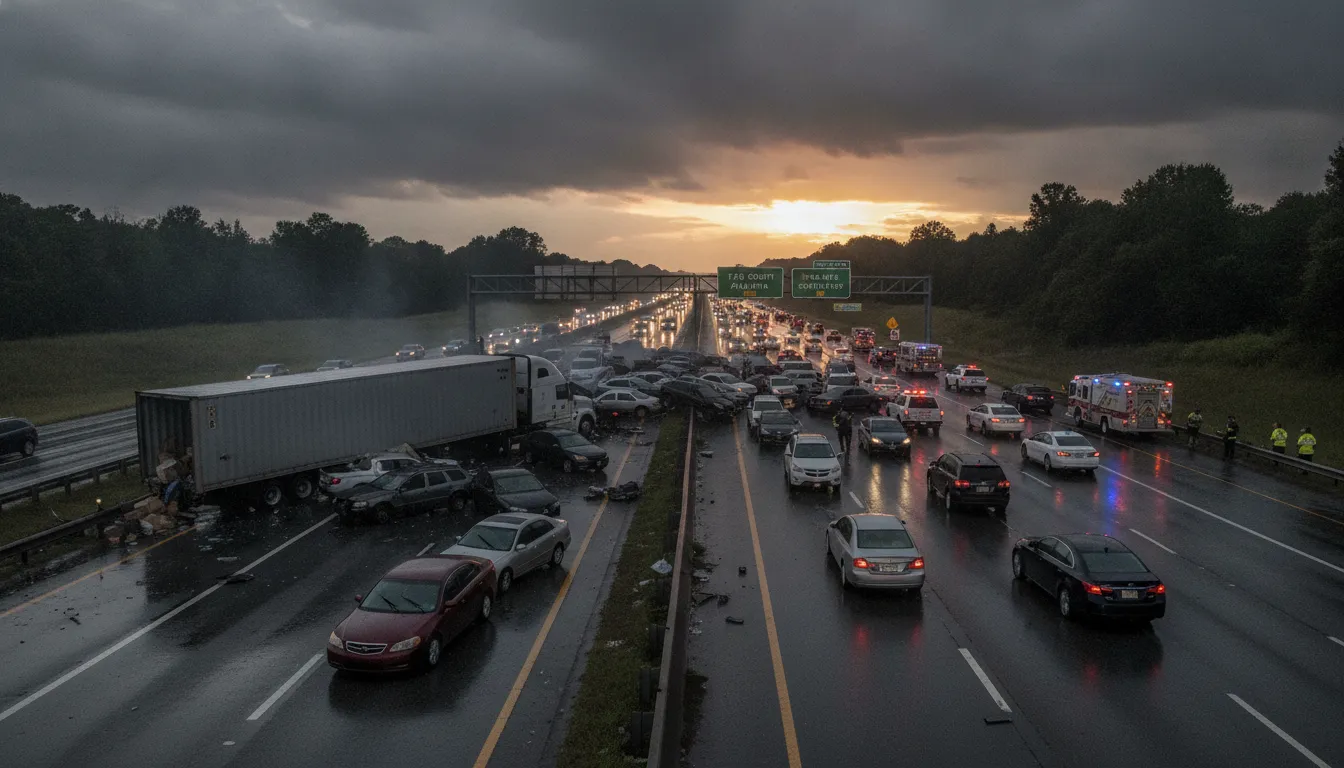
A multi-vehicle pileup on a Georgia highway leaves behind far more than just bent metal and broken glass. Even after full repairs, your car loses a lot of resale value just because it now has a crash history.
A diminished value claim after multi-vehicle accident Georgia is a legal demand for the price gap in a car’s worth before and after a crash. Georgia law says that a car with a crash history is worth less than a clean car, no matter how good the repairs are. The state requires insurance firms to pay for this loss for both first-party and third-party claims. In a multi-car pileup, this gets harder because the driver’s policy limits must be split among every damaged car. This leads to adjusters using a flawed formula to underpay victims. You can get these funds even if you were part at fault. It is vital to get a pro report that shows the real market loss.
Managing a claim with many insurance firms at once creates hurdles for any car owner. To get the money you are owed, you must first learn What Is a Diminished Value Claim After a Multi-Vehicle Accident in Georgia? Start by asking
What Is a Diminished Value Claim After a Multi-Vehicle Accident in Georgia?
A diminished value claim covers the loss in a car’s market price after a crash. Even if a shop does great work, the car now has a history of damage. This history makes the car worth less to a buyer than a car with no accidents. In Georgia, this loss is a real form of property damage. You have the right to seek payment for this loss, even in a pileup with many cars.
How diminished value differs from repairs
Repair costs pay for the parts and labor to fix your car. Diminished value is different. It is the value you lose because the car is no longer “accident-free.” Most buyers will not pay full price for a car that was in a major wreck. You can learn how diminished value claims work in Georgia to see why this matters. Georgia law recognizes diminished value as a form of property damage you can recover.
Property damage in multi-car crashes
In a pileup, many owners may have a claim. Each owner has the right to seek funds from the at-fault driver’s insurance. Georgia is one of the few states where you can also claim this from your own insurer. This is true even if you were at fault. Newer or luxury cars often lose the most value. Owners of these cars might see a property damage loss of 10% to 50% of the car’s pre-accident price. High-end cars with a bad history are very hard to sell for a fair price later.
Why crash history costs you money
When you sell or trade your car, the buyer will check its history. A report showing a multi-car crash will lower the offers you get. This is called inherent loss. It stays with the car for its whole life. A Georgia vehicle diminished value guide can help you see if your car qualifies for a claim. If you wait, you may lose the chance to get back the money you lost when the car was hit.
Why Multi-Vehicle Pileups Complicate Your Diminished Value Claim
A chain reaction crash involves more than just broken glass and bent metal. It starts a hard legal race for low funds. When you file a diminished value claim after a multi-vehicle accident in Georgia, you do not just deal with your own car. You also deal with every other driver who lost value in the same wreck.
Policy limits and the pool of funds
The biggest hurdle in a pileup is the at-fault driver’s policy limit. Under Georgia law, the low limit for property damage liability is $25,000 per wreck. In a one-car crash, that full sum might cover your repairs and your value loss. But in a four-car pileup, that one $25,000 pool must be split among all who were hit. If three cars have big damage, there may be very little left for your payout.
Complex fault and insurance tactics
Multi-vehicle wrecks lead to tough insurance splits. Firms often try to shift blame to other drivers to avoid paying their fair share. Since Georgia does not force you to have physical damage coverage by law, you may rely only on the other driver’s plan. If many firms fight over who hit whom first, your claim can stall for months.
The need for a property damage specialist
You need a clear plan when funds are low and blame is shared. Most firms focus on injuries, but a car accident property damage lawyer knows how to track every dollar. We work to ensure you get a fair cut before the money runs out. Having a pro who knows these unique splits can help you get the full value your car has lost.
How Insurance Companies Allocate Property Damage Among Multiple Claimants
In a large pileup, the total cost of car repairs and value loss often exceeds the at-fault driver’s coverage. Insurance companies must then decide how to split the available money. In Georgia, drivers are only required to carry a minimum of $25,000 for property damage per incident. When five or six cars are involved, that $25,000 limit is stretched very thin before any diminished value is even considered.
The challenge of limited policy funds
When multiple people make claims against one policy, the insurer typically uses a pro-rata method to share the funds. This means each person gets a part of the total pool based on the size of their loss. If the total damage to all cars is $50,000 but the policy only has $25,000, each person might only get half of what they are owed. This makes it very hard to get full payment for a diminished value claim after a multi-vehicle accident in Georgia without help.
Carriers may also try to delay payouts until all claims are filed. They do this to make sure they do not pay more than the policy limit. If one driver settles early and takes most of the money, there might be nothing left for others. You must move quickly to protect your right to a fair share of the coverage.
Comparing single and multi-vehicle claims
The process of getting paid for your car’s lost value changes when more drivers are involved. While a simple crash involves two parties, a pileup creates a complex web of fault. Insurance adjusters often look for ways to shift blame to other drivers to reduce their own payout. This table shows the main differences you will face when filing your claim.
| Factor | Single-Vehicle Scenario | Multi-Vehicle Pileup |
|---|---|---|
| Policy Limits | Usually covers full damage | Often hits coverage ceiling |
| Claimants | One vehicle owner | Three or more owners |
| Allocation Method | Direct payment to one party | Pro-rata split of funds |
| Average Recovery | Higher part of loss | Lower due to shared limits |
| DV Complexity | Standard talks | High due to fund competition |
Protecting your share of the settlement
Because funds are limited, insurance companies may use the third-party diminished value claim process to offer low settlements. They might claim that your car’s value loss is less vital than another driver’s repair bill. You need a strong appraisal to prove the exact amount of money you have lost in market value. This proof is key when the insurer starts dividing the available policy funds among everyone in the crash.
If the at-fault driver’s insurance is not enough, you may need to look at other options. This could include your own uninsured motorist coverage or filing a suit against other parties. A firm that knows how hiring a car accident property damage lawyer works can help you find every possible way to get paid.
Georgia Law Protects Your Right to Diminished Value After a Pileup
Georgia is one of the best states for car owners after a crash. State law says you have a right to get paid for the value your car loses. If you are filing a diminished value claim after a multi-vehicle accident, Georgia rules help you get paid. A Georgia vehicle diminished value guide can show you how to start. You can seek money for the drop in market price that happens when a car has a wreck on its record.
Recovering loss under Georgia code
The main law for these claims is OCGA 51-1-6. This rule lets property owners get money back for a breach of legal duty. In Georgia, diminished value counts as a form of property damage. This means you are not just asking for a favor. You are using your legal right to be made whole again.
Multi-car pileups make these cases hard. Many cars may be hurt at once. But the law remains clear. Georgia courts allow you to get money back for value loss in many forms:
- Loss from the wreck being on your car’s record.
- Loss when a car is worth less even after a good fix.
- Claims against the person who caused the pileup.
- Claims against your own policy if you were at fault.
If your car is worth less now than before the crash, you can claim that loss. In Georgia, you have four years from the date of the crash to file a claim for property damage. This is the core of how diminished value works in our state.
The impact of Mabry v. State Farm
A well-known court case called Mabry v. State Farm changed the law in 2001. The Georgia Supreme Court ruled that insurers must pay for the loss in value. This rule applies to both first-party and third-party claims. It means your own insurance company cannot ignore the drop in your car’s price.
Most firms try to use a math trick called the 17c formula. They use it to give you a low offer. But this math is flawed and does not show real market loss. You need to prove the real gap in price to get a fair check. Georgia law says you deserve the full amount, not just a small part.
First-party claims for at-fault drivers
Georgia has a very special rule for drivers. You can be at fault for the pileup and still get a check for value loss. You file this through your own policy as a first-party claim. Most other states do not allow this. This is why Georgia diminished value requirements are so helpful for car owners.
This right exists because your policy is a contract. The court says the contract must cover all parts of your loss. If you pay for full coverage, your insurer must pay for the car’s drop in price. This protects your money even if you made a mistake on the road.
Steps to Protect Your Diminished Value Claim After a Multi-Car Crash
Getting into a pileup is scary and hard. When many cars hit each other, finding out who pays for what is tough. You must act fast to save your right to a full payout.
A car that has been in a crash is worth less than one that has not. Even with great repairs, the value of your car drops once it has an accident past. This loss is what we call diminished value.
In Georgia, you can get this money from the at-fault driver’s policy. But in a multi-car crash, the insurance funds may be low. Georgia law only requires drivers to carry minimum property damage coverage of $25,000 per crash.
When many people make a claim on one policy, that money runs out fast. This is why you must take clear steps right away to secure your share of the funds.
Immediate Actions at the Scene
Your claim starts the moment the crash happens. You need to prove what happened and who caused it. If you can, take photos of every car. Do not just take photos of your own car.
You want to see how each car hit the other. Get the name and insurance card of every driver. In a pileup, more than one person might be at fault.
Having all the facts helps your lawyer sort out the diminished value claim after multi-vehicle accident Georgia laws require. Good records are the best way to prove your loss.
- Record the crash scene details. Take photos of all cars, street signs, and traffic lights. Ask for a copy of the police report as soon as it is ready.
- Find all insurance firms. Get the policy numbers for every driver. You may need to file against more than one person if the fault is shared.
- Get a formal appraisal. Do not trust the insurance adjuster to tell you what your car is worth. Get an expert to look at it and give you a written report.
- Send a written notice. Tell the at-fault driver’s insurance that you want diminished value. Do this early to get your spot in the line for a payout.
- Track all vehicle data. Keep records of what your car was worth before the crash. Use sites like KBB or NADA to show the value loss after repairs.
- Check your own policy. Look for an appraisal clause. This rule lets you hire your own expert to fight a low offer from the insurance firm.
- Hire a special attorney. A lawyer who knows property damage can handle the third-party diminished value claim process for you.
Fighting for a Fair Payout
Insurers often use a math rule called the 17c formula. They use this to offer very low payouts. This formula is often wrong and does not show the real loss of value.
You do not have to accept their first offer. If the insurance firm will not pay a fair price, you can take them to court. Small claims court is a great way to get a fair payout without a long wait.
Gastley Law helps car owners by taking on the risk. We front the cost of the appraisal, which can be between $200 and $1,500. This means you do not have to pay anything out of your own pocket to start.
We only get paid if we win money for you. This allows you to fight back against big insurance firms without any upfront costs. Our team knows how to prove your car lost value so you get what you deserve.
## Common Insurance Tactics That Shortchange Pileup Victims
Insurance companies are businesses, and their goal is to minimize payouts. After a multi-vehicle pileup, they have even more leverage because policy limits are stretched thin across multiple claimants. Knowing their playbook is the first step to fighting back.
The “exhausted limits” trap
When multiple cars are damaged in a single pileup, the at-fault driver’s policy must cover every claimant’s loss. Insurers often pay out for repair costs first, leaving little or nothing left for diminished value claims. By the time you ask for your car’s lost value, the adjuster claims the policy is empty. This is why you must notify the insurer in writing early that you intend to file a diminished value claim. An experienced attorney can help you assert your place in line before the funds run out.
The 17c formula undercount
Most Georgia insurers use a calculation called the “17c formula” to value diminished value claims (F003). This formula was never designed to measure actual market loss. It applies arbitrary caps and multipliers that drastically reduce payouts. The formula applies a 10% cap based on the car’s value, then subtracts more for mileage and damage severity before even considering what your car is actually worth. An independent appraisal using real market data almost always shows a much higher loss.
Blame-shifting among drivers
In a multi-car crash, fault is rarely clear-cut. Insurance companies take advantage of this by pointing fingers at other drivers (F009). If one carrier can argue another driver was partially at fault, they reduce their own payout obligation. This delay tactic frustrates claimants into accepting low settlements. Georgia law allows you to recover from any at-fault party, and having a specialist who understands these allocation games is critical (F002).
The “lowball first offer”
Adjusters know many accident victims are stressed, short on time, and unaware of their right to diminished value. They often make a quick, low settlement offer hoping you will accept before learning what your claim is really worth. Do not sign any release or cash any check that says “final settlement” until you have had your vehicle independently appraised for lost value.
Claiming DV does not exist on repaired cars
Some adjusters will tell you that because your car has been repaired to “pre-accident condition,” there is no diminished value. This is false. Georgia law recognizes diminished value as a compensable loss even after perfect repairs (F007). The inherent diminished value — the loss that comes from having an accident on the vehicle’s history report — remains regardless of repair quality. If an adjuster tells you otherwise, they are hoping you do not know your rights under OCGA 51-1-6.
## Frequently Asked Questions
Can I claim diminished value if I was partially at fault for the pileup?
Yes. Georgia allows you to recover diminished value even if you share some fault for the accident. You can make a claim through your own insurance policy under your collision coverage. This is not true in most states, but Georgia law provides this protection for vehicle owners (F007). Your recovery may be reduced by your percentage of fault, but you are not automatically barred from compensation.
How long do I have to file a diminished value claim in Georgia?
The statute of limitations for property damage claims in Georgia is four years from the date of the accident. However, it is wise to act quickly. Insurance claims are processed on a first-come basis, especially when multiple victims are involved. The sooner you file, the better your position when policy limits are being allocated among claimants.
What if the at-fault driver’s insurance policy limits are too low to cover all damages?
This is a common problem in multi-vehicle pileups. Georgia’s minimum property damage liability requirement is $25,000 per incident (F004). If multiple cars are damaged, that amount is divided among all claimants. In that case, your options include filing under your own uninsured or underinsured motorist property damage coverage, if you carry it. A specialized diminished value attorney can help you identify every possible source of recovery.
Can I file a diminished value claim more than once for the same vehicle?
Yes. Each separate accident involving your vehicle creates a new diminished value claim. If your car is in a second accident, its value drops further, and you can file a new claim against the at-fault driver’s insurance for that additional loss. However, you cannot file a second claim for the same accident damage — each claim must correspond to a distinct crash event.
What if the insurance company refuses to pay my diminished value claim?
You have the right to challenge a denial. The first step is to submit a professional independent appraisal that documents your vehicle’s actual loss in market value. If the insurer still refuses, you can invoke the appraisal clause in your policy or file a lawsuit in Georgia small claims court (F010). Gastley Law handles these disputes on a contingency basis, meaning you pay nothing upfront and we only get paid if we recover money for you (F011).
## Get Help With Your Diminished Value Claim Today
You do not have to navigate a multi-vehicle diminished value claim alone. Insurance companies have teams of adjusters and lawyers working to minimize what they pay you. You deserve someone on your side who knows the system and knows Georgia law.
Gastley Law focuses exclusively on diminished value and property damage claims. We do not handle personal injury cases. This is all we do, and we do it well. Our team understands the complex insurance allocation issues that arise in multi-vehicle pileups, and we know how to fight for your fair share of the available policy limits.
We operate on a pure contingency fee model. That means you pay nothing upfront. We front the cost of the independent appraisal, which typically ranges from $200 to $1,500. You only pay if we recover money for you. If we do not win, you owe nothing. We are also prepared to litigate in small claims court if the insurance company refuses to offer a fair settlement.
Do not let a multi-car crash cost you thousands in lost vehicle value that you are legally entitled to recover. Call Gastley Law today at (770) 557-2838 or email Nik@GastleyLaw.com for a free consultation. Let us evaluate your claim and help you get the compensation you deserve.