
Third Party Diminished Value Claim Guide in Georgia

The other driver’s insurer may owe more than the cost of repairing your vehicle.
A third party diminished value claim asks the at-fault driver’s insurer to pay for market value your vehicle lost after a crash, even after repairs. In Georgia, strong records, repair proof, and a credible valuation can help answer low offers or denials.
Call Gastley Law at 770-557-2838 or request a case evaluation before you accept a low diminished value offer.
You may want to know whether the other driver’s insurer must address the loss and what proof moves the discussion forward. Those questions become easier to answer once the third-party route is clear. This guide uses verified Gastley Law resources for diminished value, negotiation, services, and case evaluation so each link sends readers to a live page. The next section, Third party diminished value claim basics in Georgia, explains who pays and what the claim seeks. The path begins with the claim itself.
Third party diminished value claim basics in Georgia
A third party diminished value claim focuses on the loss that remains after repairs. The at-fault driver’s insurer may be responsible when the accident history lowers the vehicle’s market value. The claim should separate repair costs from resale value loss and support both with records.
What the claim covers
A third party diminished value claim seeks payment from the at-fault driver’s insurer after a crash. It addresses the value a vehicle may lose because its accident history can affect a future sale or trade. The key point is simple: repairs and market value are separate issues.
A shop may restore the vehicle’s parts, paint, and safe operation. Yet a buyer may still view the repaired vehicle differently from a similar vehicle with no crash history. For Georgia drivers, Atlanta diminished value claims lawyer can help explain this remaining loss.
The insurer responsible for the claim
In a third-party claim, the demand goes to the insurer for the driver who caused the crash. This is different from asking your own carrier to pay under your policy. The claim focuses on the financial harm linked to the other driver’s fault.
The difference between first-party and third-party claims matters. A government report on diminished value coverage notes that most jurisdictions treat third-party and first-party claims differently. Keeping that distinction clear can help you frame the demand and organize the right records.
The value loss at issue
The central question is not whether the repair bill was paid. The question is whether the repaired vehicle is worth less than it was before the collision. The same government report describes damages as the reasonable market value before the accident minus the reasonable market value afterward.
That difference needs support. Useful records may include the repair estimate, final repair invoice, photos, vehicle details, and facts about the crash history. A clear demand should connect those records to the claimed loss in resale value.
A third party diminished value claim is not a blanket request for extra payment after every repair. It is a focused claim for a market loss tied to the collision. Georgia drivers should keep the at-fault insurer, repaired vehicle, and remaining value loss at the center of the claim.
Who pays a third-party diminished value claim?
The at-fault driver’s liability insurer usually pays a third-party diminished value claim when fault and value loss are supported. The carrier can still dispute liability, the appraisal, or the amount requested. Clear evidence helps keep the claim focused on the remaining property damage loss.
A third-party diminished value claim usually seeks payment from the at-fault driver’s insurance carrier. It is not a claim against your own policy. A government review of diminished value coverage notes that most jurisdictions cover this loss as a third-party claim. The insurer still reviews fault, liability, and the amount of the claimed loss.
The liability carrier’s role
The claim is part of the vehicle owner’s property damage demand. It asks the liability carrier to address a loss that may remain after repairs. That loss is the drop in market value tied to the vehicle’s accident history. A repaired car can still be worth less than it was before the crash.
Payment is not automatic. The carrier will review whether its insured driver caused the crash and whether the claimed loss is supported. The carrier may also review repair records, vehicle details, and an appraisal. Clear records help keep the focus on the vehicle’s actual post-crash value.
Reasons an insurer may dispute payment
A carrier may dispute fault or argue that another driver shares responsibility. It may also challenge whether the crash caused a measurable drop in value. Even when liability is clear, the insurer may question the appraisal method or the records submitted with the demand.
- Liability may still be under review.
- The carrier may ask for more repair records or vehicle details.
- The insurer may disagree with the claimed market value loss.
- The carrier may make an offer that is lower than the documented loss.
This is why it helps to separate repairs from diminished value. Repairs address physical damage. A third-party diminished value claim addresses the market loss that may remain after that work is complete. Vehicle owners can learn how to request a case evaluation and gather the records needed for review.
The amount of the offer
The carrier’s first offer may not match the value loss shown by the evidence. In a third-party claim, damages can be measured by comparing reasonable market value before and after the accident. That comparison helps show why a repair invoice alone may not answer the full property damage question.
An insurer may use its own appraisal approach or challenge the owner’s proof. The result can be a lower offer, a request for more records, or a denial. If an offer appears low, review the evidence before you negotiate your diminished value claim.
What evidence strengthens a Georgia diminished value claim?
The strongest Georgia diminished value claims use records that show the crash, the repairs, the vehicle’s condition, and the remaining market loss. Photos, repair invoices, supplements, vehicle details, communications, and a supported appraisal help answer an adjuster’s objections with facts instead of guesswork.
A strong third party diminished value claim needs a clear paper trail. The goal is to show the vehicle’s condition, the repairs, and the remaining loss in resale value. Keep each record in one folder and label it with the date.
Accident and repair records
Start with documents that explain what happened and what work followed. The accident report can preserve basic crash details. Photos can show the areas hit before repairs began. Save clear images from several angles, including close views of the damage.
- The accident report.
- Any exchange-of-information form.
- Photos before repairs.
- Photos during and after repairs.
- The final repair invoice.
- Itemized estimates and supplements.
- Records for replaced parts.
- Paint, frame, or calibration records.
- The vehicle identification number.
- Mileage, trim, and options.
Do not throw away an early estimate after the shop issues a supplement. Together, the records help show the scope of the repair process. They also help an appraiser compare the repaired vehicle with similar vehicles that lack an accident history.
Proof of the value difference
The key issue is the market value change. A state legislative research report explains the measure as reasonable market value before the accident minus reasonable market value after the accident. Gather records that help support both sides of that comparison.
- Pre-accident service records.
- Photos that show prior condition.
- A vehicle history report.
- Comparable vehicle listings.
- Listings with and without accident history.
- A written diminished value appraisal.
- The appraisal method and support.
The appraisal should explain its sources, assumptions, and comparison vehicles. It should not rely on a bare total with no support. For more context on the loss, review Gastley Law’s property damage claim services.
Insurance communications
Save every letter, email, estimate, appraisal, and settlement offer from the insurer. Keep notes for phone calls with the date, time, adjuster’s name, and a short summary. Written records make it easier to track what was sent and how the insurer responded.
Before sending a demand, check that the file tells one consistent story. The photos, repair documents, vehicle history, and appraisal should point to the same loss. If the adjuster challenges the amount, these records help you negotiate your diminished value claim with specific support.
How to file a third-party diminished value claim in Georgia
To file a third-party diminished value claim in Georgia, open the claim with the at-fault driver’s insurer, finish repairs, gather proof, obtain valuation support, and send a written demand. Keep every response in writing so negotiation stays tied to evidence.
A third-party diminished value claim is directed to the at-fault driver’s insurer. It asks for the value your repaired vehicle lost because its accident history can still affect the market. A clear file keeps the focus on proof, not guesswork.
Start with the claim file
The basic measure is the difference between reasonable market value before and after the accident. A government research report on diminished value describes that measure for third-party claims. Your evidence should help show both sides of that comparison.
- Confirm fault and open the right claim. Ask the at-fault driver’s insurer for a third-party property damage claim number. Keep the adjuster’s name, email, phone number, and any written fault decision in one place.
- Finish repairs and track the work. Save the final repair invoice, shop estimate, photos, and any records about parts or added work. Check the repaired vehicle and note any repair concerns that remain.
- Gather the core records. Collect the police report, accident photos, repair records, and basic vehicle details. Include the year, make, model, mileage, trim, options, and prior condition.
- Get support for the value loss. Use records that compare the vehicle’s market value before and after the wreck. An appraisal may help explain how the accident history affects value after repairs.
- Send a written demand. State that you are making a third-party diminished value claim. Attach your supporting records, explain the requested amount, and ask for a written response.
- Review the insurer’s response. Do not treat the first offer as the only possible result. Compare the insurer’s explanation with your proof, then reply with any records that address the gap.
- Consider legal help if the claim stalls. A dispute may involve the proof, the valuation method, or the insurer’s response. Legal advice can help you assess the next step without promising any outcome.
Proof before negotiation
You can file a third-party diminished value claim on your own. Still, a demand is stronger when it is organized around the vehicle and the loss. Save copies of each attachment and each message you send.
Keep your repair file separate from your value-loss proof. The invoice shows what work was done. The valuation support addresses a different issue: what the vehicle may be worth after the accident history is attached to it.
Handling a low offer
If the insurer sends a low offer or denial, ask for its reason in writing. Then review the insurer’s figures against your records. A focused response is more useful than a general complaint.
You may decide to negotiate your diminished value claim or ask a Georgia attorney to review it. The right next step depends on the evidence, the insurer’s response, and the facts of your claim.
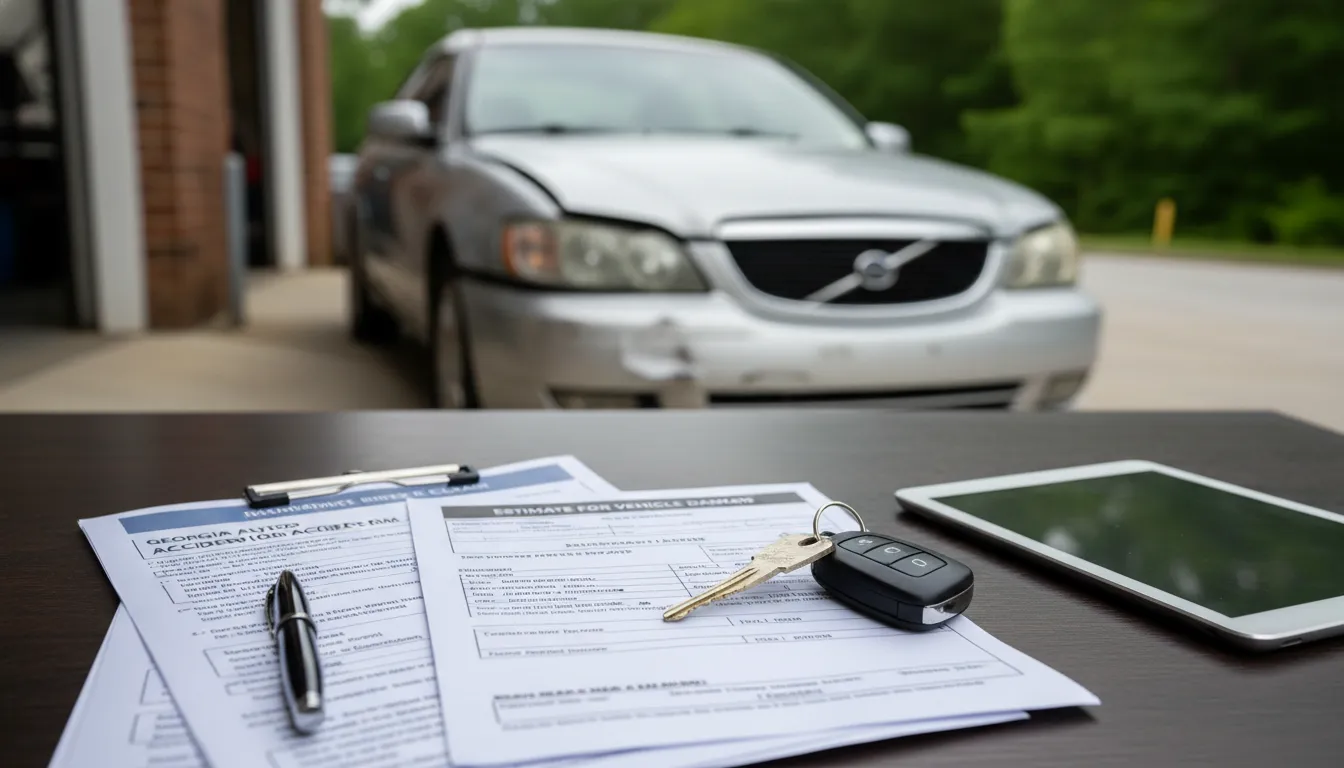
First-party vs. third-party diminished value claims
First-party and third-party diminished value claims involve different insurers and legal paths. A first-party claim goes through your own policy. A third-party claim goes to the at-fault driver’s insurer and focuses on the property damage loss caused by that driver.
The basic difference
A third party diminished value claim seeks payment from the at-fault driver’s insurer. A first-party claim goes through your own auto policy. The difference matters because the insurer, coverage basis, and early claim conversations may change.
A state legislative research report notes that most jurisdictions treat these paths differently. It says diminution of value is generally not covered as a first-party claim, but it is covered as a third-party claim.
| Point | First-party | Third-party |
|---|---|---|
| Insurer | Your own insurer. | The at-fault driver’s insurer. |
| Starting point | Your policy terms. | The other driver’s fault. |
| Core issue | Whether your coverage applies. | What value loss should be paid. |
| Value question | Depends on the policy. | Before-crash value compared with after-crash value. |
| Early communication | Ask which policy term applies. | State that you seek diminished value. |
Why the third-party path matters
When another driver caused the crash, the third-party path focuses on the value loss tied to that crash. Repairs may restore how the car works. They do not erase its accident history or the related drop in resale value.
The damages question is concrete: what was the car’s reasonable market value before the crash, and what was it afterward? Drivers who plan to file a third-party diminished value claim should keep repair records and vehicle details organized.
Clear insurer conversations
Tell the adjuster which type of claim you are making. Ask the insurer to confirm the claim number, the party it represents, and the records it wants. Do not assume a repair payment also resolves the separate value-loss issue.
If the insurer disputes the value loss, keep the discussion tied to evidence. Share the repair documents and support for the car’s market value before and after the crash. Keep copies of written messages so the claim history stays clear.
Why insurers resist third-party diminished value claims
Insurers often resist third-party diminished value claims by questioning fault, repair quality, appraisal methods, or whether the vehicle lost measurable value. That resistance is common. A well-organized file helps Georgia drivers respond with repair records, market evidence, and documented claim communications.
Common resistance patterns
When you file a third-party diminished value claim, the insurer may not accept your view of the loss. That does not always mean the claim lacks merit. Insurers often use low appraisals during negotiations. They may also ask for repeated records, delay replies, or argue that completed repairs made the vehicle whole.
Repairs and market value are different issues. A repaired vehicle can still carry a loss in resale value because of its accident history. Gastley Law’s diminished value information explains why that remaining loss matters.
Another common point of friction is a formula-based value. A formula may produce a figure that does not reflect your vehicle’s actual market position. The key question is the vehicle’s market value before and after the crash. A government research report describes third-party damages as the difference between those reasonable market values.
A record built around the actual loss
A clear file helps keep the discussion focused. Gather records that show the vehicle’s condition, accident damage, repairs, and value loss. Keep copies of estimates, repair records, appraisals, and messages with the adjuster. If the insurer asks for more documents, request a clear list and save the response.
Read each valuation closely. Check whether it reflects your vehicle, its prior condition, its repair history, and the accident record. If the insurer says repairs solved the problem, bring the discussion back to resale value. A repair bill shows the work performed. It does not, by itself, settle the separate question of market value loss.
Focused pushback during negotiations
Gastley Law helps Georgia vehicle owners review the insurer’s position and organize the response. That may include addressing a low appraisal, answering document requests, and challenging a valuation that does not fit the evidence. The goal is a clear claim based on the vehicle’s actual loss, not a promise of a specific result.
Gastley Law focuses on Georgia diminished value and property damage claims. The firm has recovered $2.4 million in property damage claims in the last 12 months, fronts costs when a case is accepted, and works on a contingency model so clients do not pay upfront legal fees for accepted claims.
Communication matters when an adjuster delays or repeats the same position. A written record makes it easier to track what was submitted and what remains disputed. Our guide on how to negotiate your diminished value claim covers practical ways to prepare for that discussion.
Talk to Gastley Law about your third party diminished value claim if the insurer is delaying, denying, or undervaluing your Georgia property damage loss.
What should you expect from a diminished value settlement?
A diminished value settlement depends on the vehicle, crash facts, liability, repair history, valuation proof, and negotiation record. There is no fixed payout for every claim. The better question is whether the evidence supports a market loss beyond the repair bill.
A diminished value settlement is not a fixed payment. It should address the market value your vehicle lost because of its accident history. The amount and timing depend on the facts of your third party diminished value claim.
The facts that shape the offer
Each vehicle presents a different loss. Its age, make, model, mileage, pre-accident value, prior damage, and repair quality can affect the discussion. Liability and the strength of your evidence matter too.
For third-party claims, the measure of damages is the vehicle’s reasonable market value before the crash minus its reasonable market value after the crash. That standard is described in a state legislative research report. A repaired vehicle can still lose resale value because its accident history remains part of its story.
The insurer’s first response
An insurer may ask for more records, make an offer, or dispute part of the loss. The first response is not always the last word. An early offer may not reflect the full market loss shown by your appraisal and supporting records.
Review the insurer’s reasoning before you decide how to respond. Compare its figure with your repair records, valuation evidence, and other claim documents. If the numbers do not line up, you may need to negotiate your diminished value claim.
Timing and negotiation
There is no single settlement timeline for every claim. A clear file can move more smoothly, while missing documents or a disputed value can slow the process. Negotiation may take more than one exchange.
Keep copies of the insurer’s letters, emails, offers, and requests. Track what you sent and when you sent it. If you are preparing to file a third-party diminished value claim, build the record before accepting an offer. The goal is a fact-based settlement, not a promised result.
Call 770-557-2838 to ask Gastley Law whether your Georgia diminished value claim is ready for review.
Frequently asked questions about third-party diminished value claims
These answers address common questions Georgia drivers ask after a crash caused by someone else. They are general legal information, not a prediction of any specific outcome. Your facts, records, insurer response, and appraisal support will shape the next step.
What is a third-party diminished value claim in Georgia?
A third-party diminished value claim is a property damage claim against the at-fault driver’s insurer. It seeks payment for the market value your vehicle lost because of the crash history, even after repairs are finished. The claim is separate from the repair bill.
Do insurance companies have to pay diminished value in Georgia?
Georgia drivers may pursue diminished value when a vehicle loses market value after an accident. Payment still depends on fault, vehicle history, repair records, valuation proof, and the insurer’s review. Do not assume the first offer reflects the full loss.
Can I file a diminished value claim without a lawyer?
You can file on your own, but you need organized proof. Save the police report, photos, repair invoices, vehicle details, insurer messages, and valuation support. A lawyer may help if the insurer disputes fault, delays, or makes a low offer.
What is the difference between first-party and third-party diminished value claims?
A first-party claim goes through your own insurer and policy. A third-party claim goes to the at-fault driver’s insurer. When another driver caused the crash, the third-party path focuses on that driver’s liability and your vehicle’s remaining market value loss.
Ready to protect your diminished value claim?
Gastley Law helps Georgia vehicle owners evaluate diminished value and property damage claims when insurers delay, deny, or make low offers. The firm focuses on this niche, fronts costs when a case is accepted, and works on contingency rather than charging upfront fees.
Waiting too long can leave you sorting records under pressure and make it easier to accept an insurer’s offer before you understand your options. Starting now gives you time to gather repair documents, appraisal details, and insurer correspondence while the information is easier to find. A focused review can help you identify the details that matter, prepare for the next conversation, and decide how to move your Georgia claim forward.
Ready to request a case evaluation? Call 770-557-2838 to request a case evaluation and discuss the next step with Gastley Law. Starting the conversation now can help you build a clearer plan before you respond to the insurer about your third-party diminished value claim.