
If an insurer’s offer does not cover the vehicle damage and related costs you can document, you can dispute it. Start by preserving the offer, checking what kind of claim you have, and building a written evidence file before accepting money or signing a release. In Georgia, the right response depends on your policy, the crash facts, and whether the claim involves repairs, a total loss, or diminished value.
Request a free case evaluation with Gastley Law or call (770) 557-2838 today.
A strong dispute is specific, documented, and tied to the policy or loss you are asking the insurer to address. Gather the estimate, photos, repair records, valuation material, and communication history. Put the disputed items in writing, keep proof of delivery, and use a measured escalation plan. Do not assume a complaint or a lawyer guarantees payment; the result depends on the policy, evidence, and facts.
To dispute a car insurance claim in Georgia, preserve the insurer’s offer, identify whether the claim is first-party or third-party, collect complete damage records, compare the estimate with an independent inspection, calculate every documented loss, send a focused written dispute, and set a follow-up date. Review the policy and any proposed release before you accept a payment or give up a claim.
Georgia’s Office of the Commissioner of Insurance and Safety Fire explains the difference between liability coverage and physical-damage coverage in its Georgia auto insurance resource. That overview is useful background, but your policy controls the terms of a particular claim.
A settlement may be too low because the estimate omits damage, uses different labor or parts assumptions, leaves out rental or towing costs, applies a deductible, or values a total-loss vehicle using incomplete comparables. A repair payment also may not address diminished value. Ask for the math and the supporting policy or claim basis for each deduction rather than arguing about one unexplained total.
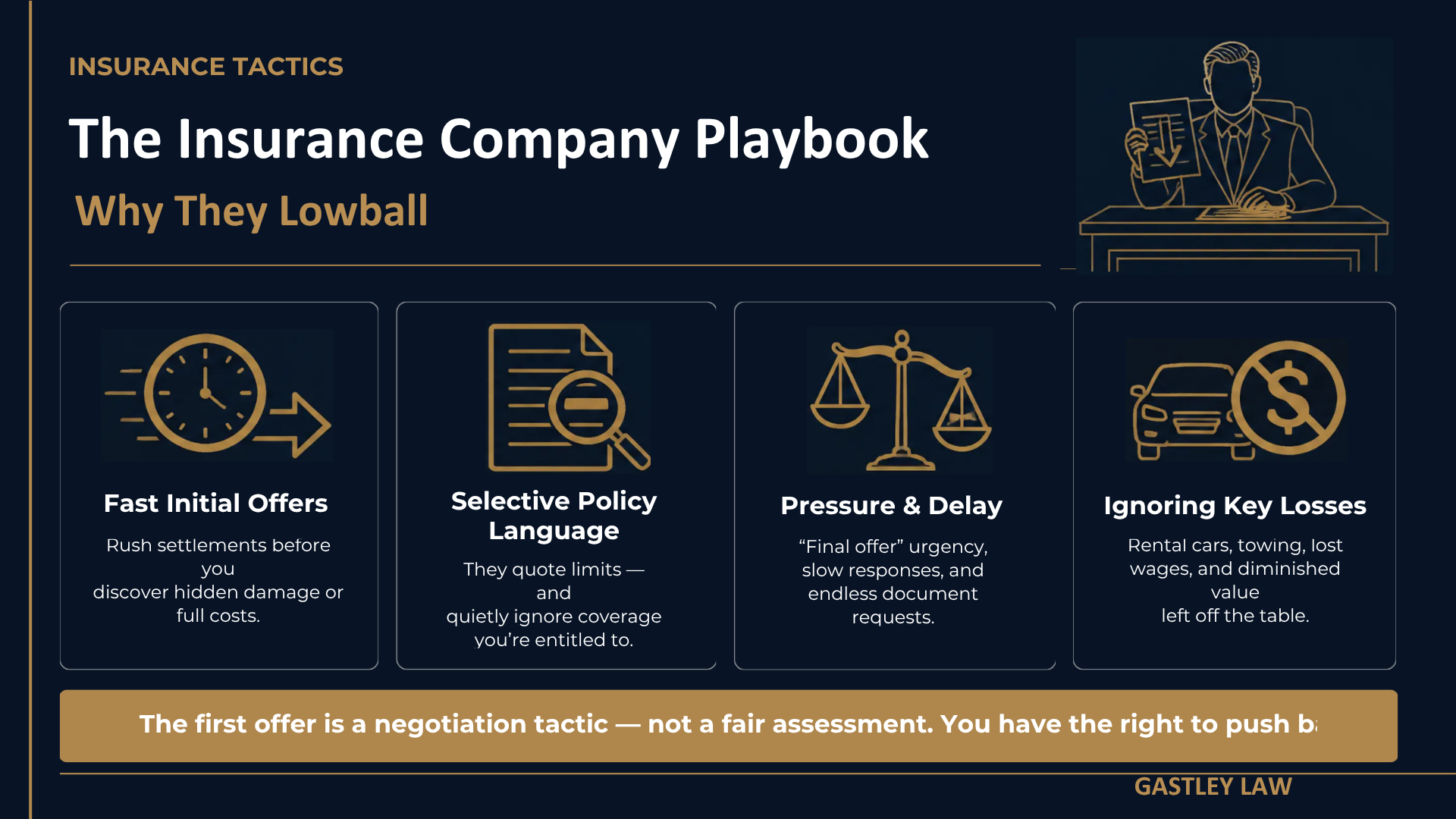
An early offer may be based on a brief inspection or incomplete information. Compare it with a detailed shop estimate and ask why any line was removed. The adjuster’s explanation should be clear enough for you to evaluate, not just a new number with no supporting detail.
Hidden damage can appear after disassembly. Other commonly overlooked items include towing, storage, rental expenses, loss of use, taxes, fees, alignment, scanning, and required calibration. Keep receipts and ask the repair facility to submit supplements through the appropriate claim process.
A repair claim addresses the cost of restoring the vehicle. A total-loss claim instead turns on the vehicle’s pre-loss market value and the deductions or additions allowed by the policy and applicable facts. Diminished value is a possible post-repair loss in market value caused by the vehicle’s accident history. It is a separate issue from the repair invoice, and the evidence and claim path matter. See Gastley Law’s diminished value claim resource for the deeper analysis.
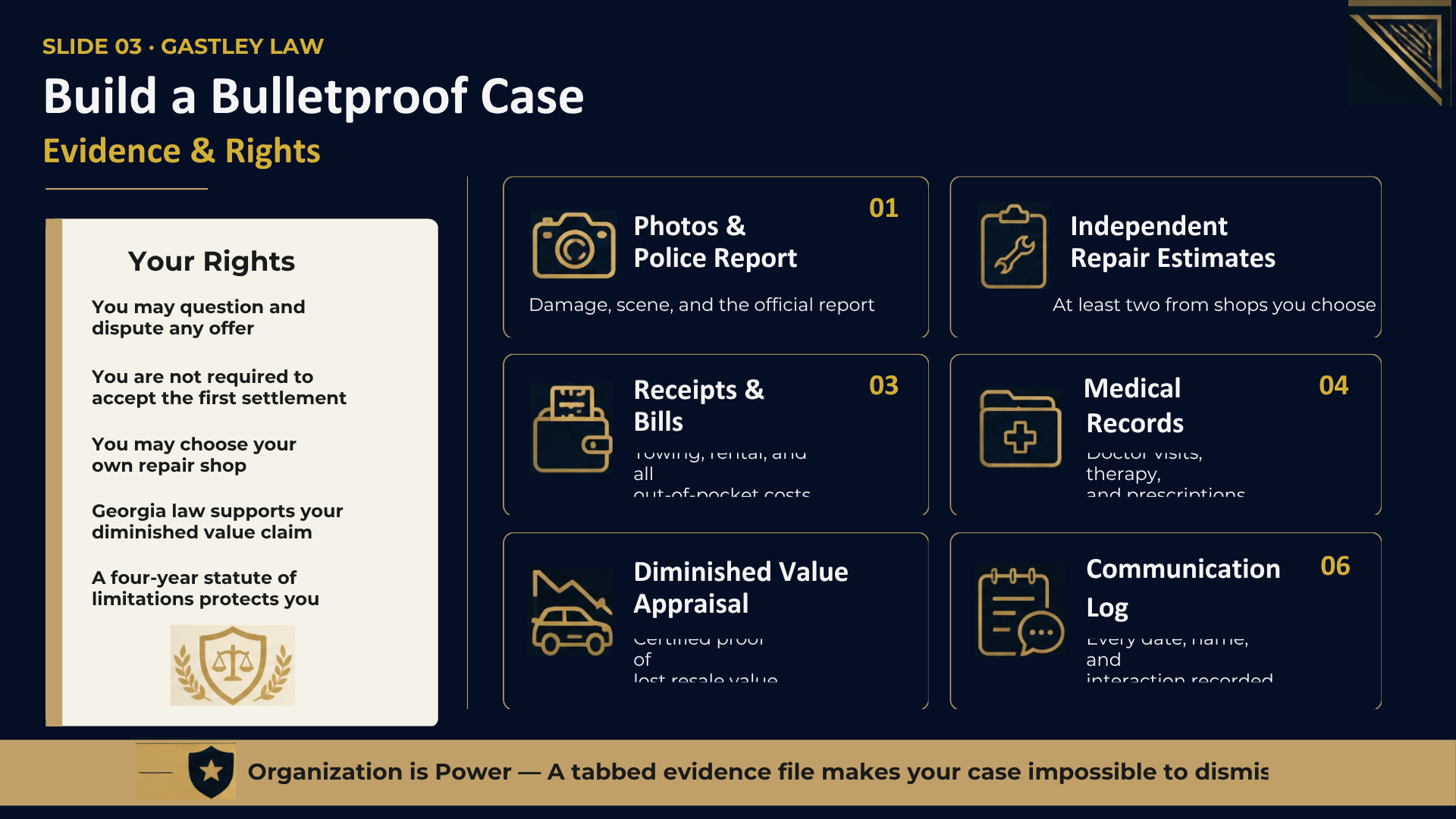
Gather evidence that shows what happened, what was damaged, what the insurer offered, and what the documented loss actually is. A complete file makes it easier to identify omissions and gives the adjuster a concrete reason to reconsider. Keep originals, use dated filenames, and maintain a short contact log so the sequence of events is clear.
An independent repair inspection or valuation report can help test the insurer’s assumptions, but it does not guarantee a particular recovery. Gastley Law’s property damage services page explains the firm’s focus. For rental and transportation issues, review the Georgia rental car and property damage guide.
A useful dispute letter identifies the claim, explains each disputed item, attaches or lists the supporting evidence, states the correction requested, and asks for a written response by a reasonable date. Keep the tone factual. Send it through a trackable method and by email when appropriate, save the complete letter and attachments, and do not include unsupported demands or threats.
For a fuller resource, see Gastley Law’s insurance claim demand letter guide. The best format depends on the claim and should not be treated as a substitute for individualized legal advice.
For a total-loss decision, compare the insurer’s valuation with comparable vehicles that match location, mileage, condition, trim, and options. Check deductible, taxes, fees, and any retained-salvage assumptions. For diminished value, document the vehicle’s pre-loss condition and post-repair history, then use a credible valuation method. The policy, claim type, evidence, and facts determine the appropriate remedy.
If the disagreement centers on valuation, review total-loss appraisal guidance before choosing a next step. A total-loss process and a diminished-value claim are not interchangeable. Do not assume that a repair payment resolves every post-accident value issue, or that every policy provides the same appraisal or dispute procedure.
If the insurer will not reconsider, ask for a supervisor and request the reasoning in writing. Then review the policy for any appraisal, mediation, arbitration, or other contractual procedure that actually applies. You may also submit a complaint to the Georgia Office of the Commissioner of Insurance and Safety Fire. A complaint can document a concern, but it does not guarantee payment or replace legal advice.
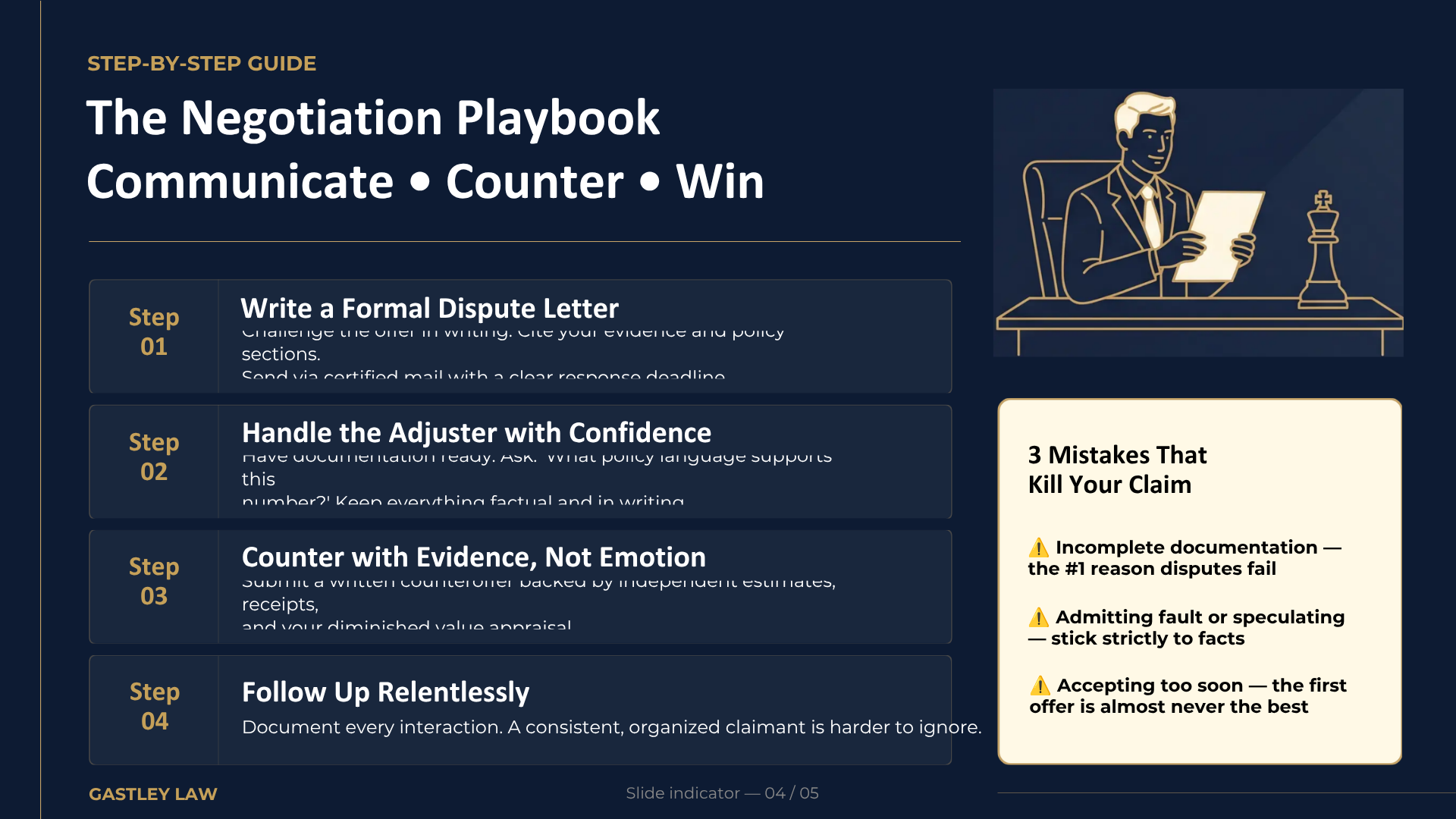
Ask the adjuster to identify the specific line items, assumptions, or policy provisions that support the offer. Keep the request narrow and give the insurer the evidence that addresses those points. A written record reduces confusion when several people handle the claim.
Some policies contain appraisal or other dispute provisions, while others use different procedures. Read the actual policy before invoking one. Mediation or arbitration may have rules, costs, deadlines, or effects that require case-specific advice.
The Georgia complaint process is available through the official OCI consumer insurance complaint page. Follow its current instructions and keep a copy of what you submit. The agency’s process is not a substitute for negotiating the claim, proving damages, or evaluating a lawsuit.
Consider contacting a Georgia insurance claim lawyer when there is a material unexplained gap, a release with unclear scope, repeated delay, disputed coverage, a total-loss or diminished-value disagreement, or a refusal to address documented losses. Gastley Law offers a free case evaluation and focuses on Georgia diminished-value and property-damage claims. No lawyer can promise a result, so bring the policy, offer, evidence file, and communication log.
A lawyer may also help you understand whether the issue is a valuation dispute, a coverage question, a missing supplement, a contract procedure, or a separate legal claim. Before you sign a release or cash a payment described as full and final, ask what rights the document may address and get advice if its scope is unclear.
Request a free case evaluation with Gastley Law or call (770) 557-2838 today.
Yes, you can ask the insurer to reconsider a settlement, but the strength and timing of the dispute depend on the policy, claim type, evidence, and any release you signed. Preserve the offer, identify the disputed items, and send a written request supported by estimates, invoices, photographs, or valuation records.
You can decline or counter an offer, but review the payment language and any release before accepting money or signing documents. An initial offer may not include every documented loss, yet refusing it does not automatically establish a right to a higher amount. Ask for the offer and deductions in writing.
Compare the estimate with an independent repair inspection, request supplements for hidden or omitted damage, and document towing, rental, storage, taxes, fees, and calibration when applicable. Ask the adjuster to explain each difference and attach the repair facility’s written support to your dispute.
You may be able to challenge a total-loss valuation or present a diminished-value claim, but the applicable policy, claim type, evidence, and facts control. Review comparable vehicles for a total loss. For a repaired vehicle, document post-accident history and market-value evidence rather than treating diminished value as another repair invoice.
Contact a lawyer when the insurer leaves a material gap unexplained, delays repeatedly, disputes coverage, rejects documented supplements, undervalues a total loss or diminished value, or presents a release you do not understand. Early advice can help preserve options, but it cannot guarantee payment or an outcome.
Disclaimer: This article provides general information about disputing vehicle insurance claims in Georgia. It is not legal advice and does not create an attorney-client relationship. Insurance policies, deadlines, procedures, and available remedies vary by claim and facts. Consult a qualified Georgia lawyer about your situation before signing a release or making a consequential claim decision.