
Alabama Diminished Value Claim: A Practical Guide
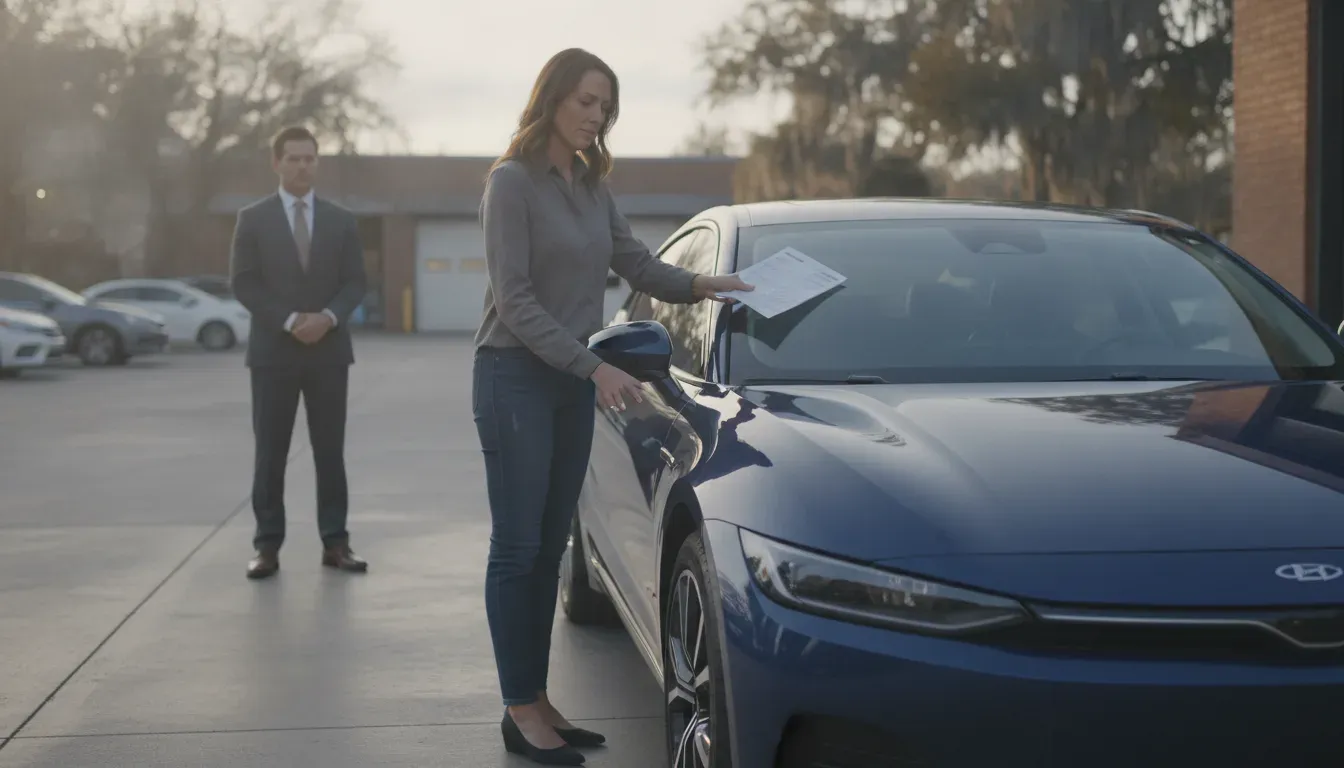
After a collision, a vehicle can be fully repaired and still be worth less to a future buyer because its history now includes accident damage. An Alabama diminished value claim seeks compensation for that market-value loss, but the legal path depends on whether you are pursuing the at-fault driver’s insurer or your own policy.
Request a free case evaluation with Gastley Law or call (770) 557-2838 today. Gastley Law focuses on Georgia vehicle claims, so Alabama residents should consult Alabama counsel for Alabama representation.
This guide explains the Alabama-specific issues to investigate, the records that can support a claim, how valuation evidence works, and what to do if an insurer offers less than you believe the loss is worth. It is general information, not legal advice. Insurance policy language, the accident facts, and the identity of the responsible party can change the analysis.
What is an Alabama diminished value claim?
An Alabama diminished value claim is a request for compensation for the difference between a vehicle’s market value before a collision and its market value after repairs. The vehicle may look and drive normally, but accident history, repaired components, and buyer concerns can affect what a reasonable buyer would pay.
Alabama courts have described diminished value as a measure of property damage. The important question is not simply whether the bumper, quarter panel, or frame was repaired. The question is whether the vehicle’s post-repair market value remains lower because of the collision. That requires evidence tied to the vehicle and the applicable claim theory.
Do not assume that an Alabama claim follows the same rules as a Georgia claim. Alabama’s treatment can differ between a third-party property-damage action and a first-party claim under your own collision policy. A careful review starts with identifying the insurer, the policy, and the person legally responsible for the crash.
Does Alabama recognize diminished value after a car accident?
Alabama recognizes diminished value as a possible measure of property damage in a third-party tort claim, but the result is not automatic. In Pritchett v. State Farm Mutual Automobile Insurance Company, the Alabama Court of Civil Appeals distinguished a third-party claim from the first-party policy dispute before it. The court held that the policy’s repair-or-replace language did not require the insurer to restore the vehicle’s pre-collision value.
Read the Pritchett decision and compare its reasoning with your own policy. The case does not mean every Alabama diminished value claim succeeds, and it does not mean every first-party policy excludes the loss. It shows why the claim’s legal basis matters before you rely on a general formula or an insurer’s short explanation.
Third-party claim against the at-fault driver’s insurer
A third-party claim is generally directed to the insurer for the driver who caused the collision. If liability is established and the vehicle is repairable, diminished value may be presented as part of the property-damage demand. Your evidence should connect the other driver’s conduct, the collision damage, the completed repairs, and the vehicle’s lower post-repair market value.
First-party claim under your own policy
A first-party claim is made under your own collision or other applicable coverage. Your policy language controls more directly here. Alabama Administrative Code Rule 482-1-125-.08 addresses automobile claim settlement standards and states that a repair-shop provision does not create a duty to pay alleged diminution in value. That rule does not replace a policy review, so avoid treating a third-party case as an automatic answer to a first-party dispute.
| Question | Third-party claim | First-party claim |
|---|---|---|
| Who is the claim against? | The at-fault driver’s insurer or responsible party | Your own insurer under your policy |
| Core issue | Liability and the vehicle’s post-collision loss in value | Policy coverage, exclusions, and repair-or-replace language |
| Alabama-specific caution | Recognition as property damage does not guarantee a payment | Pritchett and Alabama rules caution against assuming the policy restores market value |
| Useful first step | Build a liability and valuation package | Read the policy and request the insurer’s written position |
Who may have a diminished value claim in Alabama?
A potential claimant is usually an owner or other person with a legally recognized interest in a vehicle that suffered a measurable post-collision loss. The strongest cases often involve a vehicle with a meaningful market, documented repair history, and evidence that the accident history affects buyer demand. Age, mileage, prior damage, repair quality, and the severity of the collision can all affect the analysis.
A claim is not established merely because a vehicle appears on a repair estimate. A repaired car may have little measurable market loss in one situation and a meaningful loss in another. A new or specialized vehicle may draw different buyer reactions than a high-mileage vehicle with prior damage. Those facts should be documented rather than replaced with a blanket percentage.
Separate the diminished value question from other losses. Repair costs, a deductible, towing, rental or loss-of-use damages, and a total-loss valuation are different components of a property-damage claim. Alabama’s Department of Insurance explains that a driver may file with the at-fault insurer or use collision coverage and allow the own insurer to pursue subrogation. That choice can affect timing, deductibles, communications, and the policy language you must analyze.
For a broader checklist of claim records, see Gastley Law’s Georgia car accident claim checklist. Its state-specific legal rules should not be copied into an Alabama claim, but the documentation principles are useful.
What evidence supports an Alabama diminished value claim?
The goal of evidence is to show a before-and-after market difference that is connected to this collision. A demand with only a repair bill may prove physical damage, but it may not establish how the vehicle’s market value changed after the repairs. Build the file while records are available and keep original documents in one place.
- Accident records: Keep the crash report, photographs, videos, witness information, insurance exchange details, and any admission or liability decision.
- Vehicle history: Preserve the title, purchase documents, maintenance history, prior appraisal, mileage records, and any pre-accident listings or trade-in evidence.
- Repair records: Collect estimates, supplements, invoices, parts information, alignment results, calibration records, photographs, and documentation of hidden or structural damage.
- Post-repair condition: Record repair defects, warning lights, panel gaps, paint differences, recurring problems, and inspection results. Do not claim a condition that an inspection does not support.
- Market evidence: Gather comparable vehicles with similar year, trim, mileage, equipment, condition, and location. Explain why each comparison is reasonably similar.
- Insurer communications: Save the claim number, coverage letters, valuation reports, adjuster emails, recorded statements, offers, denials, and deadlines.
Alabama Department of Insurance guidance also emphasizes documentation when a vehicle claim is disputed. Its automobile FAQs explain that a claim can still be supported when the at-fault insured has not reported the accident, provided sufficient documentation substantiates the claim. That is not a promise of payment, but it is a reminder to preserve proof instead of relying only on the other driver’s cooperation.
How is diminished value calculated in Alabama?
There is no single Alabama percentage that can reliably value every vehicle. A sound valuation compares the vehicle’s likely market value immediately before the collision with its likely market value after repairs, then explains the data and adjustments. The calculation should account for vehicle identity, condition, mileage, prior damage, repair severity, title history, local market conditions, and the quality of comparable evidence.
Useful valuation methods may include an independent appraisal, comparable sales analysis, dealer or buyer evidence, and documented market research. The method should be transparent enough for an insurer, mediator, or court to understand. A report that simply applies a formula without explaining the vehicle’s specific facts may be easier for an adjuster to discount.
Do not confuse Alabama’s total-loss threshold with diminished value. Alabama Code Section 32-8-87 defines a total loss at damage greater than or equal to 75 percent of the vehicle’s fair retail value before damage, subject to the statute’s details. A vehicle that is not a total loss can still raise a diminished value issue, while a totaled vehicle generally requires a different valuation and title analysis.
Gastley Law’s diminished value appraisal resource and diminished value report guide explain appraisal concepts for the firm’s Georgia audience. Alabama readers can use them to understand evidence categories, but should have an Alabama attorney or qualified appraiser assess the Alabama-specific application.
How do you file and negotiate an Alabama diminished value claim?
A practical process keeps the physical-damage claim, the diminished value evidence, and the insurer communications organized. The following sequence is a starting framework, not a substitute for reviewing an Alabama policy or getting advice about a pending dispute.
- Identify the claim path: Determine whether you are presenting a third-party demand, using your own collision coverage, or evaluating both options with advice.
- Report and preserve: Notify the appropriate insurer as required by the policy, obtain the claim number, photograph the vehicle, and preserve accident and repair records.
- Finish or document repairs: Keep every estimate, supplement, invoice, diagnostic record, and inspection result. If the vehicle is not repaired, explain how that affects the valuation question.
- Obtain valuation evidence: Use comparable vehicles or an independent appraisal that addresses the pre-loss and post-repair market difference.
- Send a written demand: State the amount requested, identify the evidence, separate diminished value from other damages, and request a written response.
- Evaluate the response: Ask the insurer to identify the policy language, valuation method, comparable vehicles, deductions, and facts supporting a denial or low offer.
- Choose the next step: Consider a revised demand, regulator assistance, negotiation, mediation, or Alabama legal advice based on the response and the value at issue.
Ask Gastley Law about a free case evaluation or call (770) 557-2838. The firm handles Georgia diminished value and property damage matters, not Alabama representation.
What should you do if an Alabama insurer denies or underpays the claim?
Start by asking for the insurer’s position in writing. A phone call can be useful, but a written explanation gives you a clearer record of the policy language, liability decision, valuation report, comparable vehicles, and claimed reason for rejecting diminished value. Respond to specific errors with specific documents rather than sending a new demand with no explanation.
If the dispute concerns an insurer’s handling of an Alabama insurance matter, the Alabama Department of Insurance says consumers should first contact the insurer or producer. If the response is unsatisfactory, you can review the department’s consumer complaint process. The department may send the complaint to the insurer and review its response, but it cannot provide legal representation, decide negligence, determine the value of a claim, or intervene in a pending lawsuit.
A complaint is not the same as a lawsuit and does not guarantee a settlement. It may help clarify the insurer’s position, but you should preserve all legal and policy deadlines while the complaint is pending. If the amount is significant, liability is disputed, the insurer cites a policy exclusion, or the claim is approaching a deadline, consult an Alabama attorney promptly.
What deadline applies to an Alabama diminished value claim?
Deadline analysis depends on the claim type, policy, parties, and facts. Alabama Code Section 6-2-34 includes actions for trespass to real or personal property among actions that must be commenced within six years. That statutory language may be relevant to a vehicle property-damage lawsuit, but it is not a universal answer for every insurance claim or contractual dispute.
Do not treat six years as permission to wait. Insurance policies can impose notice and proof requirements, evidence becomes harder to obtain, and a vehicle’s market history changes over time. A written demand, an appraisal, a regulator complaint, or ongoing negotiations may not extend every deadline. If you are unsure whether your claim is timely, ask Alabama counsel to analyze it before relying on a general internet summary.
The Alabama Legislature provides the current text of Section 6-2-34, and Alabama’s administrative code contains the automobile settlement rule at Rule 482-1-125-.08. Laws and regulations can change, so confirm the current text before making a legal decision.
Frequently Asked Questions
Can I make a diminished value claim against the at-fault driver’s insurer in Alabama?
Alabama recognizes diminished value as a possible measure of property damage in a third-party tort claim, but proof of liability, causation, and the vehicle’s market loss is still required. The insurer may dispute the value, the evidence, or the legal basis for the demand.
Can I make a diminished value claim under my own Alabama auto policy?
Possibly, but the policy language is central. Alabama’s Pritchett decision held that the specific repair-or-replace policy before the court did not require restoring the vehicle’s pre-collision value. Do not assume a third-party rule automatically creates first-party coverage.
Does Alabama use the 17c formula for diminished value?
Do not assume that a Georgia or insurer formula controls an Alabama claim. A vehicle-specific appraisal and comparable-market analysis may provide stronger support than a formula used without explaining the vehicle’s facts, repairs, and local market.
Do I need an appraisal for an Alabama diminished value claim?
An appraisal is not automatically required for every claim, but credible valuation evidence can make the demand easier to evaluate. The report should explain the vehicle’s pre-collision value, post-repair value, comparable vehicles, adjustments, and the reasoning behind the amount claimed.
Can I file an Alabama Department of Insurance complaint about a low offer?
You can review the Alabama Department of Insurance complaint process after first contacting the insurer or producer. The department can review the insurer’s response, but it cannot provide legal representation, determine the value of your claim, or decide who was at fault.
Does Gastley Law handle Alabama diminished value claims?
Gastley Law’s customer-facing service focus is Georgia diminished value and property damage claims. Alabama vehicle owners should consult an Alabama attorney for advice or representation concerning Alabama law, an Alabama policy, or an Alabama court deadline.
Request a free case evaluation with Gastley Law or call (770) 557-2838 today. Gastley Law focuses on Georgia vehicle claims, so Alabama residents should consult Alabama counsel for Alabama representation.