
Property Damage Settlement Dispute Lawyer
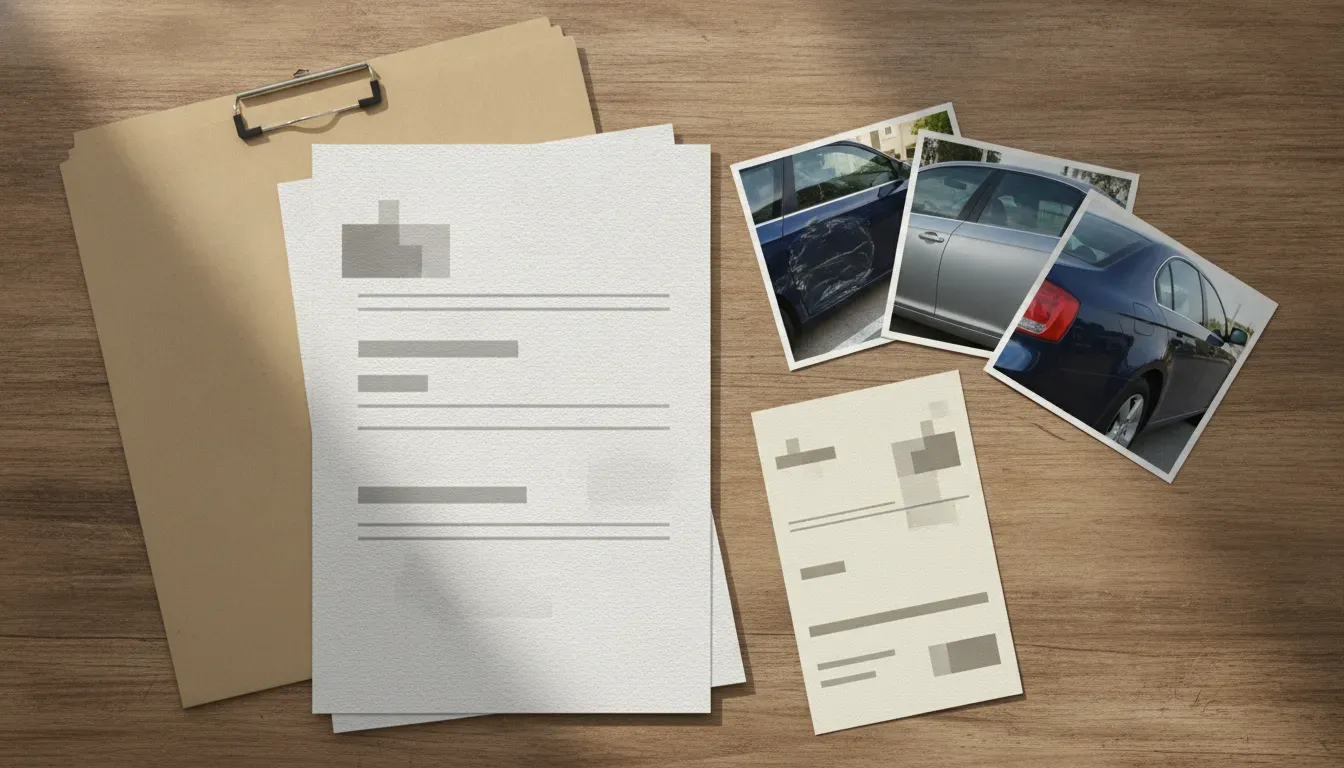
A property damage settlement dispute lawyer is useful when a Georgia insurer’s number and your records describe two different losses. The gap might be a repair line, a rental week, storage, or the value left after the car is fixed. Signing, or cashing the check, can close the items named in the release. A review starts with the paper and the proof, not with a promise about the outcome.
Request a free case evaluation if the offer and your records do not match.
Gastley Law reviews Georgia vehicle property damage and diminished value claims. The firm does not handle injury cases. A free evaluation looks at whether the unpaid amount can be supported. It does not guarantee a higher offer. If you are still deciding whether any lawyer is worth calling, the property damage settlement lawyer page covers that choice. This page is the next step: what to send, and how the file is read.
When a Property Damage Settlement Dispute Lawyer Can Help
Call when the carrier has taken a position you can test against documents. A vague feeling that the offer is low is a start. A line-by-line gap is what a review can use.
These are the disputes that usually justify a file review:
- The estimate leaves out a repair the shop documented, or it prices a part the photos do not support.
- The payment covers the repair and says nothing about diminished value after a serious repair.
- Rental days, towing, or storage sit in your receipts and not in the offer.
- The adjuster will not say which guide, comparable, or deduction produced the number.
- A release arrived before you could tell which claims it closes.
- The same records have been requested more than once, or the file changed hands without a decision.
A small, clear repair with a matching estimate may not need a lawyer. Handling that claim yourself can be reasonable. The question changes when the carrier’s explanation and your documents point at different losses. A decision about hiring a lawyer for car property damage belongs on that page. Here, assume you already have a number you do not trust.
Separate the dispute before you send the file
Name the fight in one sentence. Coverage denied is not the same fight as value too low. Fault disputed is not the same fight as a missing rental week. Mixing them makes the packet harder to read and gives the carrier room to answer a question you did not ask.
Write the unpaid items as a short list with a dollar figure next to each one. If you cannot attach a record to a line, mark it as unknown instead of guessing. A review can work with a gap. It cannot work with a number you invented to fill the page.
What to Send Before the Evaluation
Send copies, not originals. Label each file with the date and what it shows. A complete packet lets the review start on the dispute instead of on a scavenger hunt.
- The offer in writing, including any email that explains the number, the deductions, and the deadline.
- The release, if one was attached, even if you have not signed it.
- The full repair estimate and any supplement, plus final invoices if the work is done.
- Photos from the scene, the teardown, and the finished repair. Wide shots and close shots both matter.
- The police report or the crash report number, and the other driver’s insurance card if you have it.
- Rental, towing, and storage bills, with the dates the car was unusable.
- Your notes of adjuster calls: date, name, and what was promised.
- The mileage, year, trim, and options, plus any pre-crash value sheet the carrier used.
If the fight is resale value after repairs, add the records a diminished value appraisal would need. That means structural notes, airbag or frame work, and paint blend. Do not pay for a second appraisal before someone reads the offer. A duplicate report rarely changes a file that was never organized.
What can wait
You do not need a legal brief, a recorded statement, or a signed fee agreement to ask for a review. You also should not sign the release “just to hold the check.” If a deadline is about to pass, send the offer and say so in the first line of your message. Timing belongs in the packet. It should not be a surprise after the review starts.
| Dispute | Send this first | What the review tests |
|---|---|---|
| Repair price. | Estimate, supplements, shop notes, and photos. | Whether omitted lines are necessary and priced. |
| Diminished value. | Final repair bill, damage photos, and vehicle details. | Whether a market loss remains after the repair. |
| Rental or storage. | Bills with dates and the reason the car was held. | Whether the days match the repair timeline. |
| Total loss value. | Comparable sheet, options list, and condition notes. | Whether the comps match year, trim, and mileage. |
| Release scope. | Unsigned release and the offer letter. | Which claims the wording would close. |
How Gastley Law Evaluates the Dispute
The evaluation follows the file, not a script. The order below is the one that keeps a property damage settlement from being accepted, or rejected, for the wrong reason.
1. Read the offer against the loss
The first pass lists what the carrier is paying and what your records still show as open. Repair, rental, storage, total loss, and diminished value stay in separate columns. A single “settlement” figure often blends them. Splitting them shows whether the gap is one missing line or a different theory of the loss.
If you are still comparing the first number to your own ask, the guide to insurance settlement offers walks through that comparison. The evaluation uses the same split, then asks whether the unpaid lines can be proved.
2. Test the carrier’s reason
Every low number has a reason, even when the reason is thin. The review looks for it. A deduction for prior damage should match a photo. A comparable vehicle should match trim and mileage. An excluded loss should point at a policy term or a fact, not at a phrase in an email.
On a claim against your own policy, Georgia’s first-party property damage rules set a clock for basic claim handling. The carrier generally has 15 days to acknowledge the claim, and payment is due within 10 days after coverage is confirmed and the amount is not in dispute. Those timelines come from Ga. Comp. R. & Regs. 120-2-52-.03. They are a handling yardstick. They do not, by themselves, raise the value of the car. The rule text is on the Georgia rules site.
3. Decide whether appraisal fits
Some policies let each side pick an appraiser when the fight is the amount of loss, not whether the loss is covered. Appraisal can be the right tool for a value dispute. It is the wrong tool for a coverage denial, a fault fight, or a release that waives claims you still want open. The evaluation says which of those you actually have before anyone spends money on a report.
4. Choose the next step
If the gap is real and documented, the next step may be a corrected demand, an appraisal, a regulatory complaint, or a lawsuit. Those are different jobs. A complaint to the Georgia Office of the Commissioner of Insurance can press a handling problem. It does not set the dollar value of your car. The Georgia Department of Insurance complaint page explains that limit.
A denial raises a different set of questions than a low offer. Start with what to do when a property damage claim is denied if the carrier rejected the claim itself. If the handling, not just the number, is the problem, the insurance dispute attorney page is the better map. Bad faith has its own proof rules, covered in the bad faith settlement guide. This evaluation does not treat every low offer as bad faith.
5. Check the clock and the fee fit
An action for injury to personal property in Georgia generally must be brought within four years after the right of action accrues, under O.C.G.A. § 9-3-31. Policy notice deadlines can be shorter. The evaluation flags both. It does not give you a filing date without reading your policy and the crash date.
Gastley Law uses a contingency fee for this work, so a free evaluation is not a bill for the first conversation. What the percentage covers, and which case costs are separate, belongs in the lawyer fees guide. Ask those questions before you sign anything. Do not assume a percentage from a general article.
What the Review Will Not Do
A file review is not a court ruling, and it is not a promise that the carrier will move. Some offers match the records. In that case the honest result is to say the number is supportable and to point out what signing would close.
The review also will not invent diminished value for a minor cosmetic repair with no market proof. It will not treat a third-party claim against the other driver the same as a claim on your own policy. And it will not advise you to cash a check while you “think about” the release. If the check is sitting on the counter, say that in the first message so the wording can be read before you deposit it.
Negotiation tactics, demand-letter structure, and what to say on the adjuster’s call are already covered in how to negotiate a property damage settlement. Use that page if you are still writing the demand yourself. Use this page when you want the demand, the offer, and the proof read as one file.
A Short Example of the Evaluation
A driver in metro Atlanta receives $4,200 for repairs. The shop supplement adds $1,100 for a hidden bracket and blend time. The carrier’s email pays the original estimate only and marks diminished value “not considered.” The release says it settles “all property damage claims.”
The review splits that into three questions. Is the bracket necessary and documented? Is there a market-loss file, or only a label? Does the release close both the repair gap and any later value claim? The packet that answers those questions is the supplement, the teardown photos, the vehicle’s year and mileage, and the unsigned release. Without those four items, the $1,100 figure is a complaint, not a claim.
That is the standard a property damage settlement dispute lawyer applies to the rest of the file. The dollar amounts change. The split does not. Repair stays repair. Value stays value. The release stays a list of claims, not a courtesy page at the end of the check.
Frequently Asked Questions
Do I need a lawyer if I only disagree with the repair estimate?
Not always. If the shop’s supplement is clear and the gap is small, you can send that supplement yourself. A lawyer is more useful when the carrier will not answer the supplement, the release is broad, or a value claim is being closed with the repair check.
What if I do not have the offer in writing?
Ask for it before the evaluation, and keep the email. A phone number with no breakdown is hard to test. If a deadline will pass while you wait, send what you have and note the deadline in the first line.
Can I send the file after I already deposited the check?
You can ask, but the release language may have ended the claims it names. Send the release, the check copy, and the deposit date first. The review looks at what, if anything, is still open. It cannot reopen a claim the wording already closed.
Will Gastley Law tell me the case is worth filing?
The evaluation says whether the unpaid amount is supported and which path fits. That may be a revised demand, appraisal, a complaint, or a lawsuit. It is not a promise of a result. Injury claims are outside this review.
Send Gastley Law the offer and your records for a free Georgia property damage review. You can also call (770) 557-2838.