
Insurance Denial Reasons for Georgia Drivers
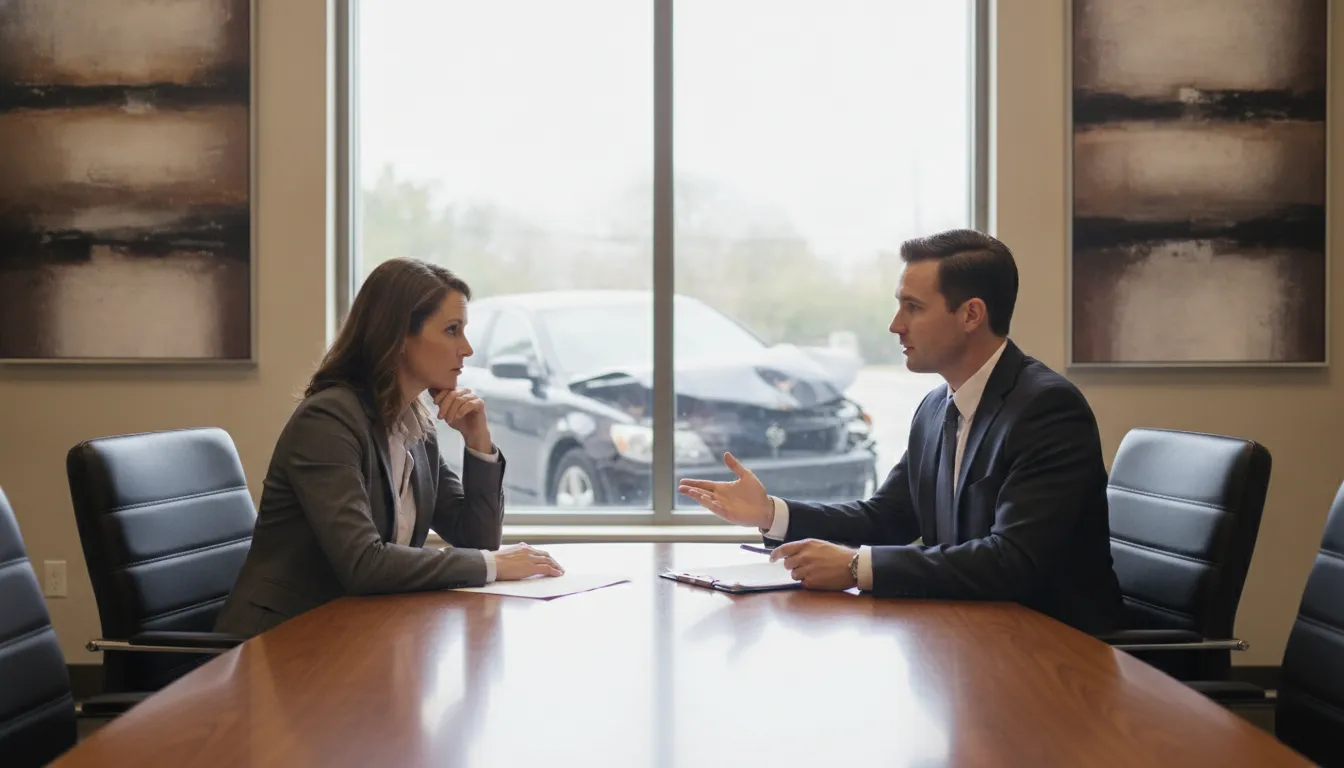
A claim can be denied, reduced, or left unresolved even after your vehicle has been repaired. The reason may involve coverage, responsibility for the accident, missing documentation, prior damage, the insurer’s valuation method, or a disagreement about diminished value. Those categories matter because a denial is not the same as a low offer, and each may call for a different response. Policy language, the claim type, the vehicle’s history, and the available evidence control what options may be available in Georgia.
Request a free case evaluation with Gastley Law at (770) 557-2838.
Common insurance denial reasons include a policy that does not cover the loss, disputed fault or causation. Incomplete proof, prior damage, missed policy requirements, and an insurer’s disagreement with the vehicle’s repair or market value. A diminished-value claim can also be challenged even after quality repairs because an accident history may affect the vehicle’s market value.
Understanding the insurer’s stated basis is the first step toward deciding whether to provide more evidence. Challenge the valuation, review the applicable policy, or seek a formal dispute option. The meaning of that position depends on the kind of Georgia vehicle claim involved.
What Insurance Denial Reasons Mean for a Georgia Vehicle Claim
When an insurer says no, that response can describe several different decisions. A true denial means the insurer is refusing responsibility for the claim, often based on coverage, policy conditions, or a disagreement about what caused the damage. A reduction means the insurer accepts at least part of the claim but offers less than the amount you requested. A delay may mean the insurer says it needs more information, although repeated requests and adjuster transfers can leave a vehicle owner without a clear explanation.
Those distinctions matter because the right response depends on the problem. A coverage dispute asks whether the policy applies. A value dispute asks whether the insurer measured the loss fairly. A documentation dispute asks whether the available records establish the damage, repairs, ownership, or market impact. These issues can overlap, but they should not be treated as one generic denial.
Coverage is not the same as vehicle value
For a first-party claim through your own insurer, the policy must provide applicable physical-damage coverage. Collision coverage generally addresses damage from a collision, while comprehensive coverage generally addresses losses such as theft, vandalism, animal contact, falling objects, fire, or weather-related events. Policy language, exclusions, notice requirements, and the facts of the loss control the analysis. If another driver caused the accident, you may also be dealing with a third-party claim against that driver’s insurer. That is a separate claim path from pursuing coverage under your own policy.
Even when an insurer accepts responsibility for repairs, it may dispute the vehicle’s remaining market loss. Diminished value is the market value loss that can remain after repairs are completed. A vehicle history report can affect what buyers will pay after an accident, even when the repairs appear complete. That makes a repair payment and a diminished-value claim different questions. An insurer may pay for covered repairs while refusing to recognize the post-accident reduction in market value.
Evidence also shapes the result. Photos, repair invoices, inspection records, prior-condition information, and valuation support can help connect the accident to the claimed loss. If the insurer has denied the property-damage claim entirely, review the explanation and challenge a denied claim using the policy language and facts, rather than assuming a low offer and a denial require the same response.
For Georgia drivers, the practical question is not only why the insurer used the word “denied.” It is which part of the claim the insurer disputes: coverage. Causation, documentation, repair cost, or diminished value. Identifying that category can show what records to request and whether a valuation review, negotiation, appraisal, or legal review may be appropriate.
What Are the Most Common Insurance Denial Reasons?
An insurer may deny a vehicle claim outright, reduce the amount offered, delay a decision, or accept the repair claim while rejecting diminished value. The reason matters because each response calls for different evidence. Policy language, the claim type, the accident facts, and the vehicle’s condition all control the analysis. A denial letter is not necessarily the final word, but it should be read carefully before you respond.
Policy scope and claim responsibility
One common issue is that the insurer says the loss is outside the policy’s coverage. For example, a first-party claim through your own insurer generally depends on whether your policy includes the applicable collision or comprehensive coverage. A claim may also be directed to the wrong insurer or presented under the wrong theory. A diminished-value claim is commonly pursued against the at-fault driver’s insurer, although the available path depends on the facts and applicable policy terms. Claims involving theft, vandalism, or other losses can also include notice and reporting requirements. Guidance from the Illinois Department of Insurance notes that failing to promptly report suspected theft or vandalism to police may allow an insurer to deny the claim. That guidance is not Georgia law, so do not assume another state’s policy rules apply to your case.
Causation, prior damage, and missing evidence
An adjuster may argue that the claimed damage was caused by an earlier accident, ordinary wear, or an unrelated event rather than the reported collision. Prior damage can make a new diminished-value loss harder to prove because the vehicle already had an accident history. The same concern may arise when records do not show the vehicle’s pre-accident condition. Photos taken before and after the crash, repair estimates, invoices, inspection records, and vehicle-history information can help establish what changed.
Missing evidence can create a separate problem. An insurer may request a police report, witness information, repair documentation, or an inspection before evaluating fault and value. You also have a duty under many policies to protect the vehicle from additional damage. The cited insurance guidance explains that failing to protect a damaged vehicle can allow an insurer to refuse repairs related to the additional damage. Follow reasonable mitigation steps, keep receipts, and preserve communications rather than discarding damaged parts or authorizing major work without documentation.
Inspection, repair, and valuation disputes
Differences over the inspection or repair scope can reduce an offer. The insurer may question whether a repair is accident-related, dispute labor or parts, or apply a deduction for pre-existing damage. A diminished-value dispute is different from the cost to restore the vehicle. Even after quality repairs, a reported accident may remain on a vehicle history report and affect market value.
Valuation method is another frequent source of disagreement. Some insurers use a formula or limited comparable vehicles to calculate diminished value. Formula 17c, for example, may cap the starting figure and understate the vehicle’s actual market discount in a particular case. The insurer’s calculation should be checked against the vehicle’s age, mileage, options, repair history, accident history, and comparable market evidence. For a broader explanation of how to review an insurance settlement offer, compare the offer to the evidence rather than accepting the first number automatically.
Delays and cooperation concerns
Repeated adjuster transfers, new documentation requests, or long gaps without a decision can delay a claim. Delay alone does not prove bad faith or establish entitlement to a particular amount. But it is a reason to keep a dated record of every call, email, inspection, and submission. Respond accurately to reasonable requests, ask what policy provision or evidence supports the insurer’s position, and seek Georgia-specific legal review if the dispute remains unresolved.
How Should You Respond to a Denial or Low Insurance Offer?
A denial, reduced offer, or unexplained delay does not tell you which part of the claim is disputed. It may involve coverage, the cause of damage, missing documentation, repair costs, vehicle value, or diminished value. Respond methodically so the insurer must address the evidence and policy language rather than leaving you with a vague conclusion.
- Preserve the written decision. Save the denial letter, estimate, valuation report, emails, portal messages, and notes from phone calls. Ask the adjuster to identify each disputed item in writing. If the insurer made a verbal decision, request a written explanation. Keep the original documents and a dated communication log.
- Request the policy basis and claim reasoning. Ask which policy provision, exclusion, condition, or valuation assumption supports the position. If the issue is a first-party claim, review the duties the policy imposes after a loss. Some policies require a sworn proof of loss stating when and how the loss occurred and how the vehicle was being used. And failing to submit a required proof may affect the claim under the policy. See the actual policy and applicable Georgia law rather than assuming another state’s requirements apply. Source: Illinois Department of Insurance guidance.
- Build the vehicle evidence file. Gather accident photographs, repair estimates, invoices, parts information, inspection records, maintenance records, ownership documents, and any communications about additional damage. Obtain the vehicle history report if the dispute includes diminished value. An accident appearing on a report such as AutoCheck or Carfax can reduce market value even after repairs. So preserve evidence of the vehicle’s condition before and after the loss. Source: Kelley Blue Book.
- Question the valuation, not just the total. Ask how the insurer selected comparable vehicles, adjusted for mileage and condition, treated prior damage, and calculated any remaining loss in value. In a cash settlement, the insurer first determines the vehicle’s retail value, but the method and supporting comparables still matter. Source: Illinois Department of Insurance guidance. If the offer ignores accident history, repair quality, or a measurable market discount, identify those omissions with supporting records.
- Respond in writing with a specific request. Explain which facts or calculations you dispute, attach the strongest documents, and request a revised position by a reasonable date. Do not assume the adjuster’s first offer is final. If negotiation is appropriate, this guide explains how to negotiate a property damage settlement while keeping the discussion focused on evidence.
- Track deadlines and escalation options. Calendar every deadline stated in the policy, denial letter, or correspondence, including any proof-of-loss, appraisal, or lawsuit provision. There is no universal deadline that applies to every vehicle claim. Review the full policy and get case-specific advice before signing a release or allowing a deadline to pass. Depending on the claim type, the next step may include an independent appraisal, further negotiation, policy-based dispute procedures, or litigation.
A complete file makes it easier to determine whether the dispute concerns coverage, repair damage, vehicle value, or diminished value. It also helps a Georgia property-damage attorney evaluate the available path without treating every denial or low offer the same way.
Does the Claim Type Change Your Options?
Yes. The insurer involved and the policy supporting the claim can change the documents you need, the arguments available, and whether an appraisal provision may apply. A first-party claim is made through your own policy. A third-party claim is made against the other driver’s liability insurer when that driver caused the damage. Gastley Law handles both, but the paths are not interchangeable.
| Issue | First-party claim | Third-party claim |
|---|---|---|
| Whose insurer is involved? | Your own insurer, under the coverage you purchased. The policy must provide applicable physical-damage coverage, such as collision or comprehensive coverage. | The other driver’s insurer, generally based on that driver’s liability for the crash. Fault evidence, such as a police report, witness accounts, and photographs, may matter. |
| What documents or policy terms matter? | Review the declarations page, coverage provisions, exclusions, notice requirements, proof-of-loss language, repair records, photographs, and valuation materials. Some policies require a sworn proof of loss within a specified period, but the policy controls. | Gather evidence of the other driver’s responsibility, repair estimates, invoices, vehicle history, and the claimed market impact. The insurer may dispute fault, causation, or the amount of loss. A third-party vehicle-damage claim is generally handled separately from any injury claim. |
| Can appraisal resolve the dispute? | Some personal auto policies contain an appraisal clause for disagreements about the amount of loss. The procedure may involve appraisers and, if they cannot agree, an umpire. Read the actual Georgia policy before relying on it. | Do not assume your policy’s appraisal clause applies to the other driver’s insurer. Appraisal availability depends on the claim, policy, and applicable law. |
| What if the other driver has no insurance? | Uninsured-motorist property-damage coverage may be relevant, depending on the policy, the facts, and applicable Georgia law. Check the coverage rather than assuming it includes every property-damage or diminished-value loss. | There may be no ordinary liability insurer from which to recover. The available route may depend on your own policy and uninsured-motorist provisions. |
For a closer look at the opposing-insurer process, review this third-party insurance claim guide. Because policy language and Georgia law control, a denial or low offer should be evaluated with the complete policy. Claim correspondence, repair documentation, and valuation evidence rather than by applying a rule from another state.
How Do Denial Reasons Affect a Diminished Value Claim?
A diminished value claim can be reduced or rejected for reasons that do not necessarily mean the vehicle has no remaining market loss. The insurer may be questioning causation, the quality of the repairs, the amount claimed, or the method used to measure post-accident value. Identifying the specific reason matters because each issue calls for different evidence.
Accident history and prior damage can complicate causation
A reported accident can remain on a vehicle history report and affect what buyers are willing to pay, even when repairs restore the vehicle’s physical condition. Kelley Blue Book notes that an accident history can reduce market value after repairs. A vehicle history report can affect resale value, so a carrier should not treat completed repairs as automatic proof that all market impact disappeared.
At the same time, a prior accident can make the latest loss harder to isolate. If the car already had accident history, the insurer may argue that the earlier event, not the recent one, caused some or all of the alleged reduction. Repair invoices, pre-accident photographs, vehicle-history records, and evidence about the vehicle’s condition before the latest collision can help clarify what changed.
Repair completion does not answer the market-value question
Repair estimates and final invoices show what it cost to restore the vehicle. They do not, by themselves, establish what a Georgia buyer would pay for a vehicle with a reported collision. Diminished value concerns the difference in market value that can remain after repairs, not simply the amount spent on parts and labor. A substandard repair may add another issue, but a claim does not necessarily depend on proving that every repair was defective.
This distinction is important when an adjuster says, “The car was repaired, so there is no loss.” The response should address market evidence, not only repair quality. Comparable vehicles, vehicle-history information, condition records, and a qualified valuation opinion may help show why repair completion and market value are separate questions.
Formula offers have limits
Some insurers use Formula 17c when evaluating diminished value. The formula described in available industry guidance begins with a cap tied to the vehicle’s pre-accident value, then applies other adjustments. A formula can provide a starting point, but it may not reflect the vehicle’s actual condition, mileage, repair history, local market, or buyer reaction. The formula’s result should be tested against the facts rather than accepted as the only possible measure.
Independent appraisal evidence can provide a more detailed assessment of post-repair market value and may give the owner a basis to challenge a low offer. The available dispute path depends on the claim type and policy language. For a Georgia-focused overview of documentation, valuation, and dispute options, review the diminished value claim process.
When Should a Georgia Driver Seek Legal Review?
Consider legal review when an insurer denies the claim, offers substantially less than the documented loss. Delays without a clear explanation, or refuses to recognize diminished value after repairs. These signals do not automatically establish that the insurer acted improperly. They do mean you may benefit from having someone examine the policy, claim file, vehicle history, repair records, and valuation method together.
Documentation is especially important when the insurer points to a technical reason for the denial. Bring the denial or reservation letter, policy declarations and relevant policy provisions, photographs, police or incident reports. Repair estimates and invoices, inspection records, vehicle history reports, prior damage records, insurer correspondence, and every offer or valuation report you received.
Make sure the claim fits the right review
Claim type matters. A first-party claim runs through your own insurer and depends on the coverage and duties in your policy. A third-party claim generally involves the other driver’s insurer. At-fault and not-at-fault drivers can have different paths, so identify whose policy is being used before evaluating the response. The vehicle’s age, condition, repair history, and accident date also matter. Gastley Law serves Georgia individual vehicle owners whose vehicles were damaged within the last six years, including both first-party and third-party diminished-value and property-damage claims. Policy terms and the specific facts still control whether a matter is a fit.
Low valuation offers deserve a closer look
An insurer may rely on Formula 17c when calculating diminished value. The formula’s cap can make the resulting figure a starting point rather than a complete measure of market impact. Ask what evidence supports the insurer’s number. A review can determine whether an appraisal, negotiation, policy appraisal clause, or litigation is appropriate. None guarantees a particular result.
Gastley Law uses a contingency model and fronts case costs, including appraisal expenses, rather than requiring the client to fund those costs upfront. The firm charges when it successfully recovers compensation, subject to the engagement terms. If negotiation does not produce a fair offer, it is also willing to consider small claims court where appropriate. A Georgia insurance dispute options review can help you understand the available path before accepting an offer or signing a release.
What Questions Should You Ask Before Accepting the Insurer’s Position?
An insurer’s denial, reduced offer, or release may reflect a coverage decision, a valuation dispute, missing documentation, or a disagreement about how the damage occurred. Before accepting that position, ask questions that identify the exact issue. Policy language, claim type, vehicle history, and the available evidence all matter.
Questions about the reason for the decision
- What specific fact supports the denial or reduction? Ask the adjuster to identify whether the issue is coverage, causation, prior damage, repair scope, notice, cooperation, or another concern.
- Which policy provision or claim rule are you applying? Request the relevant provision in writing. Do not rely on a general explanation such as “the policy does not cover it” without seeing the language being used.
- Is this a first-party or third-party claim? Your own policy may control a first-party claim, while a claim against the other driver’s insurer follows a different path. The available appraisal process can also depend on the claim type.
Questions about the amount offered
- How did you calculate the vehicle’s value or the loss? Ask for the comparable vehicles, database, guidebook, repair estimate, deductions, and other valuation inputs used. If the issue is diminished value, ask how the accident history and post-repair market impact were considered.
- What evidence do you believe is missing? Clarify whether the insurer wants photographs, repair records, inspection information, prior-damage details, a vehicle history report, or an appraisal. Provide relevant records, but keep copies of everything submitted.
- Is an appraisal clause available under this policy? Some personal auto policies include appraisal procedures for disputes over the amount of loss, but the wording and availability vary. Ask whether it applies to this claim, what steps it requires, and who pays related costs.
Questions about what happens next
- What is the next deadline, and where does it appear? Ask about any policy notice, proof-of-loss, appeal, appraisal, or release deadline. Do not assume a universal deadline applies to every Georgia claim.
- What exactly would I be releasing by signing? Confirm whether the proposed release covers repair costs, diminished value, rental or loss-of-use expenses, or other claims. If you are unsure, consider reviewing the insurance settlement offer with a Georgia property-damage professional before signing.
Written answers can reveal whether the dispute concerns coverage, evidence, or valuation. That distinction helps you choose a focused response instead of accepting an unexplained position.
Request a free case evaluation with Gastley Law or call (770) 557-2838 before accepting a disputed vehicle claim position.
Frequently Asked Questions
What are common insurance denial reasons for a vehicle claim?
An insurer may deny or reduce a claim because the policy does not cover the loss. The evidence does not establish causation, required documents are missing, or prior damage overlaps the new repairs. Review the written policy basis before accepting the explanation.
Can my vehicle still have diminished value after repairs?
Yes. A reported accident can remain on a vehicle history report and reduce market value even when repairs restore the vehicle’s condition. Kelley Blue Book explains this market-value effect.
What is the difference between a first-party and third-party claim?
A first-party claim is made under your own policy, subject to its coverage and terms. A third-party claim is made against the other driver’s insurer when that driver caused the damage. The property-damage claim is generally handled separately from any injury claim.
Can an appraisal help after an insurer disputes the amount?
Possibly. Your policy may contain an appraisal clause for disputes about the amount of a covered loss. The procedure can involve separate appraisers and, if they disagree, an umpire. Appraisal rules depend on the policy and claim type, so review the clause carefully.
Does prior damage affect a diminished-value claim?
It can. A prior accident may make it harder to show that the latest crash caused a new loss in value because the vehicle already had an accident history. Gather earlier repair records, current photos, and valuation evidence to separate the losses.
Ready to Discuss Your Vehicle Claim?
Understanding why an insurer denied or reduced your property-damage or diminished-value claim can help you choose a practical next step. Gastley Law can review the claim details, supporting records, and insurer position during a free case evaluation.
Request a free case evaluation with Gastley Law or call (770) 557-2838.