Many people believe that once their car is repaired, the insurance claim is settled and the process is over. This is one of the most common and costly myths about car accidents. The truth is, the repair check only covers the physical damage. It does nothing to address your car’s permanent loss in market value, which happens the moment an accident is reported. This drop in value is real, and in Georgia, you are legally entitled to be compensated for it. If you’re up against a major insurer, you need to be prepared. This article will show you exactly how to build and file a powerful AAA diminished value claim and debunk the other myths that could cost you thousands.
Let’s start with the basics. A diminished value claim is your way of recovering the money your car loses in resale value after an accident. Even if your car is repaired to look and drive like new, it’s now worth less on the market simply because it has an accident history. This loss is called “
It’s easy to mix these two up, but they cover completely different things. The insurance payment for repairs covers the cost of parts and labor to fix the physical damage to your car. Think of it as restoring your car’s function. A diminished value claim, on the other hand, addresses the loss in your car’s market value. Think of it this way: if you were buying a used car and had to choose between two identical models, one with a clean record and one that was in a wreck, you’d pay less for the one with an accident history. That difference in price is the diminished value.
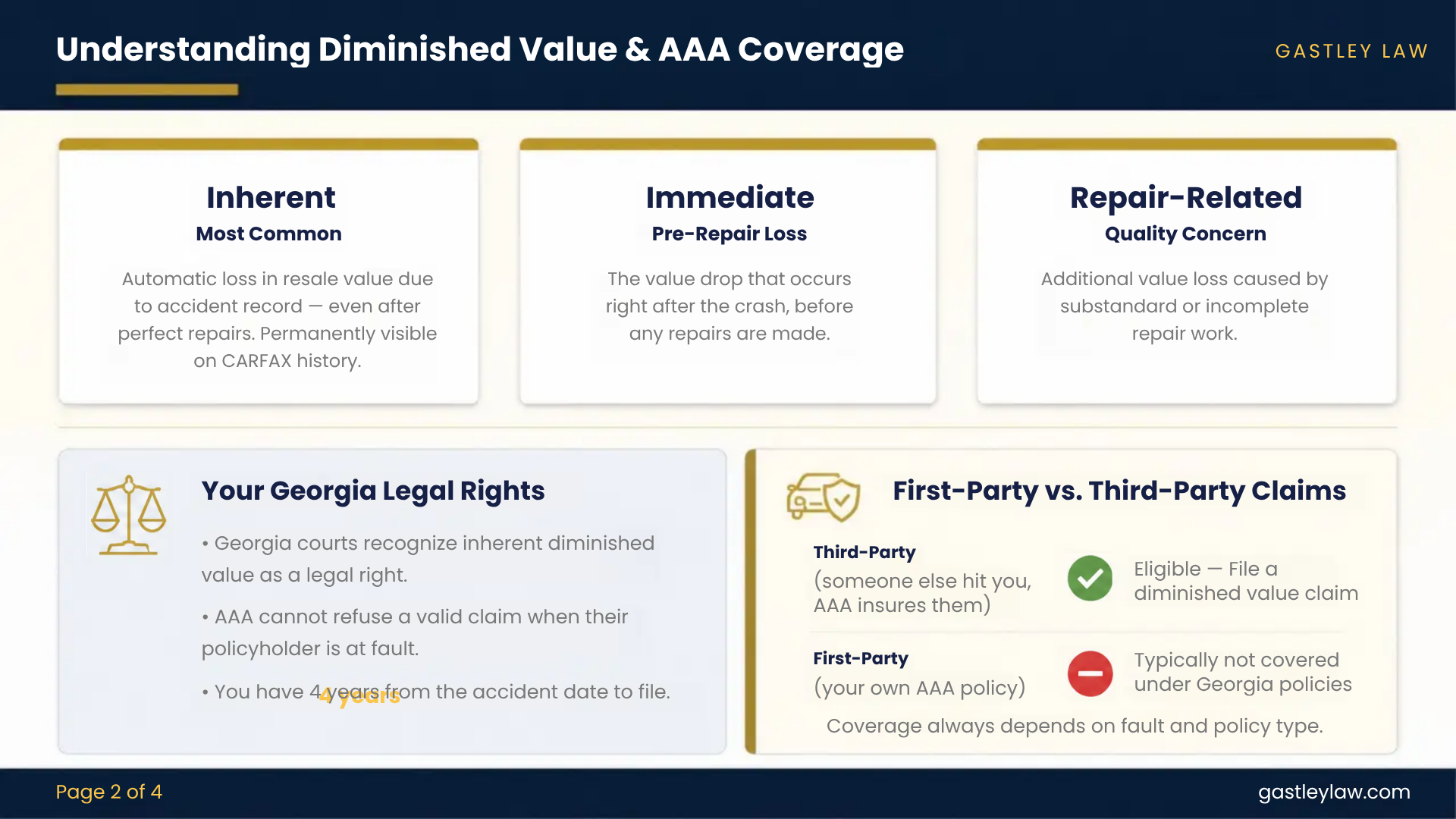
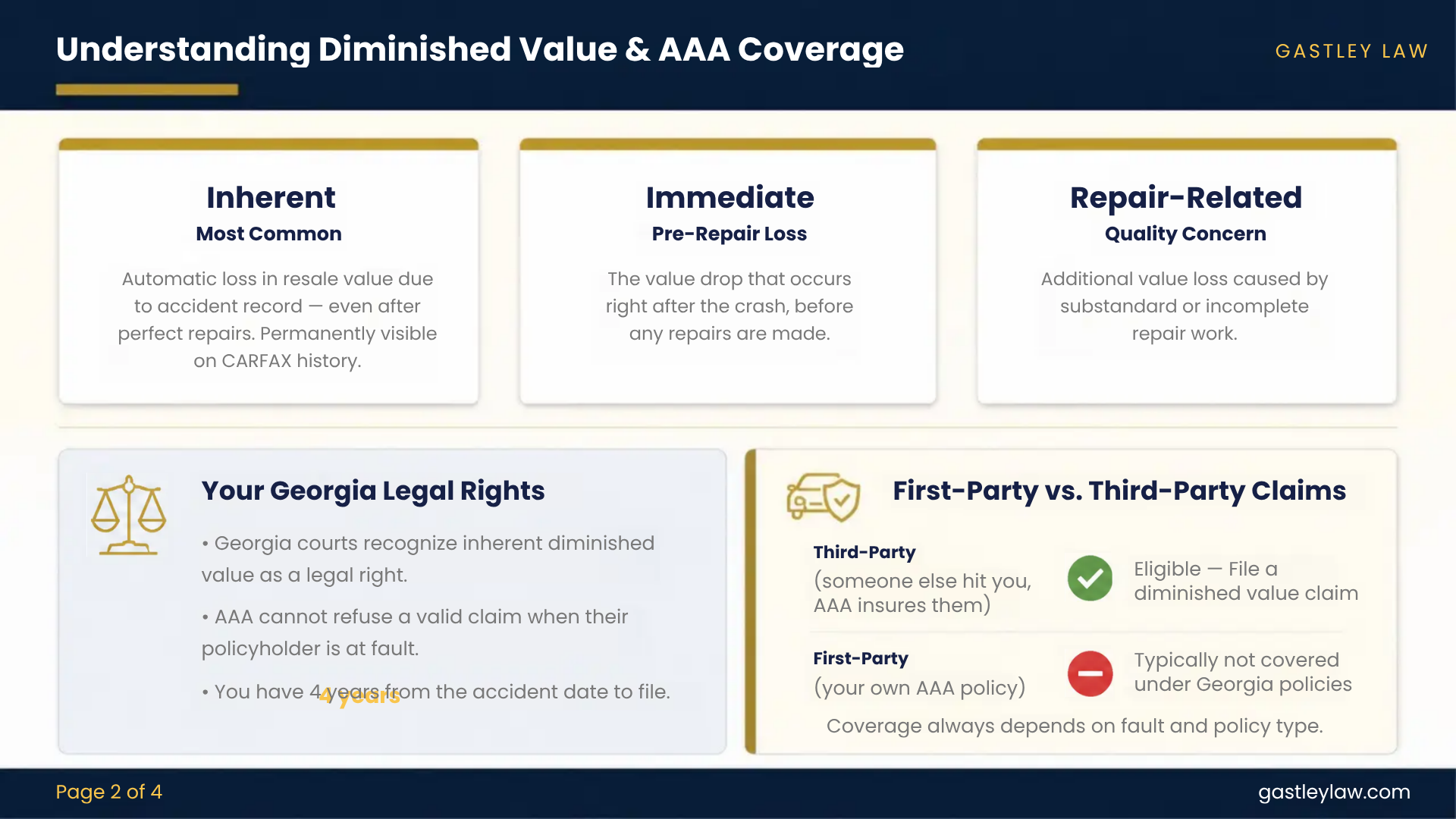
While the concept is simple, diminished value comes in a few forms. The most common type, and the one you’ll likely be dealing with, is inherent diminished value. This is the automatic loss in value just because your car now has an accident on its record, even with perfect repairs. There’s also immediate diminished value, which is the loss of value right after the crash before any repairs are made. Finally, repair-related diminished value occurs if the repairs are done poorly, further hurting your car’s worth. While it’s good to know all three, your claim will almost always focus on inherent diminished value.
The biggest reason your car’s value drops is the vehicle history report. Services like CARFAX track a car’s life story, and any reported accident becomes a permanent part of that record. When you decide to sell or trade in your car, potential buyers will pull this report. An accident history is a red flag for many, making your car harder to sell and forcing you to accept a lower price. Even if the repairs were flawless, the stigma of the accident remains. This documented loss in market value is precisely what a diminished value claim is designed to recover for you.
The short answer is: it depends. Whether AAA will cover your diminished value claim hinges on one key factor: who was at fault for the accident. Your ability to get compensation for your car’s lost value is determined by whether you are filing a “first-party” or “third-party” claim. If another driver caused the accident and they are insured by AAA, you can and should file a diminished value claim against their policy. However, if you are filing against your own AAA policy, the situation is different.
Navigating this process can feel confusing, especially when an insurance adjuster is telling you what is and isn’t covered. The most important thing to remember is that you have rights, and understanding them is the first step toward getting the full compensation you deserve. Insurance companies are businesses, and their goal is often to pay out as little as possible. Our team handles these types of property damage claims every day, and we know how to challenge insurers to make sure our clients are paid fairly for their vehicle’s loss in value.
Let’s break down the two types of claims. A first-party claim is one you file with your own insurance company. For example, if you were at fault in an accident or were hit by an uninsured driver, you would turn to your own AAA policy for coverage. In Georgia, insurance policies typically do not cover diminished value in first-party claims. Your policy is a contract to repair your vehicle to its pre-accident condition, not to compensate you for its loss of market value.
A third-party claim is one you file against the at-fault driver’s insurance company. If someone else hits your car and they have AAA, you would file a claim with them. This is where you can pursue a diminished value claim. The at-fault party’s insurer is legally responsible for making you whole, which includes paying for the drop in your car’s resale value caused by the accident.
Fortunately, Georgia law is very clear on this issue and strongly supports vehicle owners. The law recognizes that a car with an accident history is worth less than an identical car with a clean record, even if the repairs are perfect. This loss in value is known as inherent diminished value, and you are entitled to be compensated for it. This isn’t just a theory; it’s a legal right established by Georgia courts.
Because of this, an insurer like AAA cannot simply refuse to consider a diminished value claim when their policyholder is at fault. They are obligated to address the loss in your vehicle’s market value as part of the damages. Knowing that the law is on your side gives you a solid foundation for pursuing what you’re rightfully owed.
When it comes to filing a claim, time is of the essence. In Georgia, you have a limited window to take legal action for property damage, which includes diminished value. The statute of limitations for property damage claims is four years from the date of the accident. If you fail to file your claim within this timeframe, you lose your right to pursue compensation forever.
While four years might sound like a long time, evidence can disappear, and memories can fade. It’s always best to act quickly. Insurance companies are aware of these deadlines and may try to delay the process. Don’t let your claim expire because an adjuster is dragging their feet. If you’re getting close to the deadline or feel your claim isn’t moving forward, it’s a good time to contact an attorney to protect your rights.
This is where things can get a little tricky. Insurance companies have specific methods for calculating how much value your car has lost, and their goal is often to pay as little as possible. In Georgia, the most common method you’ll encounter is a formula known as “Rule 17c.” While it provides a starting point, it’s important to remember that this formula was created by an insurance company and often favors their interests, not yours. Understanding how they arrive at their number is the first step in building a case for the true amount you’re owed. Let’s break down their process.
The 17c formula is the insurance adjuster’s go-to calculation. First, they determine your car’s pre-accident value using a guide like NADAguides. They cap the potential diminished value at 10% of that amount right away. Next, they apply a “damage multiplier,” a number between 0.00 (no structural damage) and 1.00 (severe structural damage), to reduce the payout based on the severity of the repairs. Finally, they apply a “mileage multiplier,” which also ranges from 0.00 to 1.00, to further reduce the amount based on how many miles are on your car. This multi-step reduction process is how an initial fair value can quickly shrink.
The damage and mileage multipliers have a huge impact on your final offer. The damage multiplier is supposed to reflect how serious the accident was. A fender bender that only required cosmetic fixes will get a low multiplier, while a collision that damaged your car’s frame will get a higher one because it affects the vehicle’s structural integrity. The mileage multiplier works against you as your car gets older. An insurer will argue that a car with 100,000 miles has already lost most of its value from normal wear and tear, so the accident didn’t diminish its value by much. This is why a newer, low-mileage car typically has a stronger basis for a higher claim.
Insurance companies are businesses, and their primary goal is to protect their bottom line. The 17c formula itself is a tool designed to minimize payouts, with built-in caps and modifiers that work in their favor. Adjusters will often use the lowest possible multipliers and argue that your car’s age or prior condition limits your claim. They are counting on you to accept their first offer without question. Remember, their initial calculation is a starting point for negotiation, not the final word. If their offer seems unfairly low, it probably is, and challenging it is a critical part of getting the compensation you deserve for your property damage claim.
Filing a diminished value claim is all about proving your car is worth less now, even after it has been perfectly repaired. To do that, you need more than just your word; you need a paper trail. Think of it as building a case for your car’s lost value. The stronger your evidence, the harder it is for an insurance company like AAA to deny or lowball your claim. A well-organized file with the right documents is your best tool for getting the compensation you deserve.
Before you even think about sending a demand letter, you need to get your ducks in a row. This means collecting every piece of paper related to the accident and your vehicle’s repair and history. Each document tells a part of the story and helps justify the amount you’re claiming. Let’s walk through exactly what you’ll need to gather to support your AAA diminished value claim. Having these items ready will make the process smoother and show the adjuster you mean business.
Your claim starts with the accident itself. The official police or accident report is the foundational document that outlines what happened. It provides an objective, third-party account of the incident, which is critical for your claim. Along with the report, you should gather any photos you took at the scene. These visuals provide undeniable proof of the initial damage. Together, these documents help establish the circumstances of the accident and the severity of the impact, setting the stage for your entire diminished value argument. Don’t skip this step; an adjuster will always ask for the official report first.
You can’t claim diminished value until your car has been fixed. That’s because the claim is for the loss in value that remains after the vehicle has been repaired. Before you can file, you must complete all necessary repairs and have the paperwork to prove it. Hold onto every document from the body shop, including the initial estimates and the final, itemized invoice. This invoice is crucial because it details every part replaced and every hour of labor, serving as concrete evidence of the extent of the damage your car sustained.
To calculate how much value your car has lost, you first need to establish what it was worth right before the accident. This is your baseline. You can get a good estimate of your car’s pre-accident value by using online resources like Kelley Blue Book or NADAguides. Be sure to input your car’s mileage, condition, and features accurately. It’s also a great idea to gather your vehicle’s maintenance records. Proof of regular oil changes and upkeep shows that your car was in excellent condition before the crash, which supports a higher starting value and, ultimately, a stronger claim.
While online estimators are a good starting point, the most powerful tool in your arsenal is a report from a certified appraiser. Hiring a professional to assess the diminished value of your specific vehicle provides you with an expert opinion that is difficult for an insurance adjuster to dismiss. An independent appraiser will inspect your car, review the repair records, and generate a formal report that calculates the precise drop in market value. This report is your key piece of evidence, transforming your claim from a simple request into a well-supported, professional demand for fair compensation.
Filing a diminished value claim can feel like one more overwhelming task on your to-do list after an accident. But breaking it down into clear, manageable steps makes the process much more approachable. Think of it as simply building a case for the value your car has lost, and you are the best person for the job. The key is to be organized, thorough, and persistent. While AAA has its own procedures, you have the right to present a strong claim backed by solid evidence. Following this guide will help you gather everything you need to confidently state your case and work toward a fair settlement. Remember, you are your car’s best advocate, and a well-prepared claim is your most powerful tool. Let’s walk through exactly what you need to do to get the compensation you deserve.
Your first move after an accident is to get the official process started. You need to notify AAA about the incident and open a claim as soon as you can. You can typically file a claim online or over the phone. During this initial contact, be clear that you intend to pursue a property damage claim that includes diminished value. Make sure you get a claim number and write it down, along with the name and contact information for the insurance adjuster assigned to your case. This information is your lifeline for all future communication, so keep it somewhere safe and easy to find.
This is where you build the foundation of your claim. Your goal is to create a complete file that tells the story of your car’s value before the accident and the extent of the damage it sustained. Start collecting every piece of paper related to the incident. This includes the official police report, all repair estimates, the final repair invoice, and photos of the damage before and after it was fixed. You’ll also need to establish your car’s pre-accident value using a trusted source like Kelley Blue Book. Having all this paperwork organized and ready will make the entire process smoother and show the adjuster you mean business.
While you can estimate your car’s lost value, an opinion from a certified, independent appraiser carries much more weight. This is often the single most important piece of evidence you can have. An independent appraiser will inspect your vehicle and create a detailed report that formally documents its diminished value. This isn’t just a printout from a website; it’s a professional assessment that insurance companies find difficult to ignore. Think of it as bringing in an expert witness to testify on your behalf. The cost of an appraisal is a small investment that can make a huge difference in the final settlement amount you receive.
With your documentation and independent appraisal in hand, it’s time to formally submit your diminished value claim to the AAA adjuster. Draft a demand letter that clearly states the amount you are claiming based on your appraiser’s report. Attach copies of all your supporting documents, including the appraisal, repair bills, and pre-accident value report. Be prepared for the adjuster to come back with a lower offer, or even deny the claim initially. This is a standard part of the process. The negotiation has now begun. Respond calmly and professionally, using your evidence to counter their points and stand firm on the value established by your appraiser.
Filing a diminished value claim should be straightforward, but you can run into a few bumps along the way. Insurance companies, including AAA, are businesses, and their goal is often to pay out as little as possible. Being prepared for these common challenges is the best way to protect your claim and ensure you get the money you’re owed.
Knowing what to expect can make the process feel less intimidating. From lowball offers to tight deadlines, these hurdles are designed to make you second-guess your claim. But with the right information and a solid plan, you can confidently address each one. The key is to stay organized, be persistent, and remember that you have a right to be compensated for your car’s lost value. Let’s walk through the biggest obstacles you might face and how to handle them.
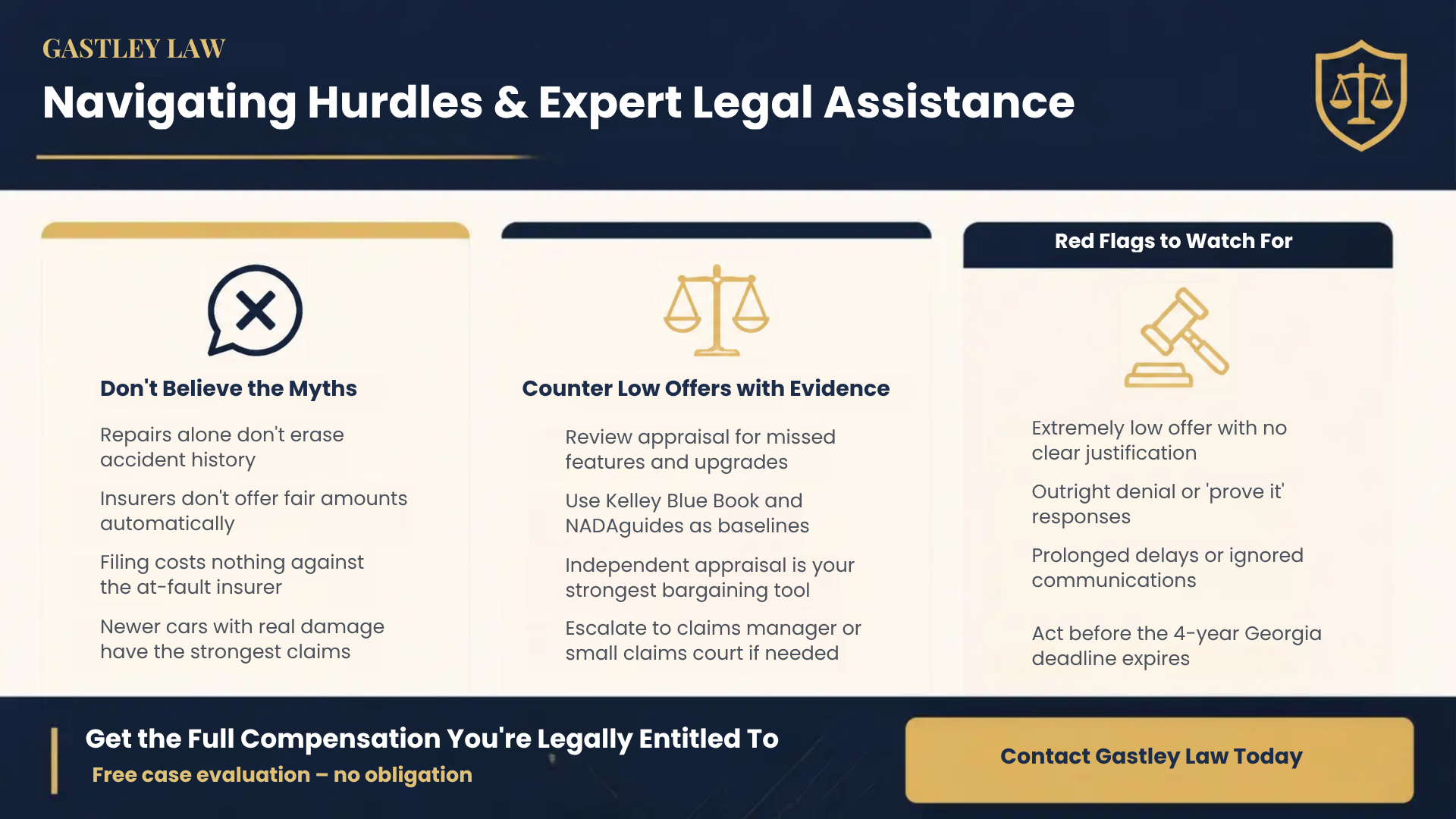
It’s incredibly common for an insurance adjuster to come back with a very low offer or deny your claim outright. You might hear them say something like, “The repairs made the car whole again,” or they may simply tell you to “prove it.” This is a standard tactic. They are testing to see if you will accept their initial assessment or just give up. Don’t be discouraged. This is the start of the negotiation, not the end of the road. If you find yourself stuck, our legal representation can help you challenge these initial offers and fight for what you’re truly owed.
The entire basis of your claim is that your car is now worth less, and this is often where the biggest disagreements happen. Even with perfect repairs, a vehicle with an accident history is less appealing to future buyers. Publicly available vehicle history reports, like CARFAX, will show the accident, which directly impacts its resale value. The insurance company will likely use its own formula to calculate this loss, which almost always benefits them. You need to be ready to present a counter-argument based on a professional, independent appraisal that accurately reflects the diminished value in the real-world market.
Time is not on your side after an accident. In Georgia, you have a limited window to file a property damage claim, which includes diminished value. This is known as the statute of limitations. Waiting too long can jeopardize your ability to recover any compensation at all. It’s best to start the process as soon as possible after the accident, while the details are fresh and you have ample time to gather your documents. If you delay, the insurance company may argue that the loss in value is due to other factors, making your case much harder to prove.
A successful diminished value claim is built on strong documentation. Without the right paperwork, your claim is just your word against the insurer’s. You need to create a comprehensive file that leaves no room for doubt. This includes the official police report, photos of the damage before repairs, detailed repair estimates and final invoices, and proof of your car’s pre-accident value. Most importantly, you’ll need a certified appraisal from an independent expert. If gathering all this feels overwhelming, we can help you get organized. Contact us to make sure you have everything you need to build a powerful claim.
When you’re trying to get your life back to normal after a car accident, the last thing you need is bad advice. Unfortunately, there’s a lot of misinformation floating around about diminished value claims. It can be tough to separate fact from fiction, and these myths often stop people from getting the money they’re rightfully owed. Let’s clear up some of the most common misconceptions so you can move forward with confidence. Understanding the truth behind these claims is the first step toward ensuring you receive fair compensation for your car’s lost value.
This is one of the most persistent myths out there. It’s easy to think that once the body shop has done its work and your car looks as good as new, the insurance company’s responsibility is over. The reality is that even the most perfect repairs can’t erase a vehicle’s accident history. When you go to sell or trade in your car, that history will show up on a vehicle report, causing its market value to drop. This loss in resale value is exactly what a diminished value claim is designed to cover. So, even if your car is fully repaired, you can and should still pursue compensation for this loss.
It would be nice if this were true, but it’s rarely the case. Insurance companies are for-profit businesses, and their primary goal is to pay out as little as possible on claims. Many people are surprised when they receive a very low offer or an outright denial for their diminished value claim. Insurers often hope you’ll simply accept their first offer without question. In reality, you usually have to advocate for yourself and provide strong evidence to prove your car’s loss in value. Don’t assume the initial offer is the final word; it’s almost always just a starting point for negotiations.
The thought of taking on an insurance company can feel intimidating, and many people worry that the process will be too complex or costly to be worthwhile. The good news is that it typically costs nothing to simply request compensation from the at-fault driver’s insurance company. While the process can become complicated if the insurer disputes your claim, you don’t have to go it alone. Starting the process is often simpler than you think, and getting expert guidance can make a huge difference. Don’t let the fear of a complicated process stop you from exploring your options.
While many cars involved in accidents are eligible for a diminished value claim, the payout isn’t always substantial. The potential for recovery is generally highest for newer cars with low mileage and significant damage. According to Bankrate, factors like your vehicle’s age, pre-accident condition, and the severity of the damage all play a role in the final amount. An older car with high mileage and minor cosmetic damage, for example, may not have lost much of its market value. It’s important to have realistic expectations and understand that how to file a diminished value claim successfully depends on the specific details of your car and its accident.
Receiving an initial settlement offer from AAA is just the start of the conversation, not the final word. Insurance companies are businesses, and their first offer often reflects their goal to pay out as little as possible. The good news is that you have the right to negotiate for a fair amount. Success comes down to preparation and a solid strategy. By gathering the right evidence and presenting your case clearly, you can confidently counter a low offer and work toward the compensation you’re actually owed.
It’s common for an initial offer from AAA to feel disappointingly low. Instead of getting discouraged, get prepared. Your first step is to counter their offer with solid evidence. Start by carefully reviewing the insurance appraiser’s report to understand how they calculated your car’s value and the diminished value amount. Did they miss any of your car’s features, like a sunroof, leather seats, or a premium sound system? What about recent upgrades or major maintenance you performed right before the accident? Make a list of anything that wasn’t included in their initial evaluation. When you present these facts, you shift the negotiation from an argument to a discussion based on the real-world value of your vehicle.
To successfully negotiate, you need to build a strong case file. Your opinion of what your car was worth won’t be enough; you need documentation to back it up. Start by gathering resources that establish your car’s market value before the accident. Websites like Kelley Blue Book and NADAguides are excellent starting points. Next, collect all your supporting evidence, including the official police report, photos of the damage, and the final repair invoice. The single most powerful tool in your arsenal is an independent diminished value appraisal from a certified expert. This unbiased report provides a credible, third-party assessment of your loss, making it difficult for the insurance company to dispute your claim. These are the exact types of legal services we provide to build a rock-solid case.
What happens if you’ve presented all your evidence and AAA still won’t offer a fair settlement? If you’ve hit a wall, it may be time to escalate. Your first move can be to ask to speak with a claims manager, who may have more authority to approve a higher amount. If that doesn’t work, you have other options. In Georgia, you can take the at-fault driver to small claims court, armed with your independent appraisal and other evidence. Often, the threat of legal action is enough to make the insurance company reconsider its position. This is also the point where having an experienced attorney can make all the difference. If you feel like you’re not being heard, don’t hesitate to contact a professional to discuss your next steps.
While you can certainly file a diminished value claim on your own, there are times when calling in a professional is the best move. Insurance companies have teams of adjusters and lawyers working to protect their bottom line, and it can feel like an uphill battle trying to get a fair settlement. If you find yourself stuck, frustrated, or unsure of your next steps, hiring an attorney can level the playing field and take the pressure off your shoulders. Knowing when to make that call is key to getting the compensation you’re owed.
It’s one thing to negotiate, but it’s another when the insurance company refuses to be reasonable. If AAA gives you an extremely low offer, denies your claim without a solid explanation, or tells you to “prove it” when you question their numbers, these are major red flags. These tactics are often used to discourage you, hoping you’ll get tired and accept a lowball amount or just give up. When the conversation stalls and it feels like you’re talking to a wall, it’s a clear sign that AAA may not be negotiating in good faith. At this point, bringing in legal help is a smart way to show them you’re serious about your claim.
An experienced diminished value attorney does more than just send letters. They build a powerful, evidence-based case on your behalf. A lawyer will guide you in gathering all the essential documentation, from police reports to detailed repair invoices. They can also connect you with a professional appraiser who will write a formal report detailing exactly how much value your car has lost. This independent appraisal is one of the strongest tools you have. Instead of just arguing, your attorney will present a complete, professional claim package that an insurance company can’t easily dismiss. They handle the negotiations, counter the low offers with facts, and fight to make sure you receive the full diminished value you deserve.
Dealing with an insurance company after an accident can feel like an uphill battle, especially when they push back on your diminished value claim. You know your car isn’t worth what it was before the wreck, and you deserve to be compensated for that loss. A diminished value claim is your right, helping you recover some of the money lost due to the accident. But getting what you’re owed isn’t always straightforward.
Insurance companies often try to minimize payouts, and it’s easy to feel pressured into accepting an offer that doesn’t truly cover your loss. This is where having an expert on your side makes all the difference. At Gastley Law, we specialize in handling diminished value claims and aren’t afraid to challenge insurance companies like AAA to get you the full amount you’re entitled to. We know the tactics they use and, more importantly, we know how to counter them.
Our team will guide you through the entire process. We help you gather the right documentation, secure a credible independent appraisal, and build a strong case that proves your car’s loss in value. We handle the tough negotiations so you don’t have to. If the insurance company refuses to offer a fair settlement, we’re prepared to fight for you. You’ve been through enough with the accident; let us handle the fight for your compensation. If you’re ready to get the money you deserve, contact us for a case evaluation.
Generally, no. In Georgia, you can pursue a diminished value claim against the at-fault driver’s insurance policy, which is known as a third-party claim. If you were at fault, you would be filing a first-party claim with your own insurance company. These policies are designed to cover the cost of repairs, not to compensate you for the loss in your car’s market value.
Absolutely not. You should view the first offer from an insurance adjuster as the start of a negotiation, not the final amount. These initial offers are often calculated using formulas that benefit the insurance company and may not accurately reflect your car’s true loss in value. It is your right to counter their offer with your own evidence, like an independent appraisal, to argue for a fairer settlement.
It depends on the situation. While it’s true that newer, low-mileage cars typically have the highest diminished value claims, an older car can still lose value after a significant accident. The key is whether the accident caused a measurable drop in its market value beyond its normal depreciation. If your older car was in excellent condition and sustained substantial damage, a claim could still be worthwhile.
While it’s an extra step, getting an independent appraisal is one of the most effective actions you can take. Online value estimators are a good starting point, but a formal report from a certified appraiser is a powerful piece of evidence. It provides a credible, expert opinion on your specific loss that is much more difficult for an insurance adjuster to dismiss, giving your claim the professional backing it needs.
Persistence and documentation are key. Keep a record of every phone call and email. If you feel you are being ignored, you can ask to speak with a claims manager. However, significant delays can be a tactic to frustrate you into giving up or to run out the clock on Georgia’s four-year statute of limitations. If you feel your claim is being unfairly delayed, it is a strong sign that it’s time to seek legal advice to protect your rights.