
Physical Damage Coverage in Georgia: What to Know
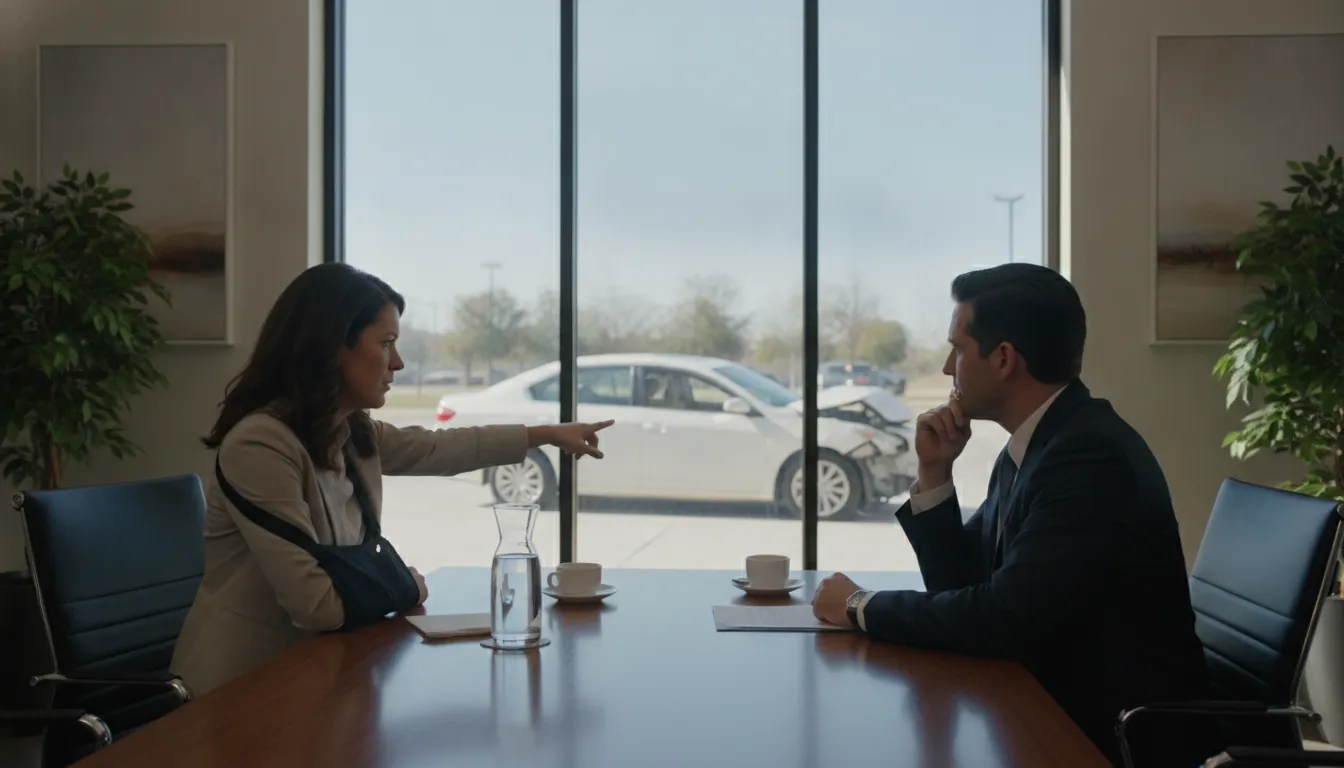
After a Georgia crash, a clear record can make it easier to explain your vehicle damage and respond to an insurer. Physical damage coverage most often refers to collision and comprehensive protection for an insured vehicle. It may help pay for covered repairs or a covered total loss, subject to the policy, deductible, limits, exclusions, and facts. It does not automatically resolve liability, every property-damage issue, or the separate market-value loss that may remain after repairs. Georgia vehicle owners should review the coverage and claim evidence together.
Request a free case evaluation with Gastley Law or call (770) 557-2838.
Quick answer: Start with safety, emergency help when needed, driver and insurance information, scene and vehicle photos, witness details, and a police or incident report when appropriate. Then organize claim records, repair estimates, invoices, insurer communications, and valuation evidence. A repaired vehicle may still have diminished value, so do not treat the repair bill as the end of the review.
This guide is for Georgia vehicle owners dealing with property-damage and diminished-value questions. It is practical information, not individualized legal advice. Use the checklist to preserve facts and identify when a focused claim review may help.
What To Do First: A Georgia Car Accident Claim Checklist
The first few minutes after a crash can feel chaotic. Focus on safety, clear documentation, and preserving information you may need later for a Georgia property-damage or insurance claim. These practical steps are not a substitute for individualized legal advice, but they can help you create a reliable record while the details are fresh.
- Move to safety and check for immediate danger. If it is safe to do so, move vehicles out of traffic and turn on hazard lights. Check whether anyone needs emergency medical assistance. Do not put yourself at risk to photograph a dangerous scene or inspect a vehicle in moving traffic.
- Call 911 when emergency help or an official response is needed. Request medical or law-enforcement assistance based on the circumstances. Cooperate with responding officers and describe what happened accurately. Avoid guessing about speed, fault, or injuries, and do not argue with the other driver at the scene. Ask how to obtain the incident or report information, if one is created.
- Exchange essential information. Obtain the other driver’s name, contact information, driver’s license details, insurance carrier, and policy information when available. Record the vehicle make, model, color, and license plate. If the other driver cannot provide information, note that fact and let the responding officer handle the situation.
- Photograph the scene and the vehicles. Take wide photos showing the roadway, traffic controls, weather or lighting conditions, vehicle positions, and surrounding property. Then photograph each vehicle from several angles, including close-ups of visible damage, undamaged areas, license plates, and any debris. If you cannot safely take photos, ask whether a passenger or witness can help.
- Identify witnesses and preserve their information. Ask people who saw the collision for their names and contact information. Write down what each person said only as a factual note, without trying to coach or debate the witness. Save any dashcam footage, nearby-camera information, or photographs that may help show the condition of the vehicles and the scene.
- Start a claim record after the immediate response. Keep the police or incident information, photos, repair estimates, invoices, policy details, claim number, insurer correspondence, and notes from calls in one folder. Claims may be handled through your own insurer or through the other driver’s insurer, depending on the circumstances. Preserve the vehicle and repair records, and avoid discarding damaged parts or signing documents you do not understand before getting appropriate guidance.
Once the immediate evidence is secure, continue documenting repairs and communications. A complete file can also help identify whether a repaired vehicle may have a remaining market-value loss, known as diminished value.
Build Your Insurance Claim File Before You Submit It
A well-organized claim file makes it easier to explain what happened, document the vehicle damage, and respond when an insurer asks questions. Start with a simple folder, either physical or digital, and keep a copy of every document you send or receive.
Record the claim number as soon as one is assigned. Add the date of the accident, the location, the names and contact information of the drivers, vehicle information, and each insurer’s contact details. Include your policy declarations or other policy information if you are making a claim through your own insurer. If another driver may be responsible, preserve that driver’s insurance information as well.
Know which insurer is handling the claim
A first-party claim is made through your own insurance policy. A third-party claim is made against the other driver’s liability coverage. The distinction matters because the parties, policy language, and communications may differ. You do not need to guess which path applies before preserving your records. Keep correspondence from every insurer involved, including emails, letters, text messages, portal notices, and notes from phone calls.
Preserve proof of the damage
Save clear photos of your vehicle from multiple angles, including close-ups of damaged areas and wider images that show the vehicle’s overall condition. Keep any accident-scene photographs, police report, exchange-of-information materials, and towing or storage records. If you have photographs showing the vehicle before the accident, preserve those too. They can help distinguish accident damage from prior condition.
Ask for written repair estimates and retain the final repair order, invoices, supplements, receipts, and proof of payment. If repairs have not started, do not discard an estimate simply because the repair shop later finds additional damage. Each version can help show how the scope of work developed. Also save records of rental transportation or other property-damage expenses that relate directly to the incident.
| Record | Why to keep it |
|---|---|
| Photos and police information | Shows the scene, vehicle condition, and reported details. |
| Estimates, supplements, and invoices | Tracks the repair scope and the cost of restoring the vehicle. |
| Offers and correspondence | Creates a record of the insurer’s position and your responses. |
| Valuation evidence | Helps evaluate whether an accident history affected market value after repairs. |
Track value and the claim timeline
Repairs may restore appearance and function without eliminating the vehicle’s accident history. That remaining market-value loss is commonly called diminished value. Keep valuation evidence, vehicle details, photographs, repair records, and any written explanation of how the accident may affect resale or trade-in value in the same file.
Finally, create a basic timeline. List the accident, report, claim opening, inspections, estimates, repairs, offers, calls, and written responses in date order. Add the name of the person contacted and a short summary of what was said. This record can expose gaps, preserve important details, and give a Georgia property-damage professional a clearer picture of the claim without relying on memory alone.
How To Handle Repairs, Estimates, and Insurance Offers
Repair records help show what happened to the vehicle and what it took to restore it. Keep the initial estimate, any revised or supplemental estimates, invoices, parts information, photographs, and proof of payment. A supplement may be needed when a repair shop discovers hidden damage after disassembly. Ask the shop to explain the added work and preserve the written documentation rather than relying on a phone conversation.
Choosing a repair shop is also a practical decision. Ask whether the shop will communicate directly with the insurer, how it documents additional damage, and whether it can provide a complete final invoice. You may also need to track rental-car expenses or other loss-of-use information. Keep rental agreements, receipts, dates, and communications together. This documentation can support a claim review, but it does not by itself establish that an insurer must pay every expense.
Keep insurer communications organized
Record the adjuster’s name, claim number, insurer, dates of calls, and the substance of important conversations. Save emails, letters, text messages, inspection reports, and requests for additional information. Claims may be handled through your own insurer as a first-party claim or through the other driver’s insurer as a third-party claim. The applicable policy and facts matter, so avoid assuming that another person’s explanation settles the issue.
Before signing a release or accepting a settlement, read the offer carefully and make sure you understand what it covers. A payment described as resolving property damage may have broader consequences depending on the language of the documents. Do not sign a release or accept an offer you do not understand. Ask written questions about disputed repairs, missing damage, valuation, fees, and whether the offer addresses any loss in market value after repairs.
Responding to a low offer
Compare the offer with your repair file and identify each gap. The amount may not account for a documented supplement, an invoice, reasonable transportation records, or the vehicle’s post-repair market-value loss. Diminished value is the market-value loss that can remain even after repairs are completed, and it should be considered separately from the cost of fixing the vehicle. You can evaluate an insurance offer by reviewing its assumptions and supporting documents before deciding how to respond.
Keep your response factual and attach the records that support your position. If communications become confusing, the insurer delays review, or the offer remains difficult to assess. A Georgia property-damage attorney can help organize the documentation and explain possible next steps without guaranteeing a particular result.
Where Diminished Value Fits Into the Checklist
Once the immediate safety concerns and basic claim documents are addressed. Add one more question to your car accident claim checklist: could the vehicle be worth less after the repairs than it was before the crash? That potential reduction is called diminished value.
Diminished value is the market-value loss that can remain after accident repairs are completed. A vehicle may look repaired and operate normally, yet its accident history can affect what a buyer or dealer is willing to pay. This is separate from the cost of restoring the vehicle. Repair costs address the work needed to fix damage. Diminished value addresses the possible loss in the vehicle’s value after that work is done.
What evidence can help show the loss?
A diminished-value review should be based on the vehicle and its documented history, not a guess made from the repair bill alone. Keep the repair estimate, final invoices, photographs from the accident and repairs, vehicle identification details, and insurer correspondence with the rest of your claim file. Records showing the vehicle’s condition before the accident can also help provide useful context.
Valuation evidence may include an assessment of the vehicle’s pre-accident and post-repair market position. The vehicle’s age, mileage, condition, make, model, and accident history can all matter. Newer or higher-value vehicles may deserve particular attention, but no single feature establishes a claim by itself. The quality and completeness of the supporting records are important when evaluating what, if anything, remains to be addressed.
You can read more about what diminished value means and why a repaired vehicle may still experience a market-value loss. That review is a later property-damage step, so preserve the underlying records even if the insurer has already paid for repairs.
Connect the review to the Georgia property-damage claim
In Georgia, diminished value belongs in the broader review of a vehicle property-damage claim. The claim may be handled through your own insurer or through the other driver’s insurer, depending on the circumstances. That coverage pathway does not automatically answer whether a diminished-value issue exists, and an accident does not automatically create a valid claim. The facts, policy, vehicle, and available evidence all matter.
If the insurer’s evaluation does not account for a possible post-repair loss, keep the offer, explanations, and related messages. Comparing the offer with your repair records and valuation evidence can help identify what remains unresolved. For more context on the larger process, review Gastley Law’s guidance on a Georgia property-damage claim.
When Should You Get Help With a Georgia Vehicle-Damage Claim?
A focused case review can be useful when an insurance claim stops moving forward or the insurer’s position does not match the damage to your vehicle. You do not have to wait until every issue is resolved to organize your records and ask what options may be available.
Warning signs that a review may help
Consider seeking guidance if the insurer denies the claim, delays a decision, offers less than your documented loss, or repeatedly asks for records you have already provided. The same is true when the parties disagree about who is responsible, how much the repairs should cost, or whether the vehicle lost market value after repairs.
Communication problems can also signal that it is time for help. If an adjuster is difficult to reach, pressures you to accept an offer. Or asks you to sign a release before you understand its effect, pause and preserve the correspondence. Do not assume that a quick settlement is a fair one simply because the vehicle has been repaired.
Issues involving diminished value or appraisal
Diminished value is the market-value loss that may remain after accident repairs. It can matter when a buyer or dealer sees the vehicle’s accident history even though the repairs were completed. Appraisal questions may arise when the insurer and vehicle owner use different methods to evaluate the loss. A review can help identify the evidence that may be relevant, including repair records, invoices, insurer communications, valuation information, and claim details.
Gastley Law focuses on Georgia property-damage and diminished-value claims for individual vehicle owners whose vehicles were damaged within the past six years. That six-year period describes the firm’s service focus. It is not a statement that every claim has the same legal deadline, and an individual claim should be evaluated on its own facts.
What a case review can cover
Gastley Law’s documented process can include reviewing repair documentation, evaluating the claim, communicating with the insurer, negotiating, and addressing appraisal or litigation issues when appropriate. The firm handles both first-party claims through a vehicle owner’s insurer and third-party claims through another driver’s insurer. Its contingency model means clients do not pay upfront fees, and the firm fronts case expenses, including appraisal costs, according to the firm’s stated process.
If your claim involves a denial, delay, low offer, disputed value, or an appraisal question, you can review Gastley Law’s property-damage services or request a case evaluation. Bring the records you have, but do not delay a review merely because your file is incomplete.
Frequently Asked Questions
What is physical damage coverage?
Physical damage coverage generally protects the insured vehicle from covered tangible damage. For personal auto insurance, it most often refers to collision and comprehensive coverage. The policy determines the covered events, deductible, limits, exclusions, and payment rules. It is different from liability coverage, which generally addresses harm or property damage caused to others.
Is physical damage coverage the same as collision coverage?
Not exactly. Collision coverage is commonly one component of physical damage coverage. It generally addresses damage connected to a collision. Comprehensive coverage is another common component and may address covered events other than a collision, such as theft, vandalism, fire, or certain weather damage. Your policy controls the details.
Does physical damage coverage pay for damage to my own vehicle?
It may, when the loss falls within the policy’s covered events and required conditions are met. The insurer may apply a deductible, limits, exclusions, and a repair or total-loss valuation process. Review the declarations page and policy language rather than assuming every expense or every type of loss is included.
Can I make a third-party claim for vehicle damage?
You may be able to make a third-party property-damage claim against the at-fault driver’s insurer when the facts and available liability coverage support that route. Gather photographs, the crash report, witness information, repair estimates, and insurer communications. A third-party claim may address vehicle damage separately from any injury claim.
What if the insurer denies or undervalues my claim?
Ask for the decision and its reasoning in writing. Preserve the policy, estimates, photographs, repair records, valuation evidence, and communication timeline. Compare the offer or denial with the documented loss and consider a focused case evaluation before signing a release. Options depend on the policy, evidence, claim type, vehicle, and applicable Georgia law.
Ready to discuss your Georgia vehicle claim?
Understanding physical damage coverage is a useful first step when a vehicle damage, property-damage, or diminished-value dispute remains unresolved. Request a free case evaluation with Gastley Law or call (770) 557-2838 today.