
Georgia Car Accident Claim Checklist for Vehicle Owners
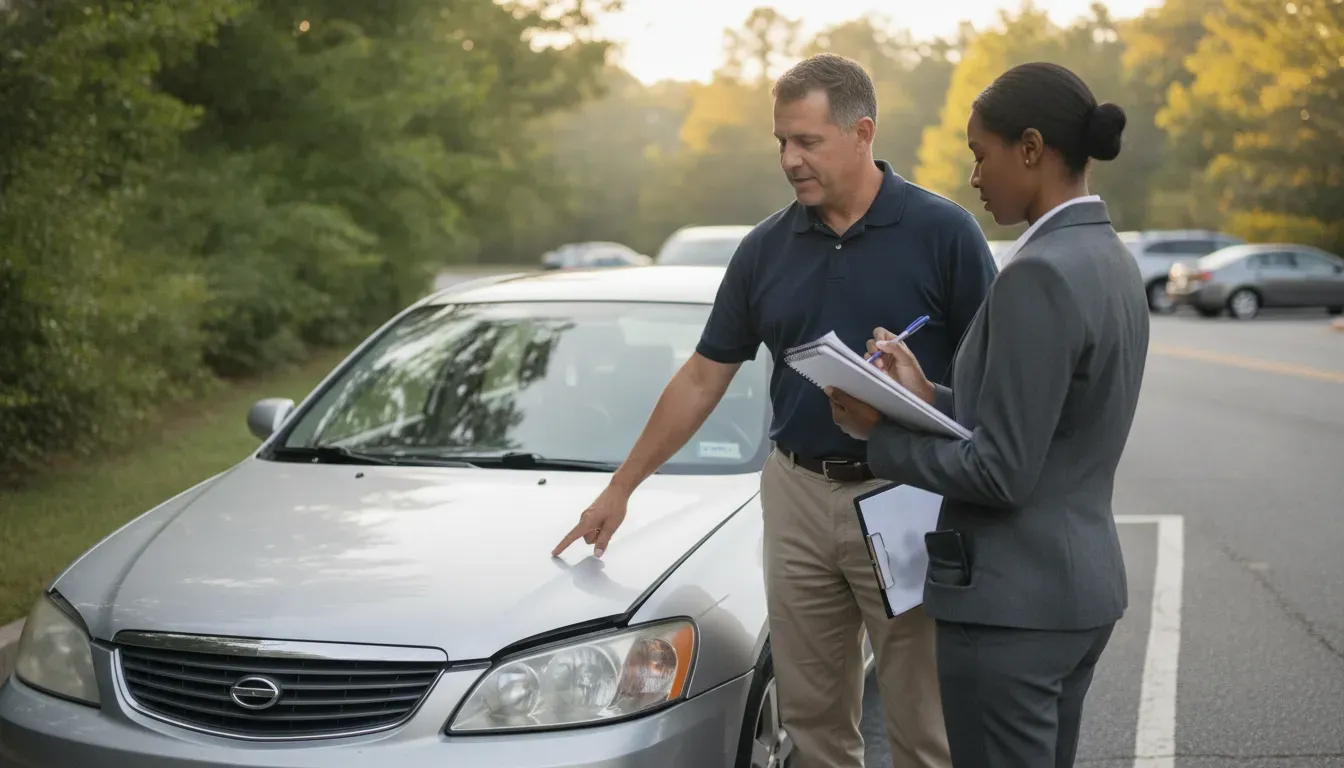
After a crash, the first few decisions can affect how clearly you can prove vehicle damage and what an insurer understands about your loss. This Georgia car accident claim checklist gives vehicle owners a practical sequence for protecting evidence, starting the claim, tracking repairs, and spotting possible diminished value before an important document is signed.
Request a free case evaluation with Gastley Law or call (770) 557-2838 today.
What should you do immediately after a Georgia car accident?
A vehicle owner should first get people to safety, request emergency help when needed, notify law enforcement when appropriate, exchange reliable information, and document the scene without guessing about fault. These steps protect safety first and create a record that can support a later property damage or diminished value claim.
- Move to a safe location if you can do so without creating another hazard.
- Call 911 when anyone is injured, traffic is blocked, a driver leaves, or the situation requires police assistance.
- Exchange names, contact information, license plate details, and insurance information.
- Photograph the vehicles, damage, roadway, signals, weather, debris, and visible injuries when it is safe.
- Ask witnesses for their names and contact information.
- Avoid arguing about fault or making a detailed statement before you have recorded what happened.
The Georgia Office of the Commissioner of Insurance and Safety Fire also recommends obtaining information about the police report and notifying the insurer as soon as possible. A checklist is useful because stress makes it easy to overlook a witness, a photograph, or a small piece of information that later becomes important.
What information belongs in your accident claim file?
Your claim file should connect the accident to the vehicle damage, the repair process, the expenses you paid, and the value of the vehicle before and after the collision. Keep originals when possible, save digital copies in more than one place, and record when each item was created or sent.
- Crash date, time, location, weather, road conditions, and a short factual description.
- Police report number, officer information, and the process for obtaining the report.
- Names and contact details for drivers, passengers, witnesses, and responding agencies.
- Insurance company, policy information, claim number, adjuster name, and every communication.
- Photos and videos from the scene, including all sides of each involved vehicle.
- Tow, storage, inspection, repair, rental, transportation, and other accident-related receipts.
- Repair estimates, invoices, supplements, parts information, alignment results, and warranty records.
- Pre-crash photographs, service records, purchase documents, and other proof of the vehicle’s condition.
Do not edit photographs or delete messages. If an adjuster asks for an item you do not have, say what you can provide and keep a written record of the request. Organized documentation can also help Gastley Law evaluate whether the issue is a repair cost, a loss of use concern, diminished value, or more than one type of property damage.
How do you start an auto insurance claim in Georgia?
Start by reviewing the policy and reporting the crash through the insurer’s approved claim channel. Ask what information the carrier needs, where the vehicle may be inspected, and how the carrier handles estimates, supplements, repairs, and related transportation expenses. Report facts accurately and keep the claim number with your records.
- Notify your insurer promptly, even if another driver appears responsible.
- Confirm the claim number, adjuster’s name, phone number, email address, and preferred submission method.
- Ask for written instructions about inspection, repair estimates, supplements, and documentation.
- Submit a concise factual description and identify damage you can see without speculating about hidden damage.
- Save every estimate, email, portal message, voicemail, and letter in chronological order.
Georgia insurance rules and policy language can affect what happens next. The state’s auto insurance resources explain general coverage concepts, but they do not replace review of your policy or advice about your specific facts. A claim checklist helps you ask better questions without assuming that one deadline, coverage rule, or repair process applies to every accident.
What should you document before and during vehicle repairs?
Before repairs begin, preserve the vehicle’s condition through photographs and keep the first estimate. During repairs, save supplements and invoices and ask questions about parts, structural work, calibration, paint, alignment, and any repair concern that could affect safety or resale value.
Before the repair appointment
- Take clear photographs in good light from multiple distances and angles.
- Photograph the odometer, interior, warning lights, tires, and any pre-existing damage separately.
- Save the initial estimate and note who prepared it and when.
- Ask how the vehicle will be inspected and whether additional damage may be found after disassembly.
While the vehicle is being repaired
- Keep the repair order, supplements, parts information, and final invoice.
- Record dates when the vehicle entered the shop, work paused, and repairs were completed.
- Ask for written explanations of changed work or disputed items.
- At pickup, inspect the vehicle in daylight and document unresolved defects promptly.
A repair invoice proves that work occurred, but it does not automatically prove that the vehicle has the same market value it had before the accident. If repairs are incomplete, inconsistent, or visibly poor, document that issue before accepting the vehicle as complete.
Learn how diminished value works for Georgia vehicle owners before you close your claim file.
When should you check for diminished value?
Check for diminished value after the vehicle has been repaired or its damage has been assessed, especially when the vehicle is relatively newer, has meaningful collision history, or has repairs that will appear in vehicle-history records. Diminished value is separate from the immediate cost of repairing the vehicle.
A vehicle can look repaired and still be worth less to a future buyer because the accident history remains. Start by preserving:
- The pre-accident condition and mileage of the vehicle.
- The final repair invoice and parts or structural repair information.
- Photographs showing the damage and the completed repairs.
- The vehicle history report when available.
- Any written offer, denial, or explanation from the insurer about value loss.
Gastley Law focuses on diminished value and property damage claims for Georgia vehicle owners. Its diminished value appraisal guide explains why valuation evidence matters. The appraisal question is usually more useful after the claim file contains complete repair records, not before you know what work was performed.
How can you tell which part of the claim needs attention?
Separate the claim into the type of loss you are trying to prove. Repair cost, loss of use, total loss, and diminished value can involve different evidence and different questions. Separating them prevents a broad checklist from hiding the issue that is most important to your recovery.
| Claim issue | Evidence to organize | Question to ask |
|---|---|---|
| Repair damage | Estimates, supplements, invoices, photographs | Does the file show the full cost and scope of repairs? |
| Loss of use | Repair dates, transportation receipts, rental records | What transportation loss occurred while the vehicle was unavailable? |
| Total loss | Valuation report, comparable vehicles, title and loan records | Does the valuation reflect the vehicle’s actual pre-loss condition? |
| Diminished value | Repair history, vehicle history, appraisal, market evidence | Is the repaired vehicle worth less because of the accident history? |
For a broader property damage overview, review Gastley Law’s Georgia property damage claim guide. That page covers the claim process and compensation categories in more detail. This checklist is intentionally narrower: it helps you preserve the record and identify the right next question.
When should you ask an attorney to review a vehicle claim?
Consider a legal review when an insurer denies a property damage issue, offers an amount you cannot reconcile with the evidence, asks you to sign a release before you understand the loss, disputes repair-related damage, or does not address possible diminished value. Earlier review can help preserve records, but it is still useful to organize the file after repairs.
- The insurer says the vehicle has no diminished value without explaining the basis.
- The offer does not account for documented repairs, supplements, or related property damage.
- The adjuster disputes the cause, scope, or necessity of repairs.
- You receive a release or settlement document you do not understand.
- Communication stops, deadlines are unclear, or the claim becomes difficult to manage.
- The accident occurred within the last six years and you want to know whether a Georgia claim remains worth evaluating.
Do not wait until you have a perfect file to ask questions. Bring the documents you have, explain what is missing, and ask what additional evidence would make the claim easier to evaluate.
What should you do before accepting an insurance settlement?
Before accepting a settlement, identify what the payment is intended to resolve and read every release or agreement carefully. Compare the payment with the categories of loss you documented, ask whether future claims are waived, and do not sign simply because an adjuster says the offer will expire.
- Request the offer and any release in writing.
- Ask which damage categories and vehicles are included.
- Compare the offer with estimates, invoices, repair records, receipts, and value evidence.
- Ask what rights the release affects and whether any claim remains open.
- Keep a copy of every signed document and proof of payment.
A settlement decision is not just a math exercise. It can affect the ability to pursue an unresolved property damage or diminished value issue later. If the language is unclear or the offer does not match your file, request a case evaluation before signing.
Frequently Asked Questions
Can I use this checklist if I was partly responsible for the accident?
Yes. Use the checklist to document safety, damage, communications, and repairs regardless of how responsibility may ultimately be evaluated. Do not assume that being at fault answers every property damage or value question. A Georgia attorney can review the facts and applicable policy language.
Do I need a police report to start an insurance claim?
Not every claim follows the same process, and a report may not be available for every incident. Request law enforcement assistance when appropriate, ask how to obtain any report that was made, and tell the insurer accurately what happened. Keep other evidence, including photographs, witness information, and claim communications.
Can I claim diminished value after my car is repaired?
Possibly. A repair does not automatically eliminate accident-related value loss. The vehicle’s age, condition, mileage, repair history, market, and available evidence can matter. Preserve the final repair records and ask for a Georgia-specific evaluation rather than assuming the insurer’s first position is the final answer.
What documents should I send to Gastley Law for a case evaluation?
Start with the policy or claim information, photographs, police report if available, estimates, repair invoices, vehicle history information, insurer correspondence, and any settlement offer or denial. If something is missing, explain that when you contact the firm. The team can tell you what additional records may help.
How long do I have to pursue a Georgia vehicle damage claim?
The answer can depend on the type of claim, the policy, and the facts. Do not rely on a generic internet deadline or wait until the file is difficult to reconstruct. If the damage occurred within the last six years, contact a Georgia attorney promptly to discuss whether the claim should be evaluated.
Request a free case evaluation with Gastley Law or call (770) 557-2838 today.