
Diminished Value Appraisal: A Guide for Georgia Owners

After an accident, an insurer may treat completed repairs as the end of the vehicle’s financial loss. That overlooks what happens when the car enters the resale market with a reported collision history. Buyers may question its condition or the quality of prior repairs, even when the work was completed properly.
Request a free case evaluation with Gastley Law
A diminished value appraisal documents how an accident affects your vehicle’s market value after repairs. An independent appraiser evaluates the car, its damage and repairs, and relevant market factors, creating evidence that can help your lawyer challenge an insurer’s valuation during settlement negotiations.
That evidence matters because diminished value is not simply a guess about what your car might be worth. It is a reasoned estimate of the difference between the vehicle’s value before the collision and its value afterward. Understanding what the appraisal measures is the first step toward using it effectively in a Georgia claim.
What Is a Diminished Value Appraisal?
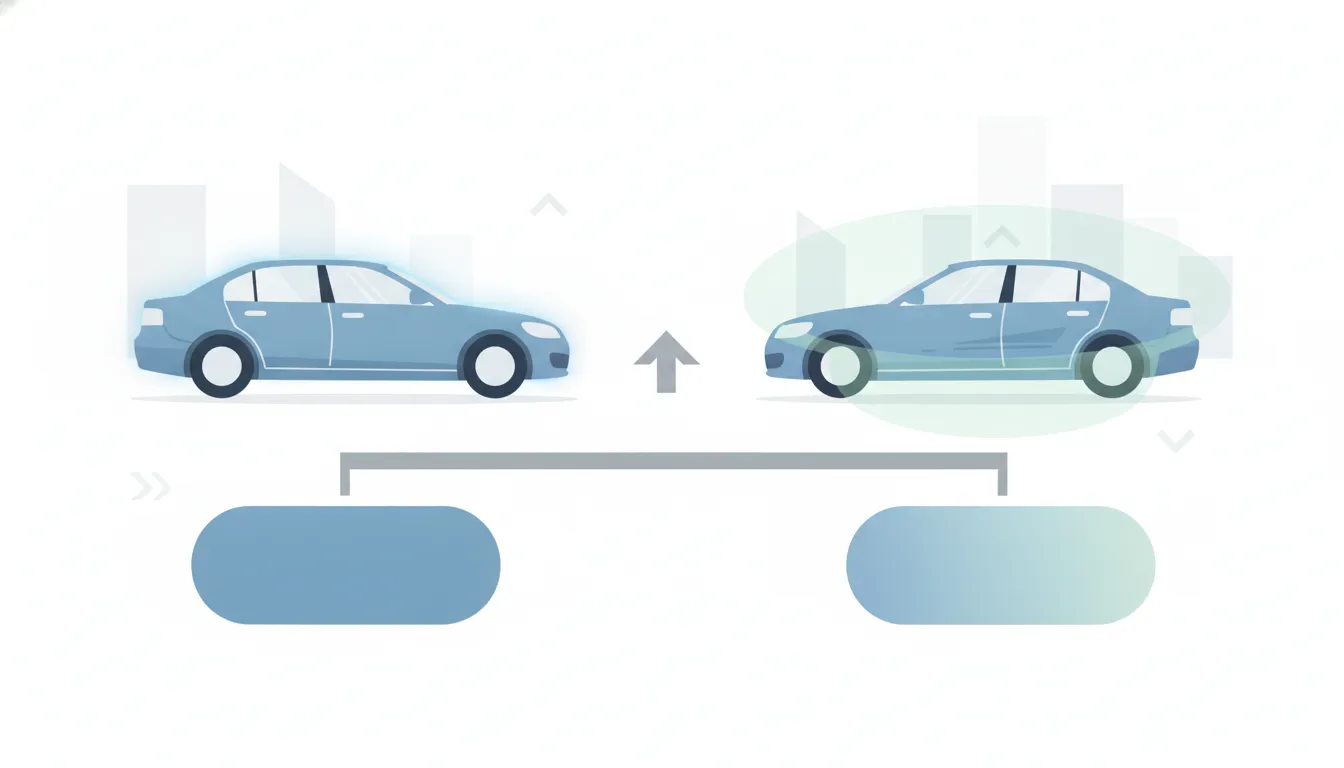
A diminished value appraisal estimates how much a vehicle’s market value fell because of its accident history, even after repairs are completed. It looks beyond the repair bill and asks what the vehicle is likely worth in the marketplace now. Where buyers and dealers may discount a car that has a reported collision.
A vehicle can be repaired properly and still be worth less than an otherwise comparable vehicle with no accident history. The Boston University Law Review describes this as inherent diminished value: a loss that remains after a vehicle is competently and completely repaired. The reason is often called stigma. A future buyer may worry that hidden damage remains, that the repair will affect long-term reliability, or that the vehicle will be harder to resell.
That concern can affect the vehicle even when the repair shop restored its appearance and function. A clean-looking bumper, replacement panel, or refinished surface does not erase the accident from vehicle-history reports. The history becomes part of the vehicle’s market identity, and buyers may use it when deciding whether to make an offer or how much to pay.
Normal depreciation is a separate issue. Cars generally lose value as they age and accumulate mileage, but an accident-related reduction can occur in addition to that ordinary decline. Kelley Blue Book explains that every reported accident can reduce a vehicle’s marketplace value, including accidents followed by repairs that return the car to its pre-accident condition. That distinction matters because an insurer’s payment for repairs may address the physical damage without addressing the separate market-value loss.
What does the appraisal measure?
An appraiser compares the vehicle’s likely pre-accident market value with its post-accident value. The analysis considers the vehicle’s condition, the nature of the damage, the quality and scope of repairs, and the stigma attached to its reported history. It is not simply a receipt total, a guess based on the repair estimate, or the difference between a vehicle’s purchase price and its current value.
The resulting report gives the owner evidence to use when discussing the claim with an insurer. Because the amount depends on the particular vehicle and its documented history. A careful appraisal is more useful than a broad rule about what any accident should be worth.
How Do Appraisers Calculate Diminished Value?
An appraiser does not determine diminished value by looking at a single repair invoice or running a generic online calculator. The goal is to estimate the difference between what the vehicle was worth immediately before the collision and what a reasonable buyer would pay after the accident and repairs. Because that comparison depends on the vehicle and its market, establishing the loss often requires a systematic analysis and, in some cases, an expert opinion.
What was the vehicle worth before the accident?
The starting point is the vehicle’s pre-accident market value. An appraiser considers factors such as the year, make, model, mileage, trim, prior condition, equipment, location, and comparable vehicles available in the Georgia market. A well-maintained vehicle with no previous damage may have a stronger baseline than one with an existing accident history or significant wear. The pre-loss value must be tied to the specific vehicle, not just a broad book value.
How severe was the damage?
Next, the appraiser evaluates what happened in the collision. Damage to structural components, multiple body panels, suspension, safety systems, or other major parts can affect how buyers view the vehicle. The analysis also considers whether the accident required extensive repairs or left a record that will follow the vehicle through future ownership. A reported accident can reduce marketplace value in addition to ordinary depreciation, even when the repairs appear complete, as documented by Kelley Blue Book.
How well was the vehicle repaired?
Repair quality matters because buyers may look for signs that the vehicle was not restored properly. An appraiser can review repair records, photographs, parts used, paint and panel alignment, and any remaining functional or cosmetic concerns. A competent repair may restore safe operation without eliminating the market concern associated with a collision history. That distinction is important: repair-related problems and inherent stigma can affect value in different ways.
What marketplace stigma remains?
Finally, the appraiser considers how a reported accident changes buyer confidence. Many buyers worry that hidden problems may surface later or that the vehicle will be harder to resell. Academic research describes this continuing concern as a stigma that can remain even after a vehicle is competently repaired, creating inherent diminished value. See the Boston University Law Review analysis for background on that concept.
Some evaluations also reference formula-based approaches, including the once-common 17c method. Such formulas can provide a starting framework, but they do not replace a vehicle-specific review. The meaningful question is whether the proposed figure reflects the car’s actual pre-accident value, damage, repairs, and post-accident market perception.
The Three Types of Diminished Value
Diminished value is not a single calculation in every situation. The kind of loss involved depends on when the damage is measured and what happened during the repair process. Separating these categories helps clarify what an appraisal is evaluating and keeps an insurance discussion focused on the actual source of the vehicle’s lost value.
For many Georgia claims, inherent diminished value is the central issue. A vehicle may be repaired competently and still be worth less because its accident history affects how buyers, dealers, and future insurers view it. That loss can remain even when the car looks and drives normally. A professional diminished value appraisal should identify the vehicle’s pre-accident market position, the damage history. And the market effect of that history rather than treating the repair bill as the full measure of loss.
Immediate diminished value is different. It describes the reduction in value at the moment of the accident, before repairs take place. This category focuses on the vehicle in its damaged condition. It may matter when a vehicle is sold or evaluated immediately after the collision. But it does not describe the separate market stigma that can remain after a proper repair.
Repair-related diminished value concerns the quality or completeness of the repair. If a vehicle has mismatched paint, visible defects, unresolved mechanical problems, non-equivalent parts, or other deficiencies. Its value may be lower because the repair did not restore it to its prior condition. The evidence for this type may include repair records, photographs, inspection findings, and an independent assessment of the completed work.
Inherent diminished value
- Definition: Market loss that persists after competent repairs because of the accident history.
- When it applies: After repairs are complete and the vehicle remains less marketable.
- Typical recovery logic: Compare pre-accident and post-repair market value, supported by appraisal evidence.
Immediate diminished value
- Definition: Loss in value while the vehicle is damaged and unrepaired.
- When it applies: Between the accident and the completion of repairs.
- Typical recovery logic: Assess the damaged vehicle’s market value at that point in time.
Repair-related diminished value
- Definition: Loss caused by incomplete, defective, or substandard repairs.
- When it applies: After repairs reveal quality, safety, or condition problems.
- Typical recovery logic: Document repair deficiencies and measure their effect on market value.
These categories can overlap in a real claim, but they should not be treated as interchangeable. The repair file, vehicle inspection, accident history, and current market evidence determine which loss is relevant and how it should be presented to the insurer.
How Gastley Law Uses Appraisals to Negotiate Better Settlements
An insurer’s first valuation is not always the same as your vehicle’s real post-accident market value. Many carriers rely on automated valuation systems, including platforms such as CCC or Mitchell, to process claims efficiently. Those systems can miss the lasting stigma attached to a reported accident, the quality of the repairs, and the way buyers evaluate a vehicle with collision history.
That matters because diminished value is separate from ordinary depreciation. A vehicle may be repaired safely and still be worth less in the marketplace because prospective buyers worry that repairs did not restore it exactly to its pre-accident condition. A professional diminished value appraisal turns that concern into documented evidence that can be evaluated during settlement negotiations.
Replacing an automated estimate with independent evidence
An independent certified appraiser examines the vehicle, its pre-accident condition, the damage history, the repairs performed, and relevant market factors. The resulting report explains how the accident affects the vehicle’s value rather than simply accepting an insurer’s automated output. That distinction is important when a carrier minimizes the claim, disputes that a loss exists, or points to a policy provision that is unclear about diminished value coverage. Policy ambiguity has contributed to continuing controversy over these claims, as discussed in academic research on diminished value coverage.
The appraisal does not guarantee a particular settlement. It gives the negotiation a factual foundation. Instead of arguing generally that the vehicle is worth less, Gastley Law can present an expert-supported valuation and address the insurer’s assumptions with specific evidence. That is the same reason a carefully prepared diminished value demand letter can be more effective than a bare request for payment.
Building leverage without asking clients to take the first financial risk
Professional appraisals can be costly, and establishing diminished value often requires expert support. Gastley Law uses a pure contingency model and fronts the appraisal cost, typically about $200 to $1,500, so clients do not have to pay that expense up front. The firm then uses the appraisal alongside repair records, vehicle information, and claim correspondence to pursue a well-supported resolution.
This approach also keeps the claim connected to the broader loss. If accident-related repairs or other losses are involved, the appraisal can be considered alongside a property damage claim, not treated as an isolated number. Gastley Law’s focus is to help Georgia vehicle owners challenge unsupported valuations and seek a settlement grounded in the vehicle’s documented market loss. Learn more about how the firm handles diminished value claims after an accident.
Call Gastley Law for a free case evaluation
How Much Does a Diminished Value Appraisal Cost?
An independent vehicle appraisal for a diminished value claim typically costs roughly $200 to $1,500. The range reflects differences in the vehicle, the damage history, the documentation available, and the level of analysis needed. A professional appraisal is not simply a form that assigns a number. It is an evidence-based opinion about how the accident and repairs affect the vehicle’s market value.
That expense can feel frustrating when an insurer has already made a low offer or denied the claim. However, the appraisal may be one of the most important pieces of evidence in the negotiation. Insurance carriers often rely on automated valuation systems, including CCC or Mitchell. That may not account fully for the stigma attached to a reported accident or the specific facts of your vehicle. An independent appraiser evaluates those details instead of treating the claim as a generic calculation.
Who pays for the appraisal?
Gastley Law uses a contingency model and fronts the cost of professional appraisals for its clients. You do not have to pay that upfront expense to begin pursuing a Georgia diminished value claim with the firm. The appraisal cost is handled as part of the representation, subject to the terms of your agreement with Gastley Law.
Fronting the cost does not mean the outcome is guaranteed. It means the claim can be evaluated with professional evidence rather than relying only on an insurer’s estimate. That distinction matters when the carrier’s valuation does not reflect the vehicle’s condition, repair history, age, or market position.
Is an appraisal worth the cost?
That depends on the facts of the accident, the vehicle, the available documentation, and the insurer’s position. A lawyer can review those factors and explain whether obtaining an appraisal is a sensible step. The potential value of credible evidence is qualitative: it can give negotiations a defensible foundation. Identify weaknesses in an insurer’s offer, and make it easier to present the loss clearly.
If you are unsure whether an appraisal makes sense, request a free case evaluation with Gastley Law. The firm can review your situation, explain the process, and discuss how professional appraisal evidence may fit into your claim.
When Should You Get a Diminished Value Appraisal in Georgia?
The right time to obtain an appraisal is usually before an insurer’s low offer becomes the end of the conversation. A professional opinion can document the vehicle’s post-accident market loss while repair records, photographs, and valuation evidence are still available. It also gives your lawyer a factual basis for negotiating, rather than relying on an automated estimate alone.
-
Start when the damage was serious or structural
Consider an appraisal if the collision affected the frame, unibody, suspension, or other structural components. Airbag deployment is another meaningful trigger. Even when repairs are completed correctly, buyers may view a vehicle with this history differently. That market perception can matter when establishing the loss that remains after repair.
-
Get the vehicle evaluated if you plan to sell or trade soon
A repairable vehicle can still carry diminished value when you are preparing to sell or trade it. An appraisal may help identify the market impact before you accept a dealer allowance or private-sale offer that does not account for the accident history. The closer you are to a transaction, the more useful it is to have independent documentation in hand.
-
Act when the insurer offers too little or denies the loss
Insurance valuation systems may not fully reflect the market stigma associated with a repaired vehicle. If the carrier ignores diminished value, denies the claim, or presents an amount you cannot reconcile with the vehicle’s condition, an independent appraisal can test that position. It can then support a file a diminished value claim strategy and the evidence used in negotiations.
-
Keep Georgia’s timing window in mind
Gastley Law’s guidance is aimed at Georgia owners pursuing diminished value within six years of the accident. That does not mean waiting is the best approach. Records can become harder to gather, and the vehicle’s condition or ownership may change. Georgia precedent, including State Farm Mutual Automobile Insurance Co. v. Mabry, 274 Ga. 498 (2001), recognizes recovery for diminished value, but the facts and documentation of each claim still matter. This is general information, not legal advice.
If you are weighing an appraisal after a lowball offer or denial, an attorney can help assess how the evidence fits your claim. Learn more about pursuing a fair diminished value settlement and the negotiation steps that may follow.
Ready to act? Request your free case evaluation with Gastley Law
Frequently Asked Questions
How much does a diminished value appraisal cost?
The cost varies by vehicle, damage history, and the complexity of the valuation. Gastley Law’s knowledge base places independent appraisal costs at approximately $200 to $1,500, and the firm fronts appraisal costs under its contingency model. The precise cost and whether an appraisal is appropriate depend on the facts of your claim.
How is diminished value calculated?
An appraiser compares the vehicle’s pre-accident market value with its post-repair market value. Considering factors such as the vehicle’s condition, damage severity, repair quality, mileage, and documented accident history. The analysis addresses the stigma attached to a previously damaged vehicle, which can remain even after a competent repair. A Boston University Law Review analysis describes this continuing loss as inherent diminished value.
Do I need a lawyer to get a diminished value appraisal?
You can seek an appraisal without a lawyer, but the report is only one part of a claim. A lawyer can evaluate coverage and deadlines, challenge an insurer’s automated valuation, and use the appraisal as evidence in settlement negotiations. In Georgia, professional documentation is especially useful when the insurer disputes the amount or denies the claim.
Can I use an online calculator instead of an appraisal?
An online calculator may provide a rough starting point, but it cannot account reliably for your vehicle’s repair quality, condition, options, or local market. It also does not create an expert report tailored to your loss. For a serious claim, an independent professional appraisal is more useful than relying on a generic formula or an insurer’s software estimate.
How long does the appraisal and claim process take?
The timeline depends on how quickly repair records, photographs, valuation data, and the accident history can be assembled, as well as the insurer’s response. An appraisal may be completed before negotiations begin, but the overall claim can take longer when coverage, liability, or valuation is disputed. A case review can clarify the next step for your circumstances.
Ready to Request a Free Case Evaluation?
An independent diminished value appraisal can give your claim clearer support when an insurer’s valuation does not reflect your vehicle’s post-accident market value. Request a free case evaluation with Gastley Law to discuss whether an appraisal may strengthen your position. You can also call Gastley Law at (770) 557-2838.