
Diminished Value Totaled Car Georgia: Can You Claim It?

When an insurer declares your car a total loss after a Georgia car crash, your chance to pursue a diminished value claim ends. Insurers pay actual cash value instead of repair costs for totaled vehicles. This payout process leaves many drivers wondering how to recover their investment.
Schedule Your Free Case Evaluation. Call Gastley Law at (770) 557-2838 Today.
Pursuing a diminished value totaled car Georgia claim is generally not possible under state insurance guidelines. Total loss payouts cover the full pre-accident market value of your vehicle. Since the insurer pays you the pre-crash actual cash value, you do not own a repaired asset with lower resale value. According to Georgia state regulations, insurers must pay a fair settlement based on your car’s pre-crash worth. If your vehicle is repaired instead of totaled, you can file a separate claim to recover its lost trade-in value. Understanding these rules helps you negotiate a better settlement so you do not leave money on the table.
To get the most out of your insurance payout, you must know how your car’s value is calculated. Many drivers are confused about how these complex property rules work. Understanding diminished value is key to getting a fair check, and the path begins with knowing how auto insurers treat post-accident losses.
Diminished Value Totaled Car Georgia: What Is Diminished Value on a Vehicle in Georgia?
When you get into a car crash, your car loses value. This loss is called diminished value. Even if shops fix your car back to its top state, the crash goes onto its past report. Most buyers will not pay full price for a car with a bad history.
The legal basis for your claim
Georgia is one of the few states that treats value loss as real harm. Under state law, diminished value claims in Georgia are viewed as a type of property damage. The rules of the state force firms to handle these claims fairly. This is ruled by state codes like Georgia Regulation 120-2-52, which guides how firms settle property damage issues.
This right comes from a key court ruling. In 1999, the Georgia Supreme Court made a major choice in Mabry v. State Farm. The court ruled that car insurance firms must pay the owner for lost trade-in value. This means firms cannot just pay for repairs; they must also pay for the drop in market price.
No official formula from the state
Some insurance firms try to use set formulas to limit what they pay you. They may tell you that the state forces them to use a set math tool. But in 2008, the Georgia Insurance Commissioner made a clear statement. The commissioner said that the state has never set up or approved any single formula to find diminished value. This means you do not have to accept their low math. You have the right to show the real loss of your car with help from an expert.
Three ways a car loses value
To file a strong claim, you need to know how value drops. There are three types of diminished value. Each type looks at a different part of how a crash hurts the worth of your car:
- Inherent loss — The drop in worth that stays even after a car is fully fixed. Buyers simply pay less for a car that has been in a wreck. Two identical cars side by side — the one with no crash history will always sell for more.
- Immediate loss — The gap in price right after the crash but before repairs. This type is rarely used in claims unless you sell the car as-is.
- Repair-related loss — The drop in value when a shop does not do a good job. Cheap parts, bent frames, or substandard work leaves the car in a worse state than before the crash.
If you want to seek payment, you must learn the diminished value claim requirements. These rules show you how to prove your case. Knowing these rules helps you fight for the full amount you are owed.
When Is a Car Considered a Total Loss in Georgia?

When you get into a car wreck, you might hope the insurance company will pay to fix your car. But sometimes, the damage is too bad, so they declare your car a total loss. This choice changes how your claim works, meaning you often cannot file a diminished value claim. Knowing how Georgia defines a totaled car can help protect your rights.
The total loss threshold in Georgia
By Georgia law, a car is a total loss when repair costs are too high compared to its value. This point is the total loss threshold. In Georgia, this limit is often 75% to 80% of the car’s actual cash value, as set by state safety rules. Once fixing costs top this limit, you cannot drive the car until it is rebuilt and passes safety checks.
This rule is vital because it keeps you from driving a car that is unsafe to repair. Still, you must fight for a fair payout for your car’s value instead of repairs. If you do not agree with their math, you should learn how to handle a total loss insurance offer before you sign. Finding your car’s true value is the best way to get a fair deal.
How insurers calculate vehicle value
Actual Cash Value, or ACV, is what your car was worth right before the crash. Insurers do not care what you paid for the car or what you owe on your loan. Instead, they look at local sales for matching models. They check the car’s age, mileage, and wear to adjust this market price.
Once the insurer finds this value, they compare it to the repair quote. If repair costs are high enough to hit the threshold, the car is a total loss. Then, the insurer will pay you the cash value instead of fixing it. Keep in mind that this payout goes to your lender first if you have a car loan.
Georgia Regulation 120-2-52
To make sure insurers treat you fairly, Georgia has strict rules for auto claims. Under Georgia Regulation 120-2-52, companies must follow clear rules to settle property damage claims. This law outlines how insurers must set a car’s value and stops them from using biased methods.
For instance, the rule says insurers must use fair market values to find a car’s worth. They cannot just guess or use low figures to save money. If an insurer tries to cut corners on your claim, this rule gives you a tool to hold them to a fair standard. You can point to this law to demand a better offer if their first bid is too low.
Can You Claim Diminished Value on a Totaled Car in Georgia?
When asking if you can claim diminished value totaled car Georgia insurers will often give you a fast no. For most drivers, this answer is hard to hear after a major wreck. Under state rules, the short answer is that you mostly cannot get this payout if your car is a total loss. Knowing the reason why can help you work through the claims process with ease.
Why Total Loss Prevents Diminished Value
To understand this rule, you must look at how the law defines these two terms. A diminished value claim helps you recover the lost market worth of a car that has been fixed. If your car is repaired, its record now shows an accident. This history makes the car worth less on the trade-in market, even if the repairs were perfect. You file a claim to make up for that drop in resale value.
But when your car is a total loss, the insurance company does not pay to repair it. Instead, they pay you its actual cash value. In Georgia, this process is governed by Georgia Insurance Regulation 120-2-52. Because the car is not repaired, it no longer exists as a usable asset for you to sell or trade. There is no resale value left to diminish. So, diminished value claims do not apply because there is no repaired car to value.
How the Settlement Covers Your Losses
When your car is a total loss, the insurance check is meant to cover its full market value right before the wreck. This payout should let you buy a similar car in the same shape. Since the check pays you for the whole car, you do not suffer a second loss in resale value. The total loss payout itself is supposed to make you whole. This is why you cannot ask for more money to cover lost resale value on top of the cash value check.
If you think the insurer did not offer enough for your car, you can dispute their estimate. But this is a dispute over cash value. It is not a diminished value claim. To protect your rights, you should learn how diminished value claims in Georgia differ from total loss cases.
Are There Policy Exceptions?
While the general rule is clear, state law and insurance policies can vary. Whether a diminished value claim exists for a total loss depends on your insurance policy and state law. In rare cases, some insurance contracts might have unique wording that offers extra coverage. But for most drivers, a total loss means your payout is limited to the actual cash value of the car.
If you do not agree with how the insurance company valued your car, you do not have to accept their first offer. You can seek legal help to review your contract and the crash details. A legal team can help you check if you have other ways to get the full amount you are owed under Georgia law.
What Compensation Options Do You Have When Your Car Is Totaled?
When a crash ruins your car, you might want to seek a payout for its lost worth. But you cannot get diminished value for a totaled car in Georgia. Because the car is not being fixed, there is no repaired asset to value. Instead of a diminished value totaled car Georgia claim, you must look at other ways to get back your losses. You can seek a payout for your loss through other forms of insurance.
Actual Cash Value and Your Property Damage Claim
To get back the value of your car, you must file a property damage claim with the insurance firm. This claim seeks the actual cash value of your car right before the crash. The actual cash value is what your car was worth on the open market. Under Georgia Insurance Regulation 120-2-52, insurance carriers must use fair methods to find this value. They look at the local market, the mileage of your car, and its wear before the crash.
If you are not at fault, you can file a third-party claim against the other driver. Georgia uses a modified comparative fault rule for car crashes. If you are 50% or more at fault for the crash, you cannot get any payout from the other driver. But if the other driver caused the crash, their insurer should pay for your car. You have a limited time to act because the Georgia property damage statute of limitations sets a four-year deadline from the date of your crash.
How Gap Coverage Protects Your Auto Loan
Sometimes, what you owe on your car loan is more than the car is worth. If your car is totaled, the actual cash value payout might not cover your whole loan. This is where gap coverage becomes helpful. Gap coverage is an extra plan that pays the difference between the car’s market value and your loan balance.
Without gap coverage, you must pay the rest of the loan yourself. This is true even if you cannot drive the car anymore. If you have this coverage, you can file a claim with your own insurer. This is a first-party claim that helps you avoid paying out of pocket for a car you no longer own.
Negotiating Your Total Loss Settlement Offer
You do not have to accept the first offer the insurance firm gives you. Insurers often use low values to save money. Here are effective steps to negotiate a better total loss settlement:
- Research comparable sales — Look up recent sales of the same car model with about the same mileage in your Georgia market.
- Gather vehicle records — Collect recent repair bills, new tire receipts, or maintenance logs to prove your car’s condition.
- Challenge the valuation report — Review the insurer’s report for errors in options, trim level, or condition ratings.
- Submit a formal counteroffer — Write a demand letter with your evidence and a specific settlement amount.
- Seek legal help if needed — If the insurer refuses to give a fair deal, a skilled lawyer can review the total loss report and advocate on your behalf.
Having a strong advocate makes it much harder for the insurer to shortchange you on your property damage claim.
What If Your Car Was Repaired but Still Lost Value?
After a crash, your car loses market value even if a shop fixes all the damage. Unlike a diminished value totaled car Georgia crash where a car is fully destroyed, a repaired car still exists. You can file diminished value claims in Georgia to seek payment for this lost worth. But getting fair pay is rarely simple. Insurers often use cheap formulas to limit what they pay you.
The insurance company 17c formula
Most insurers in Georgia use a tool called the 17c formula to compute the drop in your car’s market value. The math starts with your car’s pre-crash value and applies a flat ten percent cap. Then, they cut the claim further based on a damage severity scale. For instance, a low percent is used for moderate damage. This flat math often drops the payout to a tiny fraction of the actual loss. Most drivers find that this formula fails to show the real market loss.
| Factor | Insurance 17c Formula | Independent Appraisal |
|---|---|---|
| Base calculation | Flat 10% cap on pre-crash value | Real dealer sales data |
| Vehicle inspection | No physical inspection | In-person professional check |
| State approval | Not endorsed by Georgia Insurance Commissioner | Supported by state claim rules |
| Accuracy | Often misses true loss | Reflects actual market trade-in loss |
Official Georgia policy on formulas
Insurance agents may tell you that the 17c formula is the real law in Georgia. This is not true. In 2008, the Georgia Insurance Commissioner released an official statement about these formulas. The commissioner said that the state has never written or endorsed any set formula to find value loss. Under Georgia Insurance Regulation 120-2-52, insurers must settle property claims in a fair way. They cannot force you to accept an unfair formula that does not reflect real losses.
The role of independent appraisals
To fight the low offers from insurers, you need real proof of your car’s lost market value. Insurance firms often use standard desk reviews to cut payouts. You can beat these tactics by hiring an outside appraiser to inspect your car in person. A skilled appraiser will check the repair work and look at local sales. They will write a report showing how much less a dealer or buyer would pay for your fixed car. Having a real appraisal makes it much harder for the insurer to deny your claim.
How Can Gastley Law Help You Pursue Your Diminished Value Claim?
A risk-free contingency model
Filing a claim can feel like a heavy burden. We want to make the process simple and clear for every client. Our Georgia law firm works on a contingency fee model, so you never have to pay any money up front. We only earn our fee if we win your claim and get you paid.
We believe that expert legal help should be open to every single driver. Our team fights hard. We work to increase the low offer the insurer gave you. We want to help you file a diminished value claim with total confidence. You do not have to settle for a small payment that does not cover your loss.
Independent vehicle appraisals
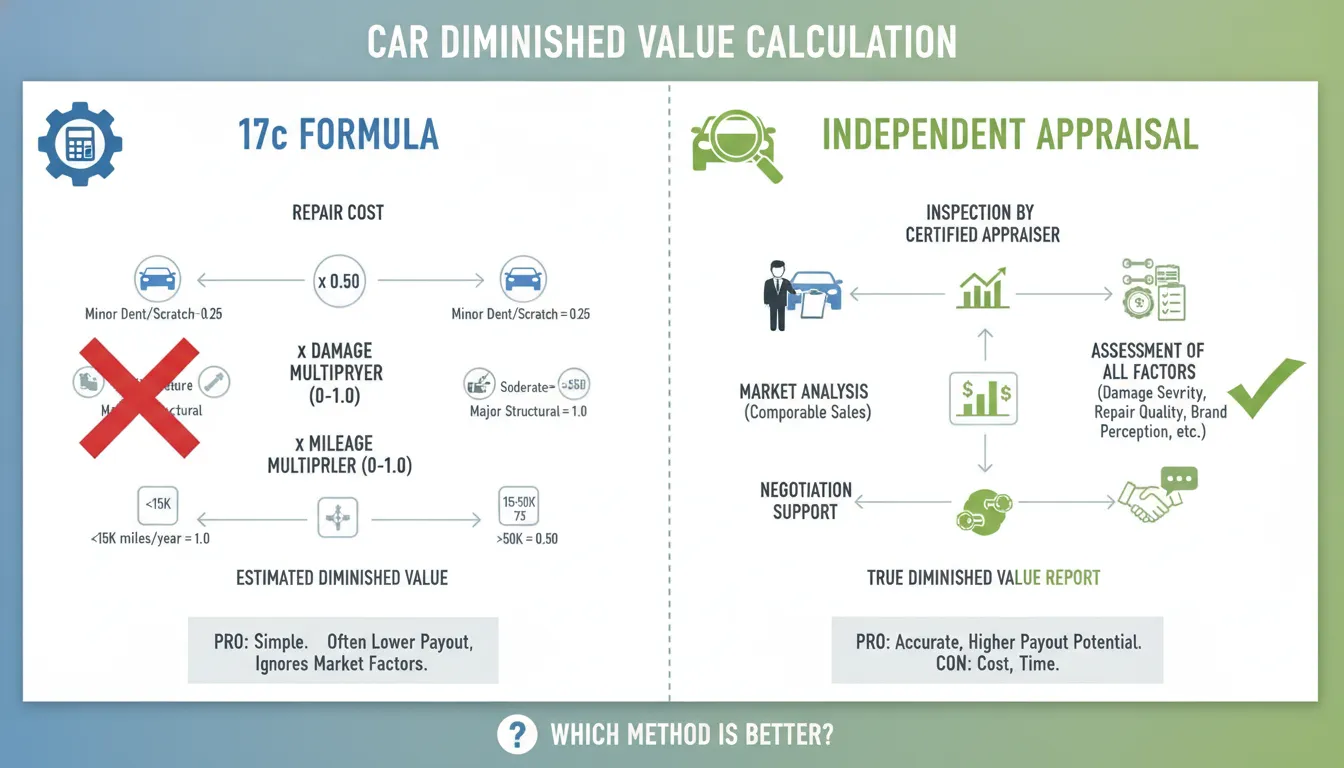
Insurers often use sneaky tactics to lower your physical damage payout. They may use biased math and outdated data to value your damaged car. Our firm counters these tactics with independent vehicle appraisals from trusted experts. These third-party experts know the local market and can find the true loss of value.
These independent reports show the true market loss of your vehicle after repairs. They make your claim strong. A clear appraisal report makes it much harder for insurers to deny your claim. When insurers refuse to agree to a fair deal, we are ready to take legal action. Our legal team does the hard work so you can focus on your life.
Protection from insurance tactics
You might wonder about a diminished value totaled car Georgia claim if your vehicle was wrecked. In most cases, a total loss means you cannot get a traditional diminished value payout. But you still have other legal options to protect your rights after an accident. We can help you. We can check your policy for other paths to recover your money.
If you feel your insurer gave a low total loss insurance offer, we can help you. State laws set standards. These laws dictate how insurers must handle property damage claims in Georgia. For instance, Georgia Regulation 120-2-52 outlines fair rules for total loss calculations. Our team knows how to use these rules to fight for a fair settlement.
Frequently Asked Questions
Can I file a diminished value claim if I was at fault for the accident?
No. In Georgia, diminished value claims are generally only available if you are not at fault for the accident. Because you recover these damages from the other driver’s insurance carrier, being responsible for the crash prevents you from filing. Under Georgia’s modified comparative fault system, you can only recover property damage if you are less than 50% responsible. To learn more, see our guide on property damage claims.
Is there a time limit to file a diminished value claim in Georgia?
Yes. Georgia law sets a four-year statute of limitations for property damage claims, including diminished value, as outlined in the Georgia property damage statute of limitations. This deadline runs from the date of the accident. If you miss this window, you may lose your right to recover compensation entirely.
How much is my diminished value claim worth in Georgia?
The value of your claim depends on several factors: your car’s pre-accident market value. The extent of damage, the quality of repairs, and your car’s mileage and condition before the crash. While insurers often use the 17c formula to calculate a lowball offer, an independent appraisal typically shows a much higher loss. There is no set cap on diminished value claims in Georgia.
Do I need a lawyer to file a diminished value claim?
You can file a diminished value claim on your own, but having a lawyer significantly improves your chances of a fair payout. Insurance companies routinely deny or lowball claims from unrepresented drivers. A Georgia diminished value lawyer understands the tactics insurers use and can counter them with proper evidence and legal arguments.
What if the insurance company denies my diminished value claim?
If your claim is denied, you have options. You can request a review with supporting evidence, hire an independent appraiser, or file a complaint with the Georgia Insurance Commissioner. If the insurer continues to deny a valid claim, legal action may be necessary. Gastley Law can evaluate your case and advise on the best path forward at no upfront cost.
Ready to Schedule Your Free Case Evaluation with Gastley Law?
Navigating the insurance claims process after a Georgia car accident can feel overwhelming, especially when your vehicle is declared a total loss. While a diminished value claim may not be available for totaled vehicles, you still have rights and options to recover fair compensation for your losses. Gastley Law is ready to help you understand every option available under Georgia law.
Let our experienced legal team review your case, negotiate with the insurance company on your behalf, and fight for the settlement you deserve. You do not have to face this process alone. With our contingency fee model, you pay nothing upfront and only pay if we recover compensation for you.
Call (770) 557-2838 today or reach out online to schedule your free case evaluation with Gastley Law. Let us put our experience to work for you.