
Uninsured Driver Diminished Value Claim Georgia
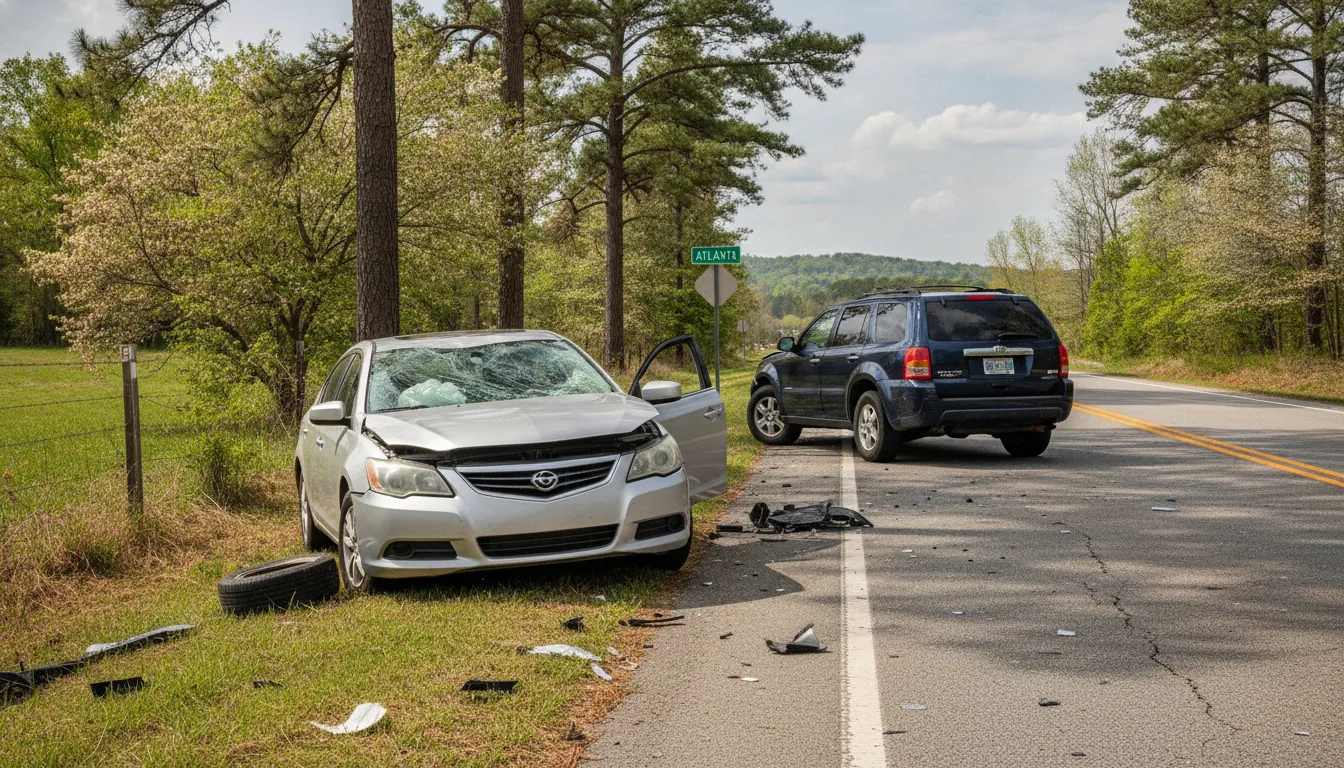
Finding out the driver who hit you lacks insurance adds another concern after a Georgia crash. Beyond repair costs, the accident may reduce your vehicle’s resale value even after repairs.
An uninsured driver diminished value claim Georgia vehicle owners consider may follow more than one path. Depending on the policy and facts, an owner may seek first-party coverage or pursue the at-fault driver directly. Neither path guarantees coverage, collection, or recovery, so preserve evidence and review the applicable policy language.
The right path depends on the policy, the crash facts, and the available proof. Understanding how diminished value works can help you ask better questions and protect the claim.
Uninsured Driver Diminished Value Claim Georgia: How an uninsured driver diminished value claim in Georgia works
A car crash often leaves a vehicle with hidden money scars. Even after a shop fixes the body and paint, the car is worth less than it was before the wreck. This drop in price is known as diminished value. If you were hit by a person with no insurance, you might think you are out of luck. But an uninsured driver diminished value claim Georgia allows you to seek this lost worth from your own policy. You can often get money for this loss through your uninsured motorist (UM) coverage.
Market value versus repair costs
Most people think insurance only pays to fix the car. While the shop bill covers parts and labor, it does not cover the loss in resale price. A car with an accident on its history report is less liked by buyers. In our state, vehicle diminished value in Georgia is a real type of loss. You have the right to ask for the gap between what the car was worth before the wreck and what it is worth now.
The Georgia Office of Commissioner of Insurance notes that insurance helps protect your assets. When a wreck occurs, your car becomes a damaged asset. Even a “perfect” repair cannot erase the fact that the car was in a crash. Most buyers will not pay full price for a car that has been in a major wreck. This gap in value is what you can recover in a claim.
The first-party claim process
When you deal with an uninsured driver, the claim is a first-party matter. This means you are working with your own insurance company. You must show that the wreck caused a real drop in your car’s price. You will need to meet all Georgia diminished value requirements to get a fair payout. Your insurer might use a simple math formula to offer you a small check. These offers often fall short of the true loss you face.
Many insurance companies use a method called the 17(c) formula to cap what they pay. This formula can undercut the actual market loss of your car. It often ignores how much a single make or model drops in price after a wreck. Fighting for a higher amount requires proof of what local buyers would pay. By knowing how the process works, you can better protect your assets after a crash with an uninsured driver.
Repairs versus market value
There is a big gap between fixing a car and making it worth what it was before. Repair costs pay for the new parts and the work to put them on. But these costs do not pay you for the fact that the car now has a “wreck” on its record. In Georgia, you can seek money for both the work to fix the car and the loss in its resale price. This is vital when you face an uninsured driver. You must rely on your own policy to cover all parts of your loss.
When you file a claim, the insurance company might only look at the repair bill. They may try to say that because the car looks new, it is worth the same as before. But the market does not work that way. Most people will pick a car with no wrecks over one that has been fixed. This choice is why your car loses value the moment it is hit. Knowing this split helps you fight for a full payout from your insurer.
What claim paths may be available after an uninsured-driver crash?
If you are hit by a driver with no insurance, you may worry about the loss in your car’s price. A wreck makes a car worth less, even after a shop fixes it. This loss is called a diminished value claim Georgia law allows you to make. In the state of Georgia, you have two main ways to get this money back. You can file a claim with your own firm or sue the person who hit you. Each path has its own pros and cons for a car owner.
Using your own insurance policy
The first path is a first-party claim. This means you ask your own insurance firm to pay for the lost value. Under Georgia state rules, your own policy may cover these costs. You will need to have uninsured motorist (UM) coverage for this to work. UM cover acts like the other driver’s policy. It pays you when the at-fault driver can not pay for the damage they caused.
Your insurance firm might try to use a low offer. They often use a math rule called the 17(c) formula. This rule can lead to a low pay out. You must make sure you meet the Georgia diminished value requirements to get a fair price. If your firm denies the claim, you can still fight for what you owe. Having a lawyer on your side makes this fight much easier for you.
Filing a lawsuit against the driver
The second path is to sue for diminished value in a local court. This is a third-party claim. You are asking the at-fault driver to pay out of their own pocket. In Georgia, you have four years from the date of the crash to start this case. This time limit is for property damage cases. It is longer than the two-year limit for injury cases in our state.
This path is often the last choice for many owners. It takes a long time to go through the court system. You will need to show clear proof of how much value your car lost. A judge or jury will look at the facts of the crash. They will also look at the price of your car before and after the wreck. This path can be slow, but it may be the only way if you lack UM coverage.
The challenge of getting paid
One big risk with a lawsuit is the ability to collect the money. Many drivers who skip insurance also do not have much money in the bank. They may not own a home or have a steady job. If the driver has no assets, a court win might not help you. You could end up with a piece of paper that says they owe you money, but no way to get it. This is why many people prefer the first-party path.
Insurance firms have plenty of money to pay claims. Even if they are hard to deal with, the money is there. The Georgia Insurance Guide says firms must act in good faith. This means they should not ignore your claim or lie about your coverage. If they do, they could face big fines from the state. You should always check both paths before you decide which one to take.
| Comparison Point | First-Party (UM) Claim | Lawsuit Against Driver |
|---|---|---|
| Source of funds | Your insurance company | At-fault driver’s assets |
| Time to settle | A few weeks to months | One to two years |
| Ease of process | Simple filing | Needs court and legal steps |
| Collection risk | Low risk | High risk |
| State time limit | Set by policy contract | 4 years per GA law |
| Role of lawyer | Helps push for fair value | Required for court filing |
Choosing the right path depends on your policy and the crash facts. You should look at your policy limits and the driver’s assets. A free talk with a lawyer can help you see the best choice. At Gastley Law, we help you understand your rights under Georgia law. We work to get the full value of your car back. Do not let an uninsured driver leave you with a huge bill. Take action to protect your asset today.
What evidence should you preserve for a diminished value claim?
When you seek to get back the lost value of your car, proof is everything. This is even more true when you file an uninsured driver diminished value claim Georgia. Without a clear trail of facts, insurance agents will likely offer you less than your car is worth. To protect your rights, you must gather files that show how much value your car lost after the crash.
Protect your initial crash records
The first few days after a crash are key. You need to save papers that prove the other driver was at fault or that they lacked help. A police report is the best way to start this trail.
It gives a fair view of the scene and any road laws that were broken. You should also keep all notes from the scene, such as witness names and their phone numbers. These notes help build a strong case for your claim.
Document the physical damage
Photos and videos of the damage are key pieces of proof. Take clear shots of the car from many spots before any fix starts. You should capture the hit point and any inner damage that is clear.
These images show the size of the crash in a way that words cannot. Also, keep all repair costs and final bills. These files prove that the car was fixed but now carries a crash history that lowers its sale price.
- Get the formal police report. This paper is the main record of the crash. It lists the drivers, the date, and the place. It often shows who was at fault, which is a key part of your Georgia diminished value requirements.
- Capture clear photos of all damage. Take pictures of the car right after the crash. Include the dash to show the miles on the car. This proves how far the car had gone at the time of the loss.
- Save your insurance policy. This paper shows your plan limits and terms. It is vital if you need to file a claim through your own firm.
- Save all repair records and bills. These papers show the cost and type of work done. They help prove that even with good work, the car is no longer in its first state.
- Pull a car history report. Once the crash is told, it will show up on sites like Carfax. This report is what buyers will see later. It proves that the car now has a bad history that hurts its price.
- Find similar car ads. Look for cars like yours that have not been in a crash. Print or save these ads. They show what your car would be worth if the accident never happened.
- Get an expert appraisal. A trained pro can give you a real dollar amount for your loss. This is often better than the basic tools used by insurance firms.
Use laws to back your claim
Georgia has strict rules about how insurance firms must act. The Commissioner of Insurance sets the rules for how these claims are handled. These laws ensure that firms do not use unfair ways to cut your pay.
By keeping all your records, you hold the firm to these high standards. Save every email, letter, and note from your talks with the firm. You prove that you know your rights and that you expect a fair pay for your lost car value.
Most firms try to use a simple math tool to find value. But these tools often miss the real truth of the market. Your proof helps show that your loss is bigger than what their math says.
This is why a complete file of facts matters. It gives the adjuster evidence to evaluate instead of relying only on a generalized formula. Strong proof may support a request for reconsideration, although the outcome remains dependent on the facts and applicable coverage.
How should you review your own insurance policy?
You need to know what your insurance plan covers before you file a claim. Many drivers in Georgia think they only have the basic coverage required by law. But you might have extra help that you forgot about when you first bought the plan. Reading your full policy helps you find these options. It shows you the rules the insurance company must follow when you ask for money.
Check your declaration page
Your declaration page is the first place you should look. This one-page sheet lists your policy limits and the types of coverage you pay for each month. If you are dealing with a vehicle diminished value in Georgia case, look for uninsured motorist coverage. This part of your plan helps if the other driver has no insurance or flees the scene. Georgia law sets the property damage minimum limit at $25,000, but your plan may have higher limits that give you more room to recover your loss.
Read the fine print on exclusions
Every policy has rules about what the insurance company will not pay for. These are called exclusions. You should check if your plan has specific limits on diminished value or property damage. For example, some plans might not cover custom parts or certain types of wear. While diminished value claim Georgia cases are common, each policy is unique. Your rights depend on the exact words in your contract, which is why you must read the whole document, not just the summary. Never guess what your policy says when you can read the facts.
Know your duties after a wreck
Your policy also lists what you must do to keep your coverage active. Most plans require you to give notice to the company soon after the crash. You also have a duty to cooperate with their check of the damage. Some plans even let you use an appraisal clause if you do not agree with their offer. The Commissioner of Insurance in Georgia oversees these rules to make sure they are fair. Failing to follow these steps can lead to a denial of your claim, even if the damage is clear. You should also check for proof of loss rules that might have strict time limits.
How do you document the amount of diminished value?
To win an uninsured driver diminished value claim Georgia, you must prove how much your car lost in value. This starts with a full look at your car before and after the crash. You need to show that even with good repairs, the car is worth less now because of its accident history.
Key facts that change value
Many things play a part in how much value your car loses. The age of the car and the miles on it are the two biggest facts. Newer cars with low miles often lose the most value. Prior damage or a bad history report can also lower your claim. A clean car that was worth a lot before the wreck will see a big drop in price once it has a damage record. As the Georgia Commissioner of Insurance states, insurers must look at these facts when they check your claim.
The flaws of insurer math
Most insurance firms use a set rule to find your loss. In Georgia, they often use the 17(c) formula. This math uses a cap that limits your payout to 10% of the car value. It also cuts the amount based on how bad the damage was and the miles driven. This often leads to a low offer that does not match the real market loss. You should not just take the first check they send. Instead, look at real sales data or get a pro to help you find the true Georgia diminished value requirements for a fair payout.
Proving your loss with data
To support a request for a better offer, give the insurer relevant proof. Sales data for comparable cars without accident histories may help establish the pre-loss market. An independent appraisal can also address repair quality, vehicle condition, and local market factors. If the insurer still says no, review whether the policy contains an appraisal or dispute-resolution provision.
What can you do if the claim is denied or undervalued?
Insurance companies often try to pay as little as possible. If they deny your claim or send a low offer, you do not have to accept it. You can take clear steps to protect your rights. Georgia law and the Commissioner of Insurance set rules for how these claims should work.
Ask for a written reason
If your claim is denied, you should ask for the reason in writing. The insurance company must explain why they will not pay. This helps you find the best way to respond. If the offer is low, check if they used a poor method like the 17(c) formula. This formula often fails to show the true loss of market value for your car.
Check your policy and gather proof
Read your insurance policy to see what it covers. You should also gather proof of what your car was worth before and after the crash. This proof can help you show that the vehicle diminished value in Georgia is higher than what the insurer says. Keep all notes from calls and copies of every email you send to the adjuster.
Use the appraisal clause
Most policies have an appraisal clause. You can use this when you and the insurance company do not agree on the amount of loss. Each side picks a pro to value the car, and they try to reach a fair number. This path can be helpful for a diminished value claim Georgia but it has strict rules. An expert can help you pick a fair umpire if the two sides cannot agree.
Get help for your claim
A lawyer can review the matter if the insurance company stays firm on a low offer. Different deadlines may apply depending on the claim and policy, so do not assume a general limitations period controls every situation. Legal advice can help you evaluate the available options and their practical costs.
When should you speak with a Georgia property damage attorney?
You can often handle a small insurance claim on your own. But when an insurance company fights back, you may need a legal expert. A property damage lawyer helps when the other driver has no insurance or when the company gives you a low offer. They look at the facts and push for the full value of your car. You should not have to pay for a crash that was not your fault.
Fights over who is at fault
Sometimes, the insurance company blames you for a crash you did not cause. If they say you are at fault, they may refuse to pay for your repairs. They might also deny the loss in your car’s value. A lawyer can help you find proof and show what really happened. They can work with experts to build a strong case for you. This is vital because your own fault level changes how much money you can get. In Georgia, the Georgia Administrative Code sets rules for how these claims must be handled by insurers. A lawyer makes sure the company follows these state rules and meets all Georgia diminished value requirements.
Handling uninsured driver claims
If the at-fault driver has no insurance, your own policy may provide a possible claim path. Whether it covers diminished value depends on its terms and the facts. A lawyer can review the policy, the insurer’s position, and whether a direct claim against the driver is practical. Learn more about Gastley Law’s property damage services.
Challenging low value offers
Insurance companies often use math rules that do not show the real market value. They might use a math trick to lower your payout. If you feel their offer is too low, a lawyer can help you fight it. They can help you use the appraisal clause in your policy. This clause lets you hire your own expert to value the car. If the two experts do not agree, a third person called an umpire makes the final choice. A lawyer helps you pick a fair umpire so the game is not rigged. They know the tricks companies use to hide the true value of your car.
Common signs you should call a lawyer include:
- The insurance company denies your claim without a clear reason.
- They offer you far less than your car was worth before the wreck.
- The other driver has no insurance or not enough coverage to pay for the damage.
- There is a fight over which driver caused the accident.
- The company stops answering your calls or takes too long to respond.
- They try to force you to use a specific repair shop that you do not trust.
Speaking with a property damage attorney may make the process easier to understand. An attorney can review the available evidence, communicate with the insurer, and explain the strengths, limits, and practical options presented by the claim.
Frequently Asked Questions
Can I file a diminished value claim if the at-fault driver is uninsured in Georgia?
Yes. If you have uninsured motorist coverage, you can still seek payment for your car’s loss in value. This coverage protects you when the other driver does not have insurance to pay for your losses. Georgia law lets you use your own policy to cover property damage. This includes the lower resale value of your car after a wreck. You should check your policy to confirm you have this kind of help.
How does uninsured motorist coverage affect diminished value claims in Georgia?
Uninsured motorist coverage acts like the other driver’s insurance when they lack a policy. In Georgia, this coverage mostly includes property damage. This means your own insurance company pays for the loss in your car’s market value. As shown by the Georgia Secretary of State, these rules help protect drivers from money loss after a wreck with an uninsured person. You still need to show how much value your car lost.
What is the statute of limitations for diminished value claims in Georgia?
You mostly have four years from the date of the wreck to file a claim for your car’s loss in value. This deadline comes from O.C.G.A. Section 9-3-31, which covers property damage in Georgia. It is key to act fast because waiting too long can mean you lose your right to any money. This four-year window is twice as long as the time you have to file for a personal injury claim.
Can I recover diminished value even if the accident was my fault?
Yes, you may be able to get money for your car’s loss in value even if you caused the crash. In Georgia, many first-party insurance policies allow you to file a claim against your own coverage. This is a unique rule in our state that helps car owners keep their money safe. You should look at your insurance papers or talk to a law expert to see if your policy includes this help.
Protect your car’s value after an uninsured accident
Acting promptly can help preserve photos, repair records, communications, and other evidence. It also gives you time to review policy notice requirements and any deadlines that may apply to your situation.
Ready to discuss your options? Contact Gastley Law to discuss your property damage claim. A consultation can help you understand possible next steps without promising a particular result.