
Diminished Value Luxury Cars Georgia Claims
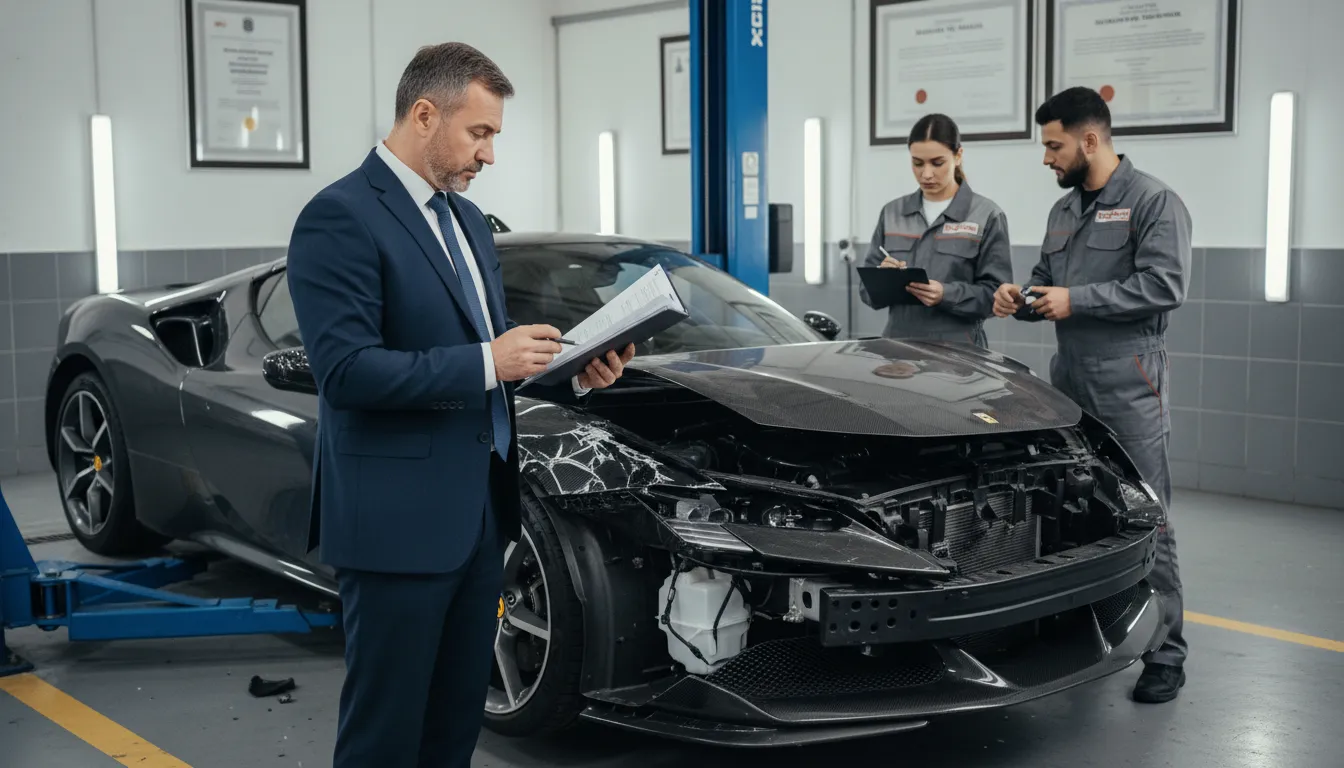
Perfect repairs do not erase the accident history attached to a newer luxury car. For Georgia owners, the unpaid loss may be far larger than the repair bill suggests.
Schedule a free diminished value claim review with Gastley Law.
Diminished value luxury cars Georgia claims address the gap between a high-end vehicle’s pre-accident market value and its value after repairs. Newer and luxury models often suffer larger dollar losses because buyers expect clean histories and may pay less once a collision enters the record. Georgia law requires automobile insurers to compensate their insureds for that difference, according to an academic analysis. The claim’s value still depends on the vehicle, damage, repair quality, accident history, and real market evidence, not simply the insurer’s first formula. An independent appraisal can document that market loss and help challenge an offer that does not reflect what the repaired car can actually sell for.
The central question for Georgia owners is why a clean-looking repair can still leave such a steep financial gap. To understand what drives the claim, start with Why luxury and newer cars lose more value after a Georgia accident. Here’s how.
Diminished Value Luxury Cars Georgia: Why luxury cars lose more value
Diminished value is the gap between a car’s pre-accident market value and its value after proper repairs. That gap can be larger for luxury, exotic, high-end, and newer cars. These vehicles start from a stronger market position, so an accident can erase more value in dollars.
Market perception after an accident
Buyers often expect a newer or luxury car to have a clean history and near-perfect condition. Once an accident appears in a vehicle history report, that expectation changes. A buyer may compare the repaired car with a similar model that has no reported accident.
Carfax and AutoCheck reports can shape that comparison before a buyer sees the vehicle. The report may prompt questions about hidden damage, future trouble, or resale risk. Gastley Law’s guide explains the Carfax accident history impact and how owners can document the resulting loss.
The dollar loss also depends on the car’s value before the crash. A price reduction that seems modest as a share of value can still mean a large loss on a high-end car. Rare options, low mileage, limited production, and strong prior condition may also affect the pre-accident baseline.
Repair quality and original parts
A complete repair fixes physical damage, but it does not remove the accident from the car’s market story. Buyers may still pay less because they cannot inspect every repaired area. This difference between physical condition and market value is the core of diminished value.
Repair choices can make the market concern stronger. Luxury and exotic vehicles often have complex materials, electronics, paint finishes, and brand-specific repair methods. Buyers may look closely at whether the shop followed manufacturer procedures and used original equipment manufacturer parts.
- OEM repair procedures can show how the shop handled structural, safety, and electronic systems.
- Parts invoices can show whether the repair used OEM, aftermarket, recycled, or reconditioned parts.
- Alignment, calibration, paint, and final inspection records can show the scope and quality of the completed work.
Repair documentation and the remaining loss
Strong records can support repair quality, but they do not guarantee the car will regain its former price. They help separate concerns about poor work from the loss tied to accident history itself. That distinction matters when measuring diminished value for luxury cars in Georgia.
Useful evidence includes the final repair bill, photos, parts invoices, calibration records, and the vehicle history report. Owners should also preserve documents showing mileage, options, and condition before the crash. These materials can support an appraisal and help an owner file a diminished value claim.
Georgia law recognizes diminished value even when repairs restore the vehicle’s function and appearance. The key issue is the remaining market loss, not whether the car can be driven. For a high-value vehicle, a careful comparison should reflect its exact model, features, condition, and accident history.
What counts in a diminished value claim for a luxury car?
Diminished value is the difference between a vehicle’s market value before a crash and its value after repairs. For luxury and newer cars, that gap can matter even when the repair work looks clean. Buyers may view a repaired car differently from a similar model with no crash record.
A Georgia diminished value claim should focus on the market loss caused by the crash. It is separate from the bill for fixing physical damage. Georgia’s right to diminished value rests on a well-known state court decision, as this legal review of State Farm v. Mabry explains.
Inherent diminished value
Inherent diminished value is the loss that remains because the vehicle now has a crash history. This type assumes the shop completed proper repairs. The concern is not a visible defect, but how the market reacts to the record.
Consider two matching late-model luxury sedans offered at the same time. One has a clean history, while the other shows repaired collision damage. A buyer may favor the clean-history car or offer less for the repaired one. The Carfax accident history impact can help explain why this gap exists.
Repair-related diminished value
Repair-related diminished value comes from problems with the completed work or changes made during repair. Examples include uneven paint, panel gaps, lingering warning lights, or parts that differ from the original parts. These issues can reduce value beyond the loss tied to crash history alone.
A luxury SUV may look acceptable from several feet away but still show mismatched paint under bright light. An appraiser may also find poor panel alignment or signs of prior structural work. Photos, repair records, and an inspection can help separate these repair issues from inherent loss.
Immediate diminished value
Immediate diminished value is the difference between pre-crash value and value directly after the crash, before repairs. It reflects the vehicle’s damaged state at that moment. Because most owners repair their vehicles, this measure is less common in a typical post-repair claim.
For example, a new performance coupe may be worth far less while it has damaged body panels and cannot be driven. That loss is not the same as the value gap that remains after repair. Owners preparing to file a diminished value claim should keep the three measures distinct.
| Type. | Cause. | Luxury example. | Evidence. |
|---|---|---|---|
| Inherent diminished value. | Crash history remains after proper repairs. | Repaired sedan sells below a clean-history match. | Market comparisons and vehicle-history report. |
| Repair-related diminished value. | Faults or changes from the repair work. | Mismatched paint or uneven panel gaps. | Inspection, photos, and repair records. |
| Immediate diminished value. | Unrepaired crash damage. | Damaged coupe’s value before shop work. | Pre-crash value and damage appraisal. |
The correct measure depends on when the loss is valued and what caused it. Clear records help show whether the claim involves crash history, repair quality, unrepaired damage, or more than one type.
Georgia rules and insurance tactics luxury owners should know
Georgia diminished value rules allow owners to pursue the market loss that remains after repairs. Insurers may still rely on low formulas, delay, or repair-based objections. Luxury owners should ask for the valuation method, compare it with market evidence, and keep every offer in writing before accepting payment.
What State Farm v. Mabry means
The Georgia Supreme Court’s State Farm v. Mabry decision is a key part of the state’s diminished value framework. An academic review of diminished value law explains that Mabry addressed an insurer’s duty to account for this loss. The case does not set one automatic payment for every damaged vehicle.
Claim value still depends on the facts. Those facts may include the model, mileage, prior condition, repair scope, and market response to the accident record. Rare options, limited production, and brand-specific buyer concerns may also affect a luxury vehicle’s post-repair value.
Owners may face a first-party claim with their own insurer or a third-party claim against the at-fault driver’s insurer. The policy terms, fault facts, and available proof can shape each path. This overview is general information, not legal advice about a specific claim.
Common insurer responses
An insurer may make a low first offer and present it as the final value. It may also rely on a formula that gives little weight to the luxury market. A formula can be a starting point, but it may miss trim, options, scarcity, and actual buyer demand.
- Low initial offers: The first figure may not reflect the vehicle’s real post-accident market loss.
- Formula-driven values: A standard calculation may treat a high-end car much like a common model.
- Delay: Repeated requests or slow replies can make owners less willing to keep pursuing the claim.
- Repair-based objections: The insurer may point to completed repairs as proof that no value was lost.
- Appraisal pushback: An adjuster may question or discourage an independent market appraisal.
None of these responses proves that an offer is fair or unfair by itself. It does show why owners should ask how the insurer reached its number. Written reasons make it easier to compare the offer with market evidence.
Evidence that answers the valuation
A strong response focuses on proof, not frustration. Keep the repair estimate, final invoice, photos, accident report, and records showing the car’s pre-loss condition. Comparable sales and dealer feedback can help show how accident history affects buyers in that vehicle’s market.
An independent appraisal can connect those records to a supportable loss figure. Gastley Law’s Georgia diminished value guide explains why an appraisal matters and what owners should document. The goal is to measure the remaining market loss after repairs, rather than repeat the repair bill.
Before accepting payment, read any release and ask whether it closes the property damage or diminished value claim. Owners who plan to file a diminished value claim should keep communications in writing and save every version of the insurer’s valuation.
How should you document diminished value on a newer vehicle?
Document diminished value by saving the repair estimate, final invoice, photos, parts records, calibration records, accident report, vehicle history report, and comparable sales. Newer and luxury vehicles need detailed proof because trim, mileage, options, repair method, and buyer perception can change the final value.
The record your claim needs
Good records show why a repaired car is worth less than a similar car with no crash history. This proof matters for newer and luxury vehicles because buyers often look closely at prior damage, repair quality, and parts.
Georgia recognizes diminished value as a loss that can remain after repairs. An academic review of Georgia law explains that insurers must compensate their insureds for that difference. This makes careful proof important when you file a diminished value claim.
Steps to preserve your evidence
Start collecting records as soon as possible, then keep them together in one digital folder. Use clear file names with dates so an appraiser or attorney can review the timeline without guessing.
-
Save the first repair estimate. Keep every page, including labor hours, parts, paint work, and any notes about structural damage.
-
Get the final repair invoice. Compare it with the first estimate and save every added repair or supplement. Ask the shop to explain major changes in writing.
-
Photograph the vehicle. Gather crash photos, repair-progress photos, and clear images after repairs. Include wide views, close-ups, the odometer, and the vehicle identification number.
-
Confirm which parts were used. Ask the shop to list original equipment, aftermarket, used, and reconditioned parts. Save calibration records for cameras, sensors, and driver-assist systems.
-
Collect market value proof. Save listings for similar vehicles with matching year, trim, mileage, options, and condition. Keep dealer trade-in offers or written buyer feedback when available.
-
Save accident history reports. Download current reports and check them again after repairs. Gastley Law’s guide explains the Carfax accident history impact and how that record can support a claim.
-
Track every insurer contact. Save emails, letters, offers, and claim notes. Record the date, person’s name, and main point after each phone call.
Before accepting an offer
Do not sign a release before you understand whether it closes the property damage or diminished value claim. Ask for the proposed release in writing. Keep a copy and review its full terms before agreeing.
A professional review can connect the repair file, accident history, and market proof. It can also test whether the insurer’s valuation reflects the car’s trim, options, mileage, and prior condition.
Gastley Law offers a free case evaluation for Georgia vehicle owners. When appropriate, the firm fronts appraisal costs so the owner can pursue stronger valuation proof without paying that cost first. Georgia vehicle owners can also review the legal basis for compensation in this academic review of diminished value law.
When does a luxury diminished value claim justify legal help?
A luxury diminished value claim may justify legal help when the insurer denies value loss, uses weak comparables, relies on a broad formula, ignores an appraisal, or delays a documented claim. Legal review is most useful when the vehicle is newer, high-value, rare, or expensive to repair.
Signs that a claim needs a closer look
A low offer does not always reflect the true resale effect on a high-end model. The gap may be worth reviewing when the vehicle is new, rare, expensive, or hard to compare with ordinary used cars. Owners can first review how to file a diminished value claim and what evidence the process requires.
- The insurer denies that any value remains after complete repairs.
- The offer relies on a broad formula instead of the vehicle’s actual market.
- Comparable sales do not match the model, trim, options, mileage, or prior condition.
- The insurer stops responding or refuses to discuss a well-supported appraisal.
Georgia has legal support for diminished value claims. The Georgia Supreme Court’s Mabry decision established an important basis for such claims, as discussed in this law review analysis. Still, the value of each claim depends on its own facts and proof.
When an appraisal or lawsuit may be needed
An independent appraisal can show how accident history affects the car’s market after repairs. It can also explain why common formulas or weak comparisons miss the loss on a luxury model. Gastley Law’s Georgia diminished value guide explains the role of appraisals and other claim evidence.
Legal representation becomes more useful when strong evidence does not move the insurer. Counsel can review policy terms, repair records, photos, market data, and appraisal methods. If negotiation fails, the next path may require a demand, formal filing, expert support, or court action.
Focusing legal effort where it matters
Gastley Law focuses on Georgia diminished value and property damage claims. That narrow focus can matter when a luxury vehicle requires detailed market proof rather than a routine estimate. The firm works on a contingency model and is willing to go to court when the facts support that step.
A consultation can also help an owner weigh the expected recovery against the time and cost of a dispute. Useful records include the repair file, pre-accident condition proof, valuation reports, comparable listings, and insurer messages. A documented Carfax accident history impact may also help explain why buyers would value the repaired car differently.
Legal help is most practical when the claim has a meaningful dollar gap and clear proof. It may also make sense when the insurer disputes fault, valuation, coverage, or the link between accident history and market price. Early review gives counsel more time to preserve records and assess the available path.
Review the Georgia diminished value claim process before you accept an insurer offer.
Mistakes that can reduce a high-value diminished value claim
The biggest diminished value mistakes are accepting the first offer, signing a broad release, relying only on the repair bill, and losing photos. Weak vehicle comparisons can also reduce a claim. Luxury owners should slow down, preserve proof, and review the offer before closing any property damage claim.
Accepting an offer before reviewing the evidence
The first check may not reflect the car’s actual post-repair market loss. Before accepting it, compare the offer with repair records, vehicle history, options, mileage, and prices for similar accident-free cars. This review is vital when trim level, rare features, or limited production affects demand.
Also read every check, letter, and digital form before signing or depositing funds. Some documents may contain release language that limits further discussion of the claim. Ask what the payment covers and whether acceptance closes the claim. Keep written copies of the answer and all related documents.
- Do not treat the insurer’s formula as the only measure of loss.
- Check whether the valuation accounts for the car’s exact model, options, condition, and local market.
- Review any release language before signing, depositing, or accepting a payment.
Waiting to build the evidence file
Delays can make a claim harder to explain. Save pre-accident photos, the police report, repair estimates, final invoices, parts lists, and post-repair photos as soon as possible. A dated record helps show the vehicle’s condition and the work completed.
Do not assume a repair bill alone proves the remaining market loss. An independent appraisal can compare the repaired car with relevant market evidence and explain any gap. Gastley Law’s Georgia diminished value guide explains why an independent appraisal can support a Georgia claim.
Georgia has recognized diminished value as a distinct loss after repairs. An academic review of diminished value law discusses the Georgia Supreme Court’s Mabry decision and its effect on insurance claims. That right does not remove the need to document the amount claimed.
Using broad statements with the adjuster
Clear, narrow answers reduce confusion. Avoid guesses about the car’s prior condition, repair quality, or future sale price. Do not say the vehicle is “good as new” if you have not reviewed its post-repair market value. Likewise, avoid naming a settlement amount without support.
Keep calls focused on facts you can verify, then follow up in writing. If a question is unclear, ask the adjuster to explain it before answering. Owners ready to file a diminished value claim should organize their evidence and review the offer before agreeing to final terms.
What to expect when Gastley Law reviews your claim
Expect Gastley Law to review your repair documents, accident history, insurer offer, photos, and vehicle details before recommending next steps. The goal is to decide whether the potential diminished value recovery is strong enough to justify an appraisal, negotiation, or legal action.
A focused first review
The process starts with a free consultation about the crash, repairs, and insurer response. Gastley Law first checks whether the facts support a claim and what evidence may still be needed. This early review helps set practical expectations before you spend money on an appraisal or take further action.
You may be asked for the repair estimate, final repair invoice, photos, accident report, and insurer correspondence. Records showing the vehicle’s trim, options, mileage, and condition before the crash can also help. For luxury cars, service records and comparable sales may give important context for the market loss.
Georgia courts have recognized diminished value as a loss that can remain after repairs. A published law review discussion of Georgia diminished value claims explains the role of the State Farm v. Mabry decision. That legal backdrop matters, but the value of a claim still depends on its specific evidence.
Evidence and offer assessment
Next, Gastley Law compares the insurer’s offer with the vehicle records and the claimed market loss. The review looks for weak assumptions, missing features, poor comparable vehicles, or a formula that does not fit the car. This step is important when pursuing diminished value for luxury cars in Georgia.
An independent appraisal may make sense when the likely loss justifies its cost. The appraiser can assess the repaired vehicle, its accident history, and the market for similar cars. Gastley Law can then use that work with the repair file and other records to challenge a low offer.
Owners who want more background can read the firm’s Georgia diminished value guide. It explains why repair quality alone may not restore a vehicle’s prior market value.
Negotiation and next steps
Once the evidence is ready, Gastley Law can present the claim and negotiate with the insurer. The goal is to support the requested amount with records, not broad estimates. You should receive a clear explanation of any response, counteroffer, or request for more proof.
If negotiation does not resolve the claim, the next option depends on the policy, amount at issue, and available evidence. That may include using an appraisal clause when the policy allows it. In some cases, small claims court may also be considered.
No path fits every vehicle or insurer. Gastley Law reviews the likely costs and limits before recommending another step. To request a free claim review, call 770-557-2838 or use the firm’s contact page.
Frequently Asked Questions
Are you entitled to diminished value in Georgia?
Georgia recognizes diminished value as a compensable loss after repairs, including claims involving luxury and newer vehicles. The right was established by State Farm Mutual Automobile Insurance Co. v. Mabry, as discussed in this law review analysis. Eligibility depends on the policy, fault, ownership, repairs, and prior damage. Supporting evidence also matters.
How is diminished value for a luxury car calculated?
A luxury car’s diminished value is the difference between its pre-accident market value and its market value after proper repairs. Appraisers examine the model, age, mileage, prior condition, repair scope, and how accident history affects comparable sales. Because buyers can be especially sensitive to accident history on high-end vehicles, a market-based independent appraisal may better document the loss than a generic formula.
Can a financed luxury car qualify for diminished value?
Yes. A financed luxury or newer vehicle can qualify when the claimant is the registered owner, according to this Georgia diminished value FAQ. Financing does not erase the vehicle’s accident-related market loss. Ownership records, loan terms, policy language, and collision facts can affect how a claim is handled. They can also affect who receives payment.
How long does a diminished value claim take in Georgia?
A fair diminished value settlement often takes time because the insurer must review repairs, valuation evidence, and responsibility. One Georgia diminished value FAQ reports an average of 30 to 45 days after a dispute begins, although some claims take longer. Delays can occur when repairs are unfinished, documents are missing, valuation methods differ, or the insurer requests more evidence.
Ready to Protect Your Luxury Car’s Value?
Waiting can leave a low insurance offer unchallenged while records, repair details, and proof of your vehicle’s market position become harder to organize. Starting now gives you more time to gather the right documents, review the loss, and address questions before deadlines create added pressure. A focused evaluation can help you understand your options and decide on a practical next step for your luxury or newer vehicle.
Ready to protect the value your vehicle lost after the accident? Schedule a free diminished value claim evaluation to discuss your situation with Gastley Law. Bring your repair records, accident details, and any insurer offer so the conversation can focus on what matters. Contact the firm now to start with a clear review rather than letting uncertainty delay your decision.