
If you’ve received a damage estimate from an insurer and your first thought was, “This can’t be right,” you’re not alone. It’s a standard part of the insurance playbook to start with a low offer. Many people simply accept it, not realizing they can—and should—push back. But you’re here, which means you’re ready to advocate for yourself. Disputing car damage appraisal is a necessary step for anyone who wants to ensure their vehicle is restored to its pre-accident condition with quality parts and craftsmanship. We’ll show you how to build a strong argument, what evidence you need, and how to formally challenge the insurer’s numbers.
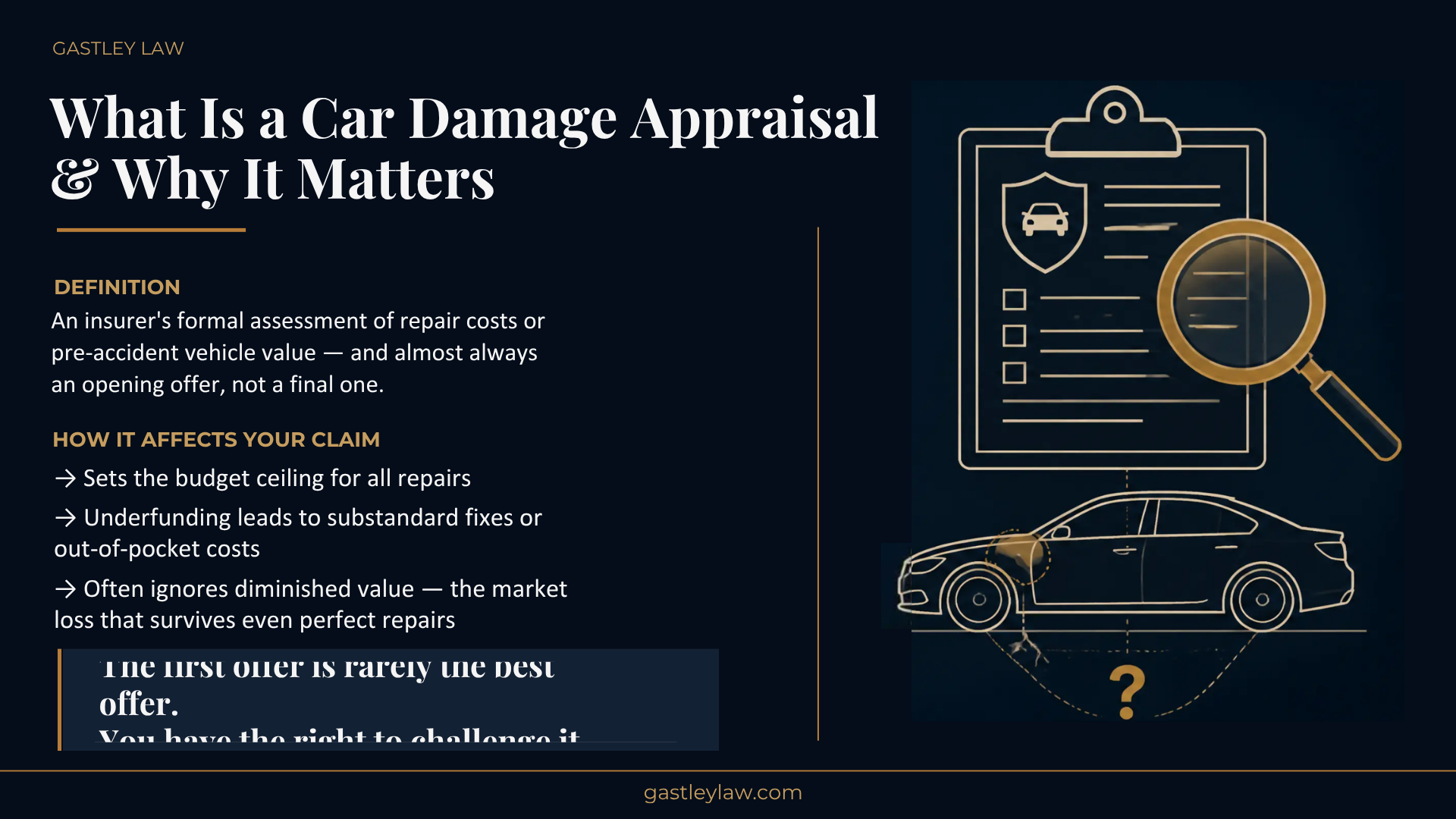 After a car accident, one of the first things the insurance company will do is send out an appraiser to inspect your vehicle. A car damage appraisal is simply a professional assessment of how much it will cost to repair your car or, if the damage is severe, what your car was worth right before the crash. This appraisal is the foundation of your entire property damage claim. The number the appraiser comes up with directly influences the check the insurance company cuts you. Think of it as the insurer’s opening offer. It’s their professional opinion on the value of your loss. But here’s the thing: it’s just that—an opinion. It’s not the final word, and it’s certainly not always correct. Appraisers can miss hidden damage, underestimate labor costs, or undervalue your vehicle. That’s why understanding this document is so important. It’s your starting point for making sure you get the full amount you’re owed to either fix your car properly or replace it. Challenging a low appraisal is a key part of the property damage claim process and ensures you don’t pay for someone else’s mistake out of your own pocket.
The appraisal is the single most important document in your insurance claim because it sets the financial terms. If your car is repairable, the appraisal dictates the budget for the body shop. If the insurer’s estimate is too low, you could be forced to cut corners on repairs or pay the difference yourself. If your car is declared a total loss, the appraisal determines the settlement amount you’ll receive to buy a new vehicle. A lowball valuation can leave you without enough money to purchase a comparable car, forcing you to downgrade or take out an unexpected loan. This is also where diminished value comes into play—the loss in your car’s market value after an accident, which is often left out of initial appraisals.
An appraiser’s job is to put a dollar amount on your vehicle’s damage. They do this by visually inspecting the car, taking photos, and referencing databases for parts and labor costs in your area. They’ll look at the obvious damage—dented bumpers, broken headlights, scratched paint—and create a line-by-line estimate for the repairs. They also assess your car’s pre-accident condition, considering its age, mileage, and any prior wear and tear to determine its market value. However, this initial inspection is often quick and may not account for underlying structural or mechanical issues that aren’t visible until a technician starts taking things apart. This is a common reason why initial estimates are often lower than the final repair bill.
Tucked away in the fine print of your auto insurance policy, you might find something called an “Appraisal Clause.” This is a provision designed to resolve disputes over the amount of a claim. If you and your insurance company can’t agree on the value of the damage, either of you can invoke this clause. When you do, you and the insurer each hire your own independent appraiser. Those two appraisers then work to agree on the value. If they can’t, they select a neutral third party, an umpire, to make the final decision. It’s important to know that you can only use this clause when filing a claim with your own insurance company, not the at-fault driver’s. If you need help finding or understanding this clause, you can always contact a professional to review your policy.
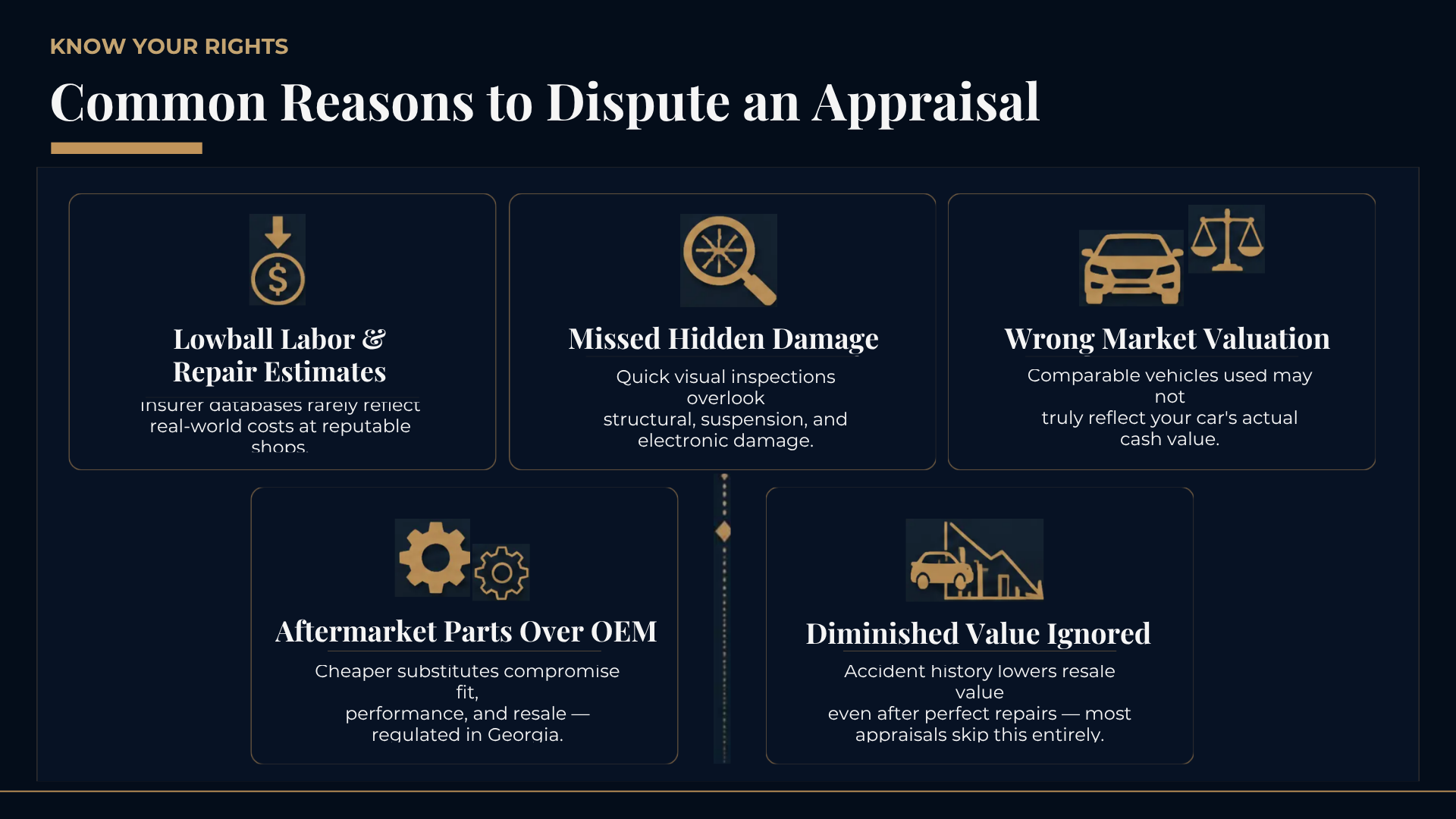 Receiving a car damage appraisal from an insurance company can feel like the final word, but it’s often just the opening offer. It’s completely normal—and often necessary—to question the numbers they give you. Insurance adjusters are focused on closing claims quickly and for the lowest possible cost, which doesn’t always align with getting your car restored to its pre-accident condition. Many people find that the initial estimate seems too low to cover quality repairs, or that it overlooks key details about their vehicle’s value. Common red flags include suspiciously low repair costs, an inaccurate assessment of your car’s market value, or a failure to account for all the damage. Understanding these common pitfalls is the first step toward building a strong case for a fair settlement. If the insurer’s appraisal leaves you feeling shortchanged, it’s time to dig a little deeper and prepare to advocate for what you’re truly owed.
One of the most frequent reasons for a dispute is an estimate that simply won’t cover the cost of proper repairs. Insurance companies often rely on internal databases that calculate repair times and labor rates, but these figures may not match the real-world prices at your local, reputable body shop. An insurer might estimate three hours of labor for a task that a skilled technician knows will take five. They might also undervalue the cost of materials like paint and finishing supplies. Don’t just accept their numbers at face value. Get detailed, written estimates from at least two body shops you trust. This documentation is powerful evidence that the insurer’s offer is insufficient. If the insurance company refuses to negotiate, it may be time to seek professional help to manage your property damage claim.
A quick visual inspection by an adjuster might catch the obvious dents and scratches, but it can easily miss deeper, more serious problems. Modern cars are complex, and a collision can cause hidden damage to the frame, suspension, sensors, and internal electronics that isn’t visible from the outside. Sometimes, this damage only becomes apparent once a technician begins to disassemble the vehicle for repairs. Even seemingly minor cosmetic damage can hint at underlying issues. If you suspect there’s more to the story than what’s on the initial report, ask your chosen repair shop to perform a thorough diagnostic and teardown. An updated estimate from your mechanic detailing the newly discovered damage is crucial for getting the insurance company to adjust their initial appraisal and cover the full cost of restoration.
If your car is declared a total loss, the insurance company is supposed to pay you its Actual Cash Value (ACV)—what it was worth right before the accident. Disagreements often arise when the insurer’s valuation of your car seems unfairly low. They might use a valuation report that lists “comparable” vehicles that aren’t truly similar to yours. For example, they might compare your well-maintained, low-mileage vehicle with a base model that has a spotty history. Do your own homework. Research what similar cars (same make, model, year, trim, and condition) are selling for in your area. Use online resources like Kelley Blue Book, Edmunds, and local dealership listings. Gather evidence of your car’s excellent condition, recent maintenance, and any special features to prove it’s worth more than their offer. This is also a key part of calculating your car’s diminished value after an accident.
To cut costs, insurance companies often specify the use of aftermarket parts instead of Original Equipment Manufacturer (OEM) parts. OEM parts are made by your car’s manufacturer and are identical to the ones your vehicle had when it was built. Aftermarket parts are made by third-party companies. While some are fine, others may not fit correctly, perform as well, or last as long as OEM parts. Using non-OEM parts can also affect your vehicle’s warranty and resale value. Check your insurance policy to see what it says about replacement parts. In Georgia, there are specific regulations about when insurers can and cannot specify aftermarket parts. You have the right to question their choice and push for OEM parts, especially if your car is relatively new. Insisting on quality parts is a critical part of ensuring a proper repair.
 Receiving a lowball damage appraisal from an insurance company can feel defeating, but it’s not the end of the road. You have the right to challenge an estimate that you believe is unfair or inaccurate. Disputing an appraisal is a structured process, and with the right preparation, you can build a strong case for the compensation you truly deserve. Think of it as a negotiation where you need to come to the table with solid evidence. Following these steps will help you present your claim clearly and confidently, putting you in a much better position to secure a fair settlement for your property damage claim.
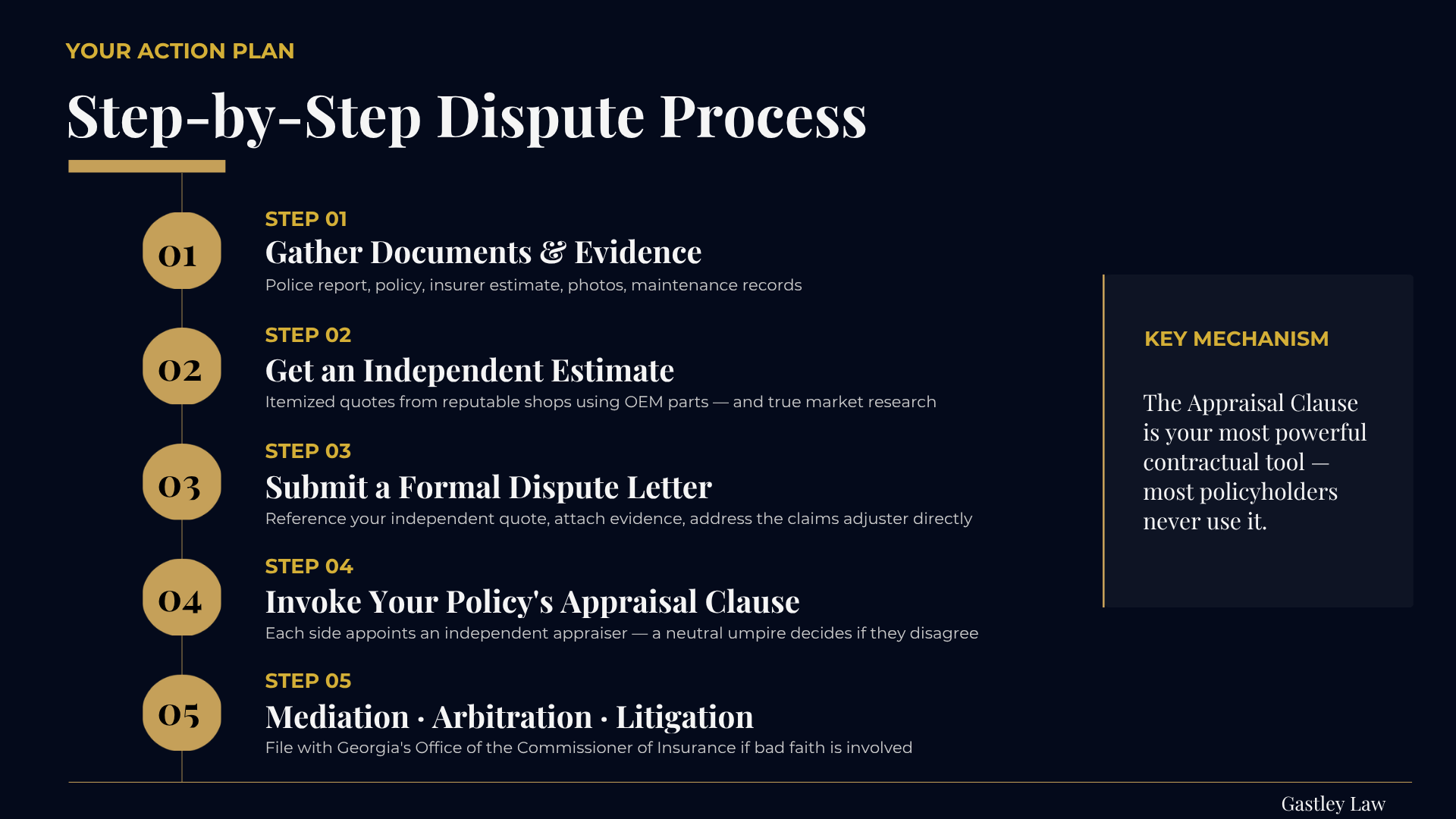
Before you can challenge the insurer’s numbers, you need to build your own case file. Start by collecting every piece of paper and digital file related to your accident and your vehicle. This includes the official police report, your insurance policy documents, and the initial damage estimate provided by the insurer. Compile all your photos and videos of the damage from the accident scene. It’s also smart to gather your vehicle’s maintenance records to prove it was in good condition before the crash. This documentation is the foundation of your dispute; it shows the insurance company that you are organized, serious, and prepared to back up your claim with facts.
Never take the insurance company’s initial estimate as the final word. Their preferred body shops often have an incentive to keep costs low. Instead, take your vehicle to a reputable, independent repair shop of your choice for a second opinion. Ask them for a detailed, itemized estimate that lists every necessary repair and uses original equipment manufacturer (OEM) parts, not cheaper aftermarket ones. This independent estimate is one of your most powerful negotiation tools. It provides a realistic assessment of the repair costs from a neutral expert, giving you a concrete figure to counter the insurer’s low offer and fight for the true diminished value of your car.
With your evidence and independent estimate in hand, it’s time to officially notify the insurance company of your dispute. Draft a formal letter or email to the claims adjuster assigned to your case. In your message, state clearly that you are disputing the appraisal amount. Be specific about why you believe their estimate is insufficient, referencing your independent quote and any damage they may have missed. Attach copies of all your supporting documents, including your photos and the new estimate. Maintain a professional and firm tone. The goal is to present a logical, evidence-based argument that prompts them to reconsider their initial offer.
If the insurance company refuses to adjust its offer after your formal request, your next move is to invoke the appraisal clause in your policy. This clause gives you the right to hire your own independent appraiser. This is a licensed professional who will conduct their own thorough inspection of your vehicle’s damage and determine the true cost of repairs and loss of value. Their assessment provides an expert opinion to counter the insurance company’s appraiser. While you will have to pay for this service, it’s an investment that can lead to a significantly higher settlement. This is often the point where getting professional legal advice can make a huge difference, so don’t hesitate to contact an attorney to discuss your options.
Once you and the insurance company have each hired an appraiser, they will review the evidence and attempt to agree on a fair amount. If they can’t reach an agreement, the appraisal clause in your policy typically requires them to select a neutral, third-party “umpire.” This umpire will review both appraisals and make a final, binding decision on the claim amount. This process is designed to resolve disputes without heading to court. However, if the insurance company continues to act in bad faith or you feel the process was unfair, you may need to explore legal action to get the compensation you are owed.
If your back-and-forth with the insurance company has hit a wall, bringing in a professional might be the best next step. An independent appraiser or an attorney can provide the leverage you need to get a fair assessment. But before you make that call, it’s important to understand what the process involves, what it costs, and when it’s the right time to hand the reins over to an expert. This move can significantly change the dynamic of your claim, so going in with clear eyes is key.
You should consider hiring an independent appraiser when you and the insurance company are at a complete standstill over the value of your claim. Most insurance policies have an “appraisal clause.” If you and your insurer can’t agree on the amount of loss, either of you can make a written demand for an appraisal. When this happens, you hire your own appraiser, the insurance company hires theirs, and the two appraisers work to reach an agreement. It’s a formal step that moves the dispute out of simple negotiation and into a more structured resolution process.
Hiring a private appraiser typically costs between $150 and $500. You have to decide if the potential reward is worth the upfront cost. For example, if the insurer’s offer is only a few hundred dollars less than what you think is fair, the appraiser’s fee might eat up any potential gains. However, if the difference is a thousand dollars or more, spending a few hundred on an expert appraisal could be a smart investment. It’s a calculated risk, but one that often pays off when the insurer’s initial offer is unreasonably low.
The right appraiser can make or break your case. You need someone who has deep knowledge of vehicle repair costs and current market values in Georgia. Just as important, they need to be a skilled negotiator who can effectively argue your case. Look for a certified, independent appraiser with a strong track record of successfully challenging insurance company valuations. If you’re unsure where to start, getting advice on your specific situation can help you find the right path forward. Our team has experience with these disputes and can guide your next steps.
It’s important to know that once you invoke the appraisal clause, you often lose direct control over the final decision. The two appraisers will negotiate, and if they can’t agree, they’ll bring in a third-party umpire to make the final call. However, sometimes just the act of hiring an appraiser signals to the insurance company that you’re serious, which can prompt them to increase their offer to avoid the hassle. Before you take this step, it’s wise to understand all your options. Our firm provides the specialized legal representation needed to manage this process and fight for the full amount you’re owed.
 Before choosing your next step, identify what the dispute is actually about. If the insurer accepts that the loss is covered but you disagree about repair costs, the scope of damage, or your vehicle’s value, an appraisal process may be available. Disputes about fault, coverage, or a denied claim usually require a different approach. Review your policy and keep the appraisal, estimates, photos, supplements, and insurer communications together so you can evaluate the available options.
An appraisal clause in auto insurance may provide a formal way to resolve a disagreement about the amount of a covered loss. The exact process depends on your policy, but it commonly starts with a written demand. You and the insurer each choose an appraiser, and the appraisers review the evidence and try to agree on the amount. If they cannot agree, an umpire may help decide the disputed amount. Before invoking appraisal, check the policy’s deadlines, costs, eligibility rules, and whether the result will be binding. Appraisal generally addresses value or scope, not fault, coverage, or every reason an insurer might deny a claim.
Mediation and arbitration are separate dispute-resolution processes, and neither is automatically the right next step. In mediation, a neutral person helps the parties work toward an agreement but usually does not decide the outcome. In arbitration, a neutral decision-maker hears the dispute and may issue a binding result, depending on the agreement and applicable rules. Review your policy and the type of disagreement before choosing either path, because costs, deadlines, and legal effects can differ.
If you believe an insurer has mishandled or unreasonably delayed your claim, you may be able to file a complaint with Georgia’s Office of the Commissioner of Insurance and Safety Fire. Include a clear timeline and copies of the appraisal, estimates, correspondence, and other supporting records. A complaint can prompt regulatory review, but it does not guarantee that the insurer will change its valuation or resolve a separate coverage dispute.
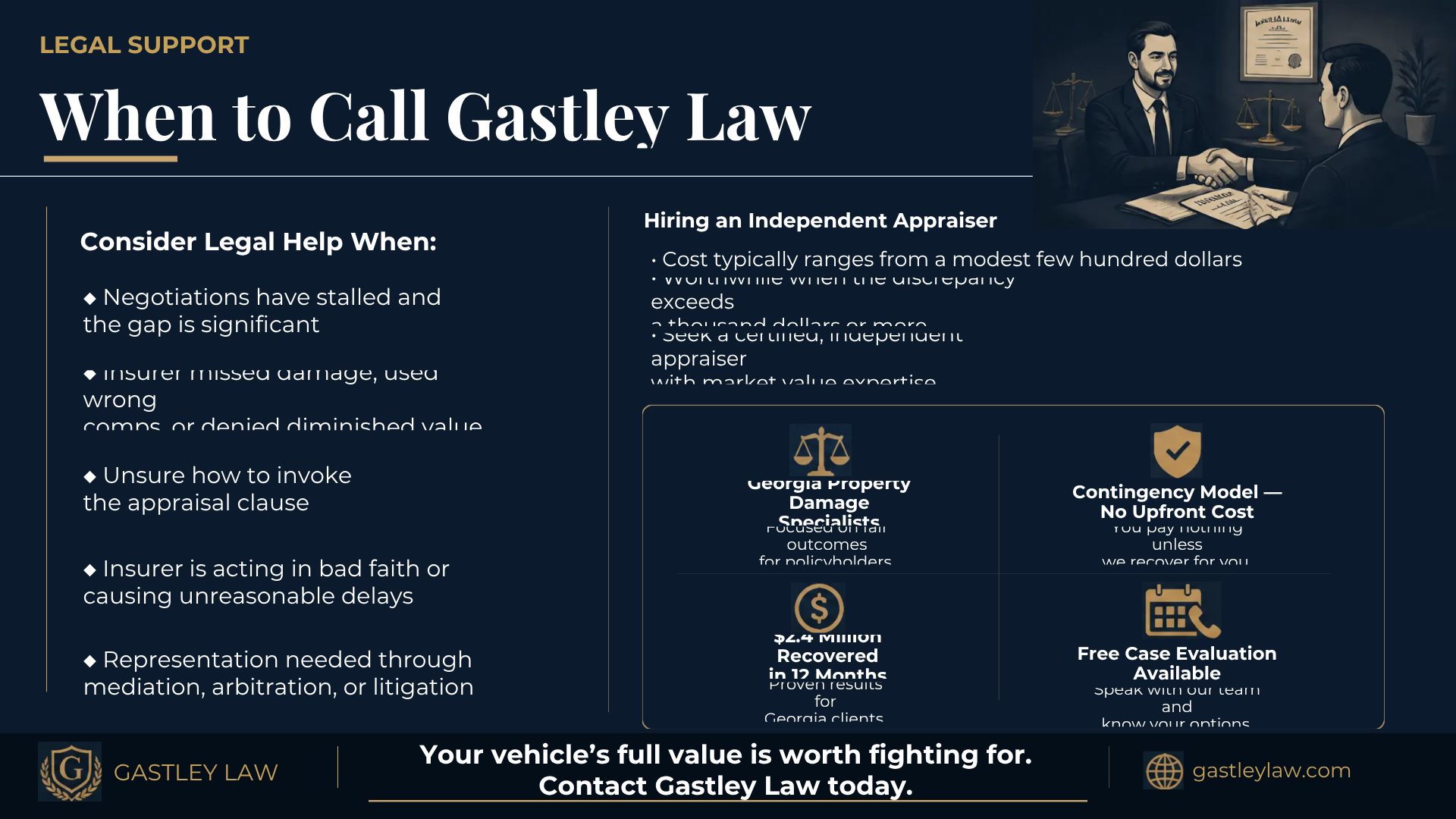
Consider speaking with an attorney for an unfair car insurance appraisal when the amount in dispute is significant, the insurer will not address documented damage or valuation errors, or you are unsure which escalation path applies. Gastley Law can review the policy, appraisal, repair estimate or valuation report, photos, supplements, and insurer communications to help Georgia vehicle owners understand their options. If you want help evaluating the next step, contact us for a case evaluation.
Absolutely not. While your insurer might recommend a shop from their “preferred network,” you have the right to take your car to any repair facility you trust. Their recommended shops often have agreements with the insurer to keep costs down, which might not always be in your best interest. Getting an estimate from an independent shop of your choice is a crucial step in determining if the insurer’s initial appraisal is fair.
This is very common. Initial appraisals often miss hidden damage to your car’s frame or internal components that only becomes visible once a technician starts taking things apart. When this happens, the repair shop will notify the insurance company and submit a “supplemental claim” for the additional parts and labor. This is why it’s so important to work with a shop that will advocate for you and document all the necessary work.
Yes, you can. If you are filing a claim under your own collision coverage, you have every right to dispute your insurance company’s appraisal if you believe it’s too low. Your policy is a contract, and the insurer is obligated to honor its terms. This includes paying the fair amount to repair your vehicle to its pre-accident condition or providing the actual cash value if it’s a total loss.
It really comes down to the numbers. If the insurance company’s offer is only a few hundred dollars less than what you and your body shop think is fair, the cost of hiring an appraiser might not make sense. However, if there’s a significant gap—say, a thousand dollars or more—investing in an independent appraisal can be a smart move that often leads to a much higher settlement.
Think of it this way: your property damage claim covers the cost to physically repair your car. Its goal is to restore your vehicle to the way it was before the accident. A diminished value claim, on the other hand, covers the loss in your car’s market value that happens simply because it now has an accident history. Even after perfect repairs, your car is worth less to a potential buyer, and you are entitled to be compensated for that loss.